Winter Wrap-Up 02: Mathematizing Children’s Literature
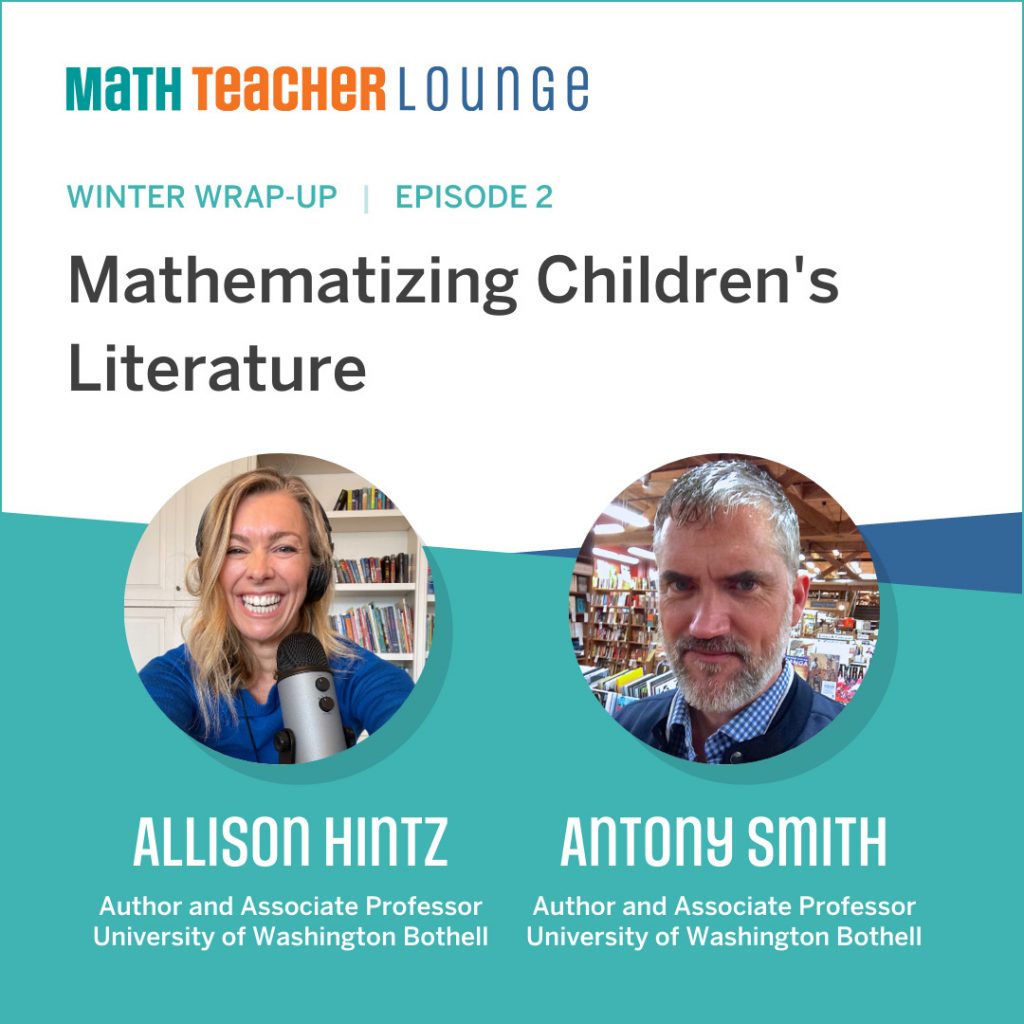
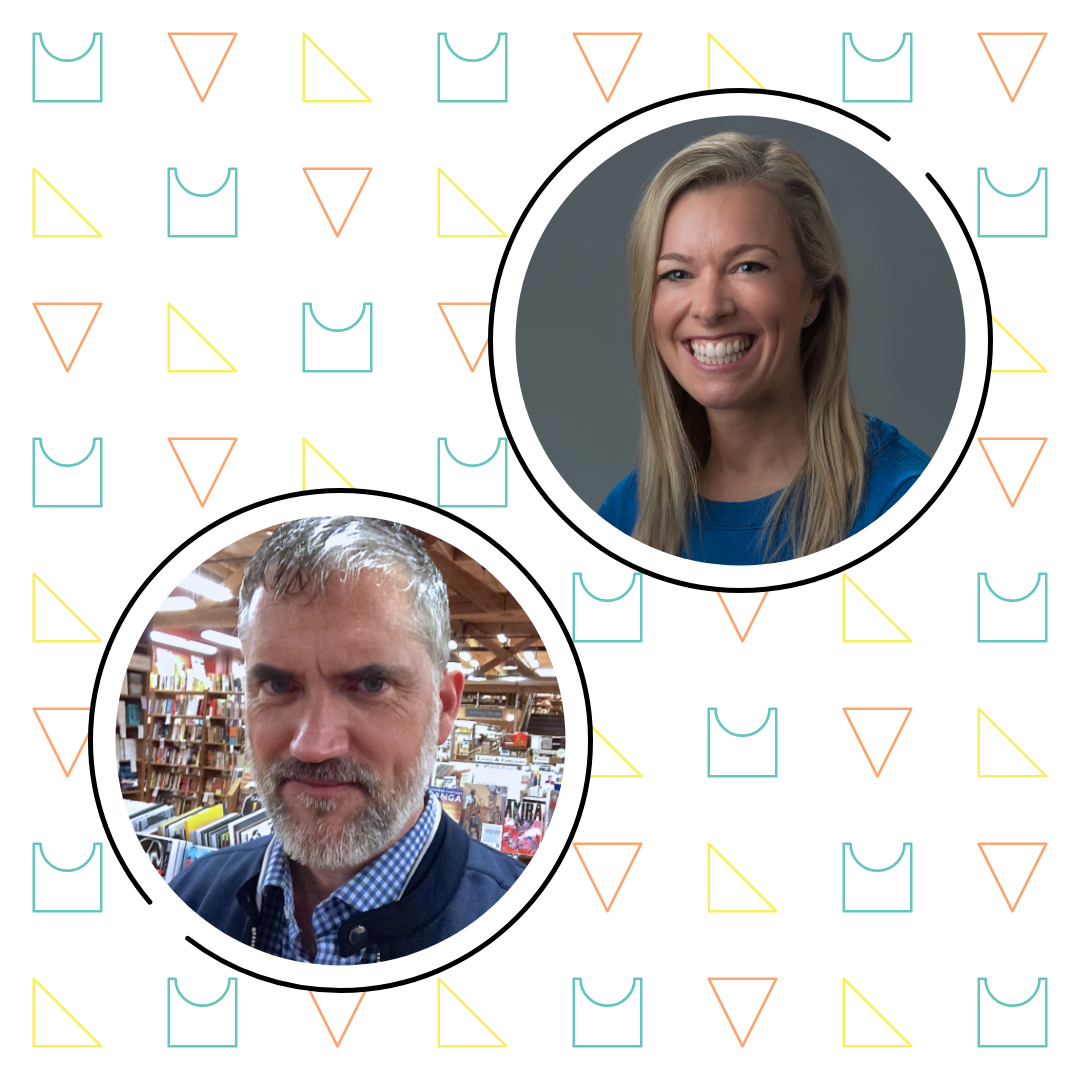
Promotional graphic for Math Teacher Lounge podcast, episode 2, featuring Allison Hintz and Antony Smith, discussing how mathematizing children's literature can build math fluency.

While we’re hard at work producing the exciting fifth season of Math Teacher Lounge: The Podcast, we’re continuing to share some of our favorite conversations from our first four seasons. This time around, we’re revisiting our popular episode that connected literacy and math!

In this episode, we sit down with Allison Hintz and Antony Smith, authors of Mathematizing Children’s Literature, to talk about what would happen if we were to approach children’s literature, and life, through a math lens–and how we can apply those same techniques to classroom teaching!

Explore more from Math Teacher Lounge by visiting our main page

Download Transcript

Bethany Lockhart Johnson (00:02):

Hi, I’m Bethany Lockhart Johnson.

Dan Meyer (00:04):

Hi, I’m Dan Meyer.

Bethany Lockhart Johnson (00:05):

And we are so excited for another episode of Math Teacher Lounge. And as you know, podcast format; you’re listening now. I think one beautiful thing about the podcast format is that it gives us a little bit more time to have these rich conversations. And I promise I won’t do it, but I could talk to our guests for hours, hours! Authors Allison Hintz and Tony Smith have just released Mathematizing Children’s Literature: Sparking Connections, Joy, and Wonder Through Read-Alouds and Discussion. And today we get to talk to the authors. Allison, Tony, welcome. Welcome to the lounge.

Allison Hintz (00:53):

Thank you. We’re so grateful to be here.

Bethany Lockhart Johnson (00:55):

We’re so excited to have you here. And I wanna say that my very first—was it my first math conference? Maybe it was my first math conference—up in Seattle, the CGI conference, and I’m all like, you know, wide-eyed and just like, “Can this be a place for me, this math community?” Re-envisioning my relationship with math and thinking about myself as a math teacher, what? And I went to your session on mathematizing children’s literature, and I was just so fired up. I was so wowed by your ideas, your energy, and your passion for students’ thinking. And I feel like as I read this book, I felt like I was hanging out with you. Like you were just so encouraging all the way through. Of educators, of other folks working with young people, and really guiding us how to listen with joy and with an open curious mind.

Dan Meyer (02:03):

Yeah. I would love to hear a bit about the genesis of this book for you folks. Like, I’m coming at this from a secondary educator lens. I’ve got small kids, so that’s also part of my interest here. But I love any book, any idea that seeks to merge what seems like two disparate worlds. Like it’s often the case that we feel like, well, there’s approaches for ELA and approaches for math, and they’re kind of separate disciplines. And these poor elementary teachers have to learn all of them and be experts at all of them. And here you both come along and say, “Hey, what if they are the same kind of technique?” Can you just speak to how this came about?

Allison Hintz (02:38):

Definitely. Tony, do you wanna take a try? Do you want me to start us off?

Antony Smith (02:42):

I can start. We oftentimes present and talk together and so we kinda switch back and forth. So that’s just how we are. So probably about eight or nine years ago, Allison and I, our offices were next to each other on our small campus. We’re both professors and we just happened to have a few children’s books that we looked at together and we were just thumbing through the pages. We really liked children’s literature. And we noticed that I would stop at certain points wondering about character motive or plot or sequence of events or language use. And Allison would stop at very different points in the book and notice number and concepts or something about mathematics. And that’s when we started to wonder, what would it be like if we were sharing a children’s book with a group of children and we put our ideas together? Where would we stop? What would we talk about? What would we ask children about in terms of their thinking and what they notice?

Allison Hintz (03:42):

And so we started playing with these questions that we had and started approaching stories with multiple lenses to see what kinds of things would children notice and what kinds of things might they say. And we were also on our own journey in trying to understand how to plan for and facilitate lively discussions and classrooms that surface really complex mathematics. And it felt like stories were a place where that might be a fruitful context for hearing children’s thinking. We’ve worked with a lot of teachers and students in our region. We live in the Seattle area and we’ve applied for some funding over time that’s really helped us be in a lot of community-based organizations and educational contexts and libraries and pediatricians’ offices and classrooms, various classrooms, and see what’s interesting about this and what might teachers and children do with stories that would surface complex mathematics to think about together.

Antony Smith (04:41):

Over time, we came to the realization that if we wanted to hear children’s ideas, we had to stop bombarding them with questions. <laugh> Yeah. And at first it made it worse that we were asking them math and literacy questions at the same time. And so we realized that what we needed to do was to back off and to ask children what they noticed and wondered.

Bethany Lockhart Johnson (05:01):

Can you say more about that and how that kind of evolved into mathematizing children’s literature?

Antony Smith (05:07):

We did work with a number of very thoughtful, talented classroom teachers and children’s librarians in public library systems who were just so masterful at asking open-ended prompts and questions, rather than kind of like the de facto reading quiz, that a read-aloud can become, which I’ve always disliked as a literacy educator. And we realized in our observing these read-alouds or interactive read-alouds or shared reading experiences that given the opportunity in the space and an adult who was actually listening, that children came up with all of the ideas we would have asked them about and more. So we didn’t have to be bombarding them with questions. They were already much more thoughtful than what would’ve been sufficient to answer our questions.

Allison Hintz (05:58):

And much like mathematics, it was really an iterative process. You know, we had some clunky read-aloud discussions where we were trying to accomplish so much and toggling multiple chart papers and different colored pens and all sorts of “how do we capture these ideas” and “do we separate ’em? do we keep ’em together?” And so it’s really been over time that with partners, we’ve learned these ways of having multiple reads of the same story that allow us to hear what children notice and wonder, and then to delve more deeply into their questions and their ideas through multiple reads where we might spotlight literary ideas that they notice; we might spotlight mathematical ideas that they notice. We might make purposeful integrations between those. But we found it to be most productive—and Kristin Gray really help us think about this—to have an open Notice and Wonder, get everything out much like an open-strategy share. We welcome here, record all the ideas, and it goes all over everywhere. You know, it can be a really not math-y noticing! And those are amazing! So there’s a lot of, um, yes, there is a ladybug on this page! The grandma is wearing green triangle earrings! Oh, your grandma wears green earrings! I mean, it all comes out.

Bethany Lockhart Johnson (07:27):

Wait, have you been in my classroom? ‘Cause that’s exactly— <laugh>

Allison Hintz (07:29):

<laugh> And then, you know, we think of it a lot like if math teachers might use the 5 Practices for selecting and sequencing, or if you might move from an open-strategy share to a targeted share, how can we get out all the questions that children are asking and then step back from them, take some time to really think about what they’re telling us they’re curious about, and plan some purposeful, intentional subsequent discussions that can delve more deeply into their ideas.

Dan Meyer (08:02):

I’d love to go into that a little bit more if that’s all right. Um, I’m gonna speak from someone who doesn’t have an elementary background and I’m gonna voice some worries that I had, some anxiety. One anxiety I have like in a classroom or a curriculum is when there’s no room for student ideas. Right? When it’s like, oh, there’s just room for the curriculum author or the teacher here. That is a sadness. But I when I see an instructional environment like you’re describing here, where there is openness to all kinds of different student ideas, of different levels of formality, from different kinds of cultural fonts of knowledge or wherever, I also get a little bit nervous because that, like, increases the risk that a student might come to understand that “my ideas are not good enough,” whereas in the class with no room for their ideas from their home or their language or their hobbies, like, they’re not gonna internalize the message that, “that wasn’t good enough.” And so I’m really curious as you move from the open Notice and Wonder where kids share all of themselves with you, and then you move to a targeted focus on some sort of disciplinary objective, how do you navigate that tension and help students feel like their contributions are valuable, even though we aren’t taking them up per se?

Allison Hintz (09:18):

That’s such an important question. I mean, I think we’ve grappled with this broadly in math education. I think any time we’re thinking about which ideas we choose to take up to pursue to consider, we have a responsibility to think carefully about whose ideas are being taken up and heard and considered. And so one of the tensions I hear you naming, I think, Dan, is when we engage in lively discussion where children’s thinking’s at the center, how do we make sure to upend and interrupt kinda status norms that run the risk of being deepened? Um, and I think by paying attention to whose ideas are taken up as much as which ideas are taken up, and what’s the mathematics we wanna explore is one tension. Um, another tension I might hear you naming is, you know, the complications that teachers face with time and pressure and coverage, and which mathematics ends up getting worked on. And, um, you know, it’s something we’ve really had to struggle with in mathematics education, where we move to more discussion-oriented classrooms that are really centered in sense-making to know that it takes a lot of time to do this thoughtful, thoughtful work. Um, does that begin to get at some of the tensions you’re raising? Is there, is there more you’re thinking about?

Dan Meyer (10:53):

I think it’s really helpful that you kind of broadened the scope of the question beyond your book to “this is an issue that we are, you know, really challenged by and focused on broadly in math education.” And, um, I appreciate you bringing the element in of whose idea—not just which idea is taken up, but whose idea is taken up—is an opportunity where, let’s say, multiple people raise an idea that is towards an objective the teacher has, they have the opportunity to disrupt certain kinds of status, like ideas about status, in that moment. From your perspective, like, are there techniques to say, I don’t know, parking-lot certain kinds of questions and say like, “Hey, like these are awesome”? I don’t know. I just know that I see kids at like ninth grade. They are very reticent, often. They’ve internalized totally this sense of like, “I’m not gonna just, like, share about the pants the grandma’s wearing, you know; that will not be received well.” And so I’m just kinda wondering how that happens and like, what are the ways we can disrupt that? That process?

Antony Smith (11:54):

So thinking about that, Dan, from the teacher’s perspective, in those kinds of scenarios where you wanna honor each child’s contribution, a couple of things that come to mind: One is that by, you know, initially by modeling what I as a teacher, something that I notice or wonder about, helps kind of set the expectation for what kind of response would be encouraged. And it’s broad, but it gives an example. And then also we really try to record or to chart all of the ideas that are shared so that we can revisit and honor those together. And then either later or on another day, if we choose one or two of those to explore in some way within a more focused read, then another thing that we do is have the idea investigation afterward that continues that thought, but goes back to being as open-ended as possible, so that those students or children who maybe didn’t have their idea as the one that was focused on by the group could go back to that or explore some other idea of their own, so that the idea investigation isn’t a lockstep extension activity, which is why we don’t call it that. So they could again bring in their own perspective. But I have to say from the teacher’s point of view, there is that moment of potential panic <laugh> because there is that power transfer when you’re asking children to help steer where this is going. And if you really mean it, you have to let them steer a little bit. And that can be terrifying. And, um, I always think of one teacher, Ashley, we worked with who read an adorable book, Stack the Cats, by Susie Ghahremani. And in that book, there’s a point where there are eight cats and they’re kind of trying to be a tower of cats and they fall and they’re sort of in the air on that page. And she asked her first graders—she stopped, and she asked, “How, do you think, how will the cats land?” And for about a minute and a half, the entire <laugh> class, was silent. They had their little papers; they had chart paper; they had clipboards; they had everything they needed. But that unusual phenomenon of a group of six- and seven-year-olds actually just sitting and thinking and not being peppered with activities was really stressful, but amazing. And then, after about the 90 seconds, they started out into their exploration of how the eight cats might land. They just needed a minute to think. And it’s so rare that we’re able to let children have that.

Allison Hintz (14:40):

In that same moment, Ashley, who’s a learning partner to us, she turned to us kind of quietly, like, “Should I pose a different question?” And <laugh>, we’re like, “No, let’s stick with it. Let’s see what happens.” So I think it creates this space too, this thinking culture, right? And this culture of “what does that mean to really pose a rich task?That’s open-ended, where there’s multiple access points?” Those eight cats could land in so many different ways. And there was broad access, there was a wide range of all the cats landing, and one’s on their feet, ’cause cats always land on their feet <laugh>, and there was every combination. And so, um, I think what’s really interesting—and to me, this brings back to your wonder, Dan—is, you know, “What’s the risk in openness?” And there’s always risk in openness. Um, it’s scary as a teacher, right? If I’m not the authority of knowledge and I don’t have control over where we’re gonna go, it might get into places that I didn’t anticipate. Or I don’t really feel as solid in the math as I want to. Or I don’t know what it sounds like to stick with silence and wait time, to know if my students are really in productive struggle or if that question was a flop. And so, um, I think this is some practice space for young mathematicians and teachers of mathematics, and just teachers, to explore with that openness and kind of the risk of the openness required for complex thinking to emerge.

Bethany Lockhart Johnson (16:12):

You know, it feels like the way you’re both describing this, it really is a culture shift, right? I kept feeling like I was given permission to be a beginner as I read this book. Like I was really…I loved how you said, I believe it was you, Allison, when you were in the class, you had a couple index card that you kept on your clipboard and that as you walked around, you were like, “Hey, if I don’t know what to ask, I ask one of these questions.” You know? And just this idea that, that, like Dan was saying, there is that loss of control, but that’s also a way to create this culture where students ideas are valued and we are allowing students to really generate the questions, which I thought was such an important idea to explore.

Allison Hintz (17:00):

We started this work long ago, super-excited about math-y books. And we saw a lot of potential in them and we still do. But the limitation we saw is that math-y books, they, they put forth a certain mathematics to be curious about. In some ways they tell you what mathematics to think about. So we started asking ourselves what would happen if we considered any story a chance to engage as mathematical sense-makers. And we started playing with non-math-y books and we got to a place where we could consider every story an opportunity to engage in mathematical thinking. And so we started noticing things over times, oh, these books tend to be really math-y. We call those text-dependent. We’d have to pay attention to the mathematics to understand the story. Whereas this pile of stories, these, they’re not overtly math-y. You could really enjoy the story and not pay attention to mathematics and have an amazing conversation. But what would happen if we thought of about this story as mathematical sense-makers and how might it deepen our understanding of the story? And then this other teetering pile of books, these are books where, you know, children didn’t tend to engage as overtly as mathematicians in it, but there’s opportunities in this story to go back to something—to a moment, to an illustration, to a comment—and think as mathematicians. And those were more about illustration exploring. And so, as we notice these different kinds of books, we really broaden what we thought about. And I think one of the things we really wanna think about in community through this book is what happens if we approach any story, every story, as mathematical sense-makers, because stories are alive in children’s lives, in homes and communities and in schools. And it’s a broad opportunity that we wanna take up. I was thinking, as I stay in this strait for just a moment about book selection, before we move into that process, um, Bethany in a previous MTL, you talked about representation.

Bethany Lockhart Johnson (19:12):

Mm, yeah.

Allison Hintz (19:14):

And do you remember when you shared the image of hair braiding?

Bethany Lockhart Johnson (19:19):

Yes. Vividly, yes. <laugh>.

Allison Hintz (19:22):

Yeah. And can you say just what that meant to you? What that….

Bethany Lockhart Johnson (19:27):

Yeah. Well, it was from a conference; Sunil Singh had used it and was talking about the artistry in mathematics and beauty in hair braiding. And, um, particularly, he was showing this particular image of this Black woman with her hair braided in profile and looking at the angles and the symmetry. And I shared that, you know, I spent so many hours in the beauty shop with my aunties and my mom and my grandma and continue to, to this day, that it just, it struck me immediately as familiar. And it struck me immediately as seeing an image that was reflective of my lived reality, projected as valuable and worthwhile for consideration in the world of mathematics. Which is not what I felt as a student of mathematics as a young adult or child. So it was this beautiful moment of, for me, the power of when we see images and we allow opportunities for re-envisioning what may be a common practice for that student, or may be something that they see every day.

Allison Hintz (20:44):

And in that same way, that image that was put up, we wanna think really carefully about representation in the stories that we select. And when we think of stories as mirrors or windows, we really wanna be mindful in story selection of whose stories are told and whose stories are heard. And when you said that you would sit down to listen to a story and you felt at ease or that you saw an image and you saw yourself that can be and should be something we really think carefully about when we select the stories that we select.

Dan Meyer (21:21):

It’s a wider path for representation of different kinds of people in literature, because people’s stories seem so much more present and towards the surface of their lives, versus, say, the abstractions and numbers and shapes in mathematics. It feels like more of a struggle to find ways to show people, hey, like you’re here, this, this place belongs to you. So in all these reasons, I think it’s really great you folks are using literature, which has this history of humanities, literally humanities, as a vehicle for mathematics. That seems pretty special here.

Antony Smith (21:56):

We both go to libraries and bookstores and look through books as often as we can, but also our partner, a children’s librarian, Mie-Mie Wu, helped us go through—when we would meet, she would bring three or four hundred books at a time.

Bethany Lockhart Johnson (22:13):

When you described her wheeling in the cart, oh, I wish I been in that room! <Laugh>

Antony Smith (22:18):

And the cart was, you know, probably three or four times bigger than she was sometimes. And we would go through hundreds of books and look at them and listen to her thoughts as a skilled librarian sharing with families, diverse families, and what catches the attention of a three-year-old sitting with her grandfather. And that was really a valuable, helpful experience. And it’s a partnership that continues. So in Last Stop on Market Street—and this is in the book; we talk about this, this children’s book quite a bit—in this story, CJ with his Nana, his grandmother, are riding the bus to the last stop on Market Street in San Francisco, to go, as we will find out, to help serve in a soup kitchen to help the community. And the teacher, Susan Hadreas, had the children record their ideas. She charted them in an open Notice and Wonder read. And one of the ideas that a young boy noticed was that CJ on the bus…a man with a guitar starts playing the guitar on the bus and CJ closes his eyes and it says CJ’s chest grew full. And he was lost in the sound and the sound gave him the feeling of magic. So this boy said, “I wonder, what does that feel like if you’re feeling the magic? What’s that?” And that was one of many ideas in the open Notice and Wonder, and Allison will talk about the math lens read, but first Susan went back and read with them. She had that idea, she circled it on the chart paper, and another day that week, she said, let’s go back and visit this story we really liked. And remember, we wondered what feeling the magic was like. Let’s go back through and let’s keep track of all the feelings and emotions that CJ had across the journey to the soup kitchen in this book. And so they did another read of the story; they were very familiar with it, of course, but they noticed new things and they also, every few pages, stopped and she helped chart all of the emotions that CJ experienced from envy to excitement to sadness. There’s a huge range in this book. And it was fascinating.

Allison Hintz (24:36):

I think one of the things that the children noticed was that CJ’s feelings were shaped by community. And that he shaped and shaped…he was shaped by and helped shape his community. And so the ways that he felt across the story were impacted by the other characters that he comes across. The guitar man on the bus. The bus driver who can pull a coin out from behind someone’s ear. The lady with the butterflies in the jar. Nana helping him to see the rainbow. And the students started, you know, being curious about that. How do we shape and how are we shaped by community? What communities are we a part of? This class is one community. I’m in many communities across my life. And they started to quantify the number of people in the story. So Mrs. Hedreas went back for a math lens read, and she said, let’s just keep track of and pay attention to how many people are in CJ’s life in this day. Because I can hear you starting to think about quantity. This class at the same time in other areas of the day had been working on counting collections, how to keep track, so they got out their tools. Some people pulled out ten frames, some people pulled out clipboards. They had a wide range of things they could use to help them keep track. They developed their own strategy, keep track however you want. She did a quicker read through it, flipping the pages, and then they get into these debates: <laugh> “We already counted that person!” “But they took their hat off and put it down to collect money!

Antony Smith (26:10):

“What about the dog?”

Allison Hintz (26:11):

“That’s the same person!” “Yeah, there’s a dog pound in his community!” <laugh> “Do animals count in our community?”

Bethany Lockhart Johnson (26:17):

I love it!

Allison Hintz (26:17):

“Yes, they count!” Uh, and so we went through and quantified and there was really this understanding as you saw these people throughout the story that communities can be of different sizes, but community has impact. And you have responsibility in your community to show up and to lean in and to know that bringing your full, authentic, vulnerable self, you shape people and they shape you. And what communities are people a part of. And it turned into this really interesting discussion about quantity and helped us think more about quantity and community. I think a really important moment for us and for that class was the transition from being people who almost did mathematics to a story, like counted things on a page, um, count acorns on a page in an autumn book, to being mathematicians who thought within the story.

Antony Smith (27:17):

And then two idea investigations that came from that —not at the same time, of course, but with the same group of children—one was they identified an emotion of their own and wrote and drew about that. And also, who helped them address or get out of or acknowledge that emotion. And then the other idea investigation was that all of the children drew or kind of mapped out a community that they were part of. Whether it was their neighborhood or their classroom or their soccer team or whatever it was. And so then those investigations strengthened the connections of those concepts to the lives of those children.

Bethany Lockhart Johnson (28:05):

Well, I, actually wanted to ask you about idea investigations. Because I feel like that was such an important invitation in your book. And the way I understood the idea investigation is you’re really paying attention to what’s coming up in your other reads. Right? And then these are opportunities to extend the thinking, or like you said, to extend a particular aspect: What’s your community? Can we map your community? Or what’s a particular emotion? And it was in such contrast to what I think I have probably done in my classroom more than once, which was like, “Oh, we read this story about seals. So now my story problem is gonna be about seals, right? <laugh> Like in the story, you know, Jojo, the seal had five balls. <laugh> So if Jojo still had five balls and two of them bounced away…” You know, or whatever. Right? But that’s not what an idea investigation is. Right?

Allison Hintz (29:03):

Yeah. I think this is where we also had some stumbles and can totally relate to what you’re saying as previous classroom teachers as well. We have come to a place where we are pretty in favor of a super open-ended idea investigation that takes up the things that have surfaced in the multiple reads and making sure it’s a rich task with many, many ways children can engage with that. There’s many, many, many right answers or ways to engage. Less is more there. So we moved way away from, like, even a worksheet that might have an idea from it to blank paper and math tools and places to get into some productive struggle around some of the complex things that were raised.

Antony Smith (29:59):

A challenge with worksheets is that they put a frame around children’s ideas. So either there are only three lines to write on, or there’s only a small box to draw in. Whereas a blank page really opens up the possibility. Um, and so—is it Ann Jonas who wrote Splash!? sorry, I don’t have it in front of me—the book Splash!, about animals that end up in and out of the pond, including a cat that is not happy about ending up in the pond, an idea investigation after that for very young children was, with the list of the different creatures displayed at the front of the room: On blank paper, hey, draw your own pond and decide how many of which and each type of animal you want in your pond and then write about it. Just on blank paper. And so that allowed some children to draw, like, three giant goldfish. But other children drew 17 frogs and three cats. And, and just, it lets children follow—

Bethany Lockhart Johnson (31:02):

It was theirs, right? It was theirs.

Antony Smith (31:04):

Their idea. <laugh> And that comes partly from, I think, as Allison mentioned, we both were classroom teachers before moving into academia. And I remember giving children worksheets, particularly math worksheets, where they weren’t necessarily bad, but right at the bottom, it says like, explain your strategy. And it gives two lines.

Bethany Lockhart Johnson (31:23):

Right! <laugh>

Antony Smith (31:25):

The only thing a seven-year-old can write there is “I thought.” Or “I solved it.” <laugh> And that’s not where we need to go.

Dan Meyer (31:34):

Yeah. If I could just ask the indulgence of the primary crowd here, like, I’m trying to make sense of all this. And I just wanna like, offer my perspective. My summary statement of what’s going on here. I’m trying to—I love how you both came here—

Bethany Lockhart Johnson (31:45):

<laughs> How ya doin’, Dan? How ya doin’?

Dan Meyer (31:47):

<laughs> I’m, ah, A, I’m loving this a lot. Um, B, I came in here loving how you folks are broadening the work of primary education to kind of find commonalities between these sometimes seemingly disparate kinds of teaching in ELA and math. Love that, I wanna say. But I think you folks are describing, with all these teachers you observed and your own work, is the work of attaching meaning to what students might not realize yet has meaning. Or they might think it only has one kind of meaning. But you, the teacher, with their knowledge, realizes that there are many more dimensions of meaning that can be attached to those thoughts. And I’m hearing that from you folks, when you describe A, what math is and the power of a teacher to name a thing as mathematical. Like, “Oh, you didn’t think math was that, but math is noticing; math is wondering; math is asking questions,” for one. But also this work you’re describing of how, like, first the task has to invite lots of student thoughts and then to say like, “Oh, I see that there’s a similarity to these two.” And to raise those up for a conversation or to ask a question like to extend one person’s, one student’s question a little bit more. But it’s always…I’m just hearing you folks attaching more meaning than the student might have originally thought. I appreciate the conversation. That’s really interesting.

Bethany Lockhart Johnson (33:03):

Well, and now that the book is out, I think it’s gonna keep evolving, right? Now that it’s gonna be in the hands of teachers and librarians and educators and caregivers, it’s exciting to see kind of where it goes next. Which actually brings us to our MTL challenge. Dan Meyer, do you wanna share?

Dan Meyer (33:22):

Math Teacher Lounge, we have a challenge for the folks who listen and we’d love for them to hop into the Facebook group Math Teacher Lounge, or hit us up on Twitter at @MTLShow and just, like, kind of exercise beyond listening, exercise the ideas you folks are talking about, some kind of a challenge that can help us dive deeper into your ideas. So what would you folks suggest for our crowd, for our listeners?

Allison Hintz (33:42):

I would love to invite people to playfully experiment with a favorite story, with a story that’s new to you. I would love to invite listeners to sit with a story maybe on your own, and just ask yourself as a mathematician: What do you notice and wonder in this story? Don’t feel any pressure. Maybe sit with a child or some children and listen to what they notice and wonder. Like, really listen! Don’t ask questions! But hear their questions and place children at the center and consider multiple reads. Consider continuing to pursue their questions. And we have a planning template that might support people in kind of sketching out some ideas if you’re open to playing with that too.

Bethany Lockhart Johnson (34:34):

And we will post—

Dan Meyer (34:36):

That’s awesome.

Bethany Lockhart Johnson (34:36):

—a link for that planning template in our Facebook group and on Twitter as well. So thank you so much for that resource, because I think it’ll definitely help. It could help you, like you said, it could help you kind of organize your thoughts or help you think about this work in a new way. So thank you for that resource and thank you for the amazing resource that is Mathematizing Children’s Literature. I am so excited to continue to engage with you both and with listeners as they dive into this book. If folks want to engage with you more, where can they find you? How can they reach you?

Allison Hintz (35:12):

Well, we’re on Twitter.

Bethany Lockhart Johnson (35:14):

Great.

Dan Meyer (35:15):

What’s your home address? <laugh>

Bethany Lockhart Johnson (35:24):

Wait, let me try that again. <laugh> ‘Cause it does sound like I’m like, <fake ominous voice> “Where can they find you?”

Allison Hintz (35:29):

4-2-5…. <laughs>

Antony Smith (35:32):

At the bookstore!

Bethany Lockhart Johnson (35:34):

Y’all, if folks want to continue this conversation or share these ideas or the math challenge, how can they tag you? How can they, they reach you on the World Wide Web, besides the Math Teacher Lounge Facebook group?

Antony Smith (35:50):

Yeah. Well, we are both on Twitter, and we’ve been trying to promote the hashtag #MathematizingChildrensLiterature. It’s very long, but once you type it once, your phone or computer…

Bethany Lockhart Johnson (36:01):

Easy. Yeah, those click, right? Is that what it is now?

Antony Smith (36:03):

<laugh> The other is that we do for our project, we have an Instagram account that is @MathematizeChildren’sLiterature.

Allison Hintz (36:11):

We care really deeply about hearing from people. You know, we think our ideas are constantly evolving and that there’s such exciting room to grow. And we just felt compelled to share what we were learning now so that together we could learn and build vibrant experiences for young children and teachers and families through stories. So we want to hear from people! We wanna learn about stories that are important in your lives and what children say, and grow these ideas together.

Bethany Lockhart Johnson (36:42):

And credit to Dan, you told me you went and ordered a bunch of the books they have on the suggested read list.

Dan Meyer (36:48):

Oh my gosh.

Bethany Lockhart Johnson (36:49):

You read ’em to your son.

Dan Meyer (36:50):

I got such a side-eye from my significant others around here for what I dropped on Amazon in one night! <laugh> Uh, all these books I didn’t have. Some of them I did. We are not fully illiterate around here! We do love the written word at the Meyer household! But there were a bunch that that I grabbed. I’m morseling them out day by day.

Bethany Lockhart Johnson (37:09):

Wait, at bedtime I read my one-year-old One Is a Snail, Ten Is a Crab. <laugh> And let me tell you, he had vigorous pointing and “Da? Da da da da?”

Allison Hintz (37:22):

<laugh> Aww, da da!

Bethany Lockhart Johnson (37:22):

So hey, we’re on the road. <laugh> <music> Deeply grateful, not only for your work and your beautiful book and your work, but also for the invitation to dive into the world of children’s literature in a way that many of us have not before. And it’s fun! Thank you, Tony. And thank you, Allison. And thanks for hanging out in the lounge.

Allison Hintz (37:48):

Thanks for having the lounge!

Antony Smith (37:49):

It’s been fun!

Allison Hintz (37:52):

Thank you both.

Stay connected!

Join our community and get new episodes every other Tuesday!

We’ll also share new and exciting free resources for your classroom every month.

What Allison Hintz says about math

“We started asking ourselves, “what would happen if we considered any story a chance to engage as mathematical sensemakers”.”

– Allison Hintz

Author and Associate Professor, University of Washington Bothell

Meet the guest

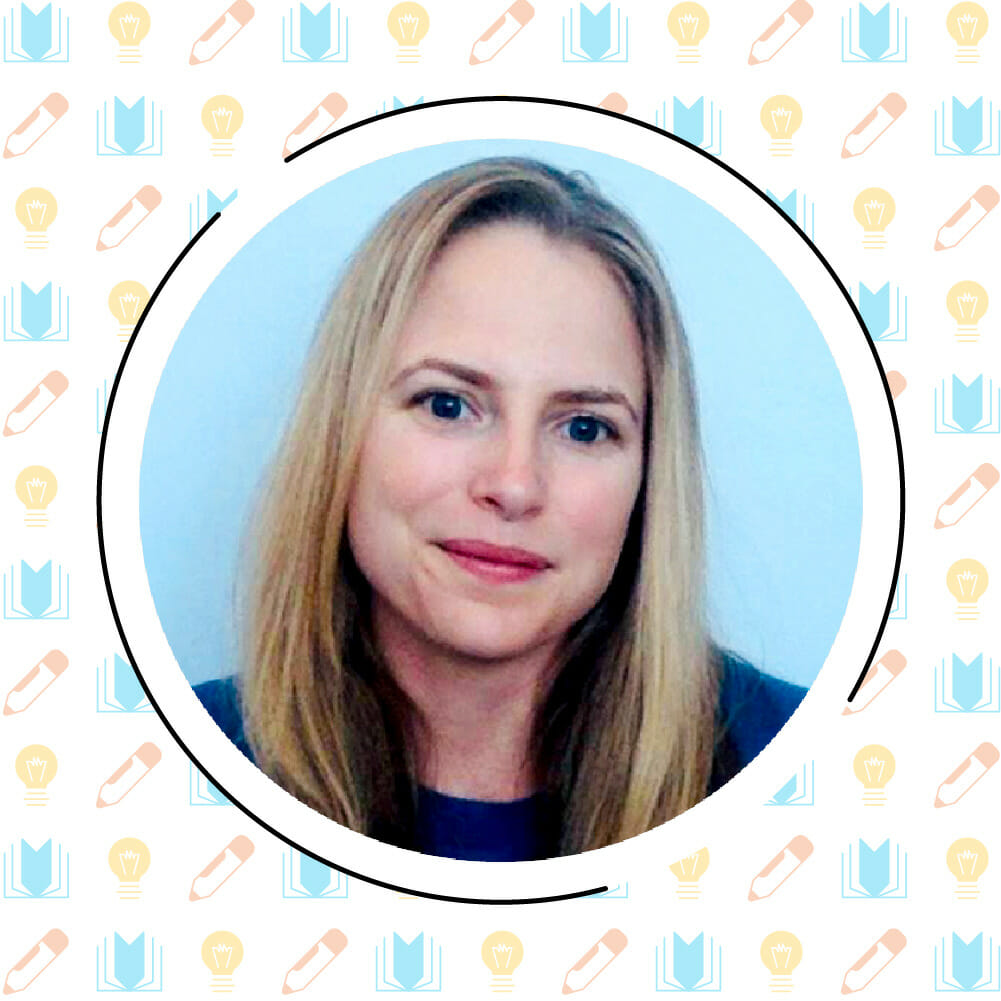
Allison B. Hintz: Dr. Hintz’s research and teaching are in the area of mathematics education. Her focus on mathematics came about during her years as a fifth grade teacher – it was alongside her students that she developed her own positive identity as a mathematician! Today she studies teaching and learning, specifically facilitating engaging discussion. Her research and teaching happen in partnership with educators and children in formal and informal settings and focuses on beliefs and practices that support all children in lively mathematics learning. She is a co-author, with Elham Kazemi, of Intentional Talk: How to Structure and Lead Productive Mathematical Discussions.

Twitter: @allisonhintz124

Antony T. Smith: Antony T. Smith is an associate professor of literacy education at the University of Washington, Bothell. He works alongside teachers to create engaging literacy-mathematics learning experiences through exploring and discussing children’s literature. He is committed to the concepts of motivation, engagement, challenge, and creativity in literacy teaching and learning.

 Twitter: @smithant  Instagram: mathematizechildrensliterature

Two people appear in separate circular frames; the woman is smiling and wearing headphones, while the man stands in front of bookshelves, perhaps discussing Mathematizing Children’s Literature.
Podcast cover for "Math Teacher Lounge" with Bethany Lockhart Johnson and Dan Meyer; bold text on orange and teal semicircle background.

About Math Teacher Lounge: The podcast

Math Teacher Lounge is a biweekly podcast created specifically for K–12 math educators. In each episode co-hosts Bethany Lockhart Johnson (@lockhartedu) and Dan Meyer (@ddmeyer) chat with guests, taking a deep dive into the math and educational topics you care about.

Join the Math Teacher Lounge Facebook group to continue the conversation, view exclusive content, interact with fellow educators, participate in giveaways, and more!

Discovering and exploring mathematics in every story

Smiling young boy sits at a classroom desk holding an open book, developing reading comprehension, while two other children are seen in the background engaged in activities.

Every picture book on your classroom shelf holds mathematical treasures waiting to be discovered! What if every read-aloud could go beyond a literacy moment to become a catalyst for mathematical sense-making? This question lies at the heart of Allison Hintz and Antony T. Smith’s delightful and informative book, Mathematizing Children’s Literature: Sparking Connections, Joy, and Wonder Through Read-Alouds and Discussion.

Many teachers have used traditional counting books and shape-focused stories to support students in connecting mathematics to literature. According to Hintz and Smith, you can challenge readers to extend and expand upon these experiences in ways that provide more space for them to make sense of stories; ask their own questions; see mathematics authentically in the world; and make connections between the stories, the math, and their lives. That’s the promise of mathematizing—approaching any story with a mathematical lens.

The concept of “mathematizing” goes beyond simply finding numbers in a story. Children are naturally curious and construct meaning by noticing, exploring, explaining, and modeling. The story context becomes a place to play and practice seeing math everywhere in our world. As we read a story aloud and pause to ask, “What do you notice? What do you wonder?,” students are able to surface structure, compare quantities, model situations, and justify their ideas, all while staying rooted in characters, plot, setting, and theme. The result is a classroom where math feels joyful, meaningful, connected, and accessible.

In this post, we’ll explore simple moves to mathematize your next read-aloud, sample prompts to elevate discussion, and follow-up activities to turn your library into a launchpad for mathematical thinking!

Mathematizing process and structure

While there’s no one way to facilitate a mathematical read-aloud, the following steps can help you get started:

  1. Explore books in your current library. There are no hard and fast rules for choosing the right book to mathematize, because a book can spark mathematical ideas in many ways. Look for books that a) are overtly ‘mathy’ where the math is central to the story’s plot, b) have illustrations that provide opportunities to explore the math in them, and/or c) have a story that inspires mathematical thinking, even if the math isn’t central to the story’s plot.
  2. Read the book aloud for the first time. The first read is a wonderful opportunity for students to hear and enjoy the story itself.
  3. Ask students what they noticed and wondered. As students share their responses, record them on a piece of chart paper to revisit later. If no responses pertain to the math in the story, you can follow up with the question, “Where did you see math in the story?”
  4. Reread the book a second time or revisit a specific page in the book. At this point, you want to start to focus on the math the students will explore in the book. You can either reread the entire story and pause on strategic pages that center on the mathematical ideas, or revisit specific pages in the story. (If the story is longer,it will probably be easiest to just flip back to specific pages.)
  5. Elicit student thinking. Ask students what math questions they could ask based on the pages they revisited.
  6. Give students a follow-up math activity. This could be based on a question the students mentioned earlier in this process, or one the teacher has planned.

Mathematizing examples

To save you time finding a book to use, we’ve outlined a plan based on some of our favorite books to mathematize (listed by grade band).

Grade levelK–1
Book title and authorBear Says Thanks by Karma Wilson
Mathematical focusCounting, addition, and mathematical representations
LaunchRead the story aloud. Ask students, “What do you notice? What do you wonder?” Record their responses on a piece of chart paper. And ask students, “How many friends visited Bear? What different food items did Bear’s friends bring?”
Pages to revisitAs students describe the different foods, revisit those pages. Identify any foods the students didn’t mention. As you revisit each page, ask students, “How many of that food item did that friend bring? ”Record their responses on a piece of chart paper for each friend. 
ActivityArrange students in small groups of 3–4 and give them a piece of poster paper. Ask students to show each friend’s food items. They can represent them using pictures, counters, ten-frames, etc. After they’ve correctly represented each friend, ask them to show how many total food items Bear’s friends brought using numbers and equations. When they’ve finished, have them visit one another’s posters to see how others represented and added the food items. 
Grade level2–3
Book title and author100 Hungry Ants by Elinor J. Pinczes
Mathematical focusConnecting arrays to expressions
LaunchRead the story aloud. Ask students, “What do you notice? What do you wonder?” Record their responses on a piece of chart paper. And ask students, “How did the ants rearrange themselves throughout the book?”
Pages to revisitAs students describe the different arrangements of ants, revisit those pages so students have a visual of the array. As you revisit each page, ask students, “How many ants are in each row? Each column? What is an equation we can write to represent the array?” Record their responses on a piece of chart paper. 
ActivityArrange students in small groups of 3–4 and give them a piece of poster paper. Give each group a different number of ants. Suggested numbers are: 12, 24, 36, 20, 18. Ask students to draw all of the different ways their number of ants could rearrange themselves and record an equation to match each. If it’s helpful, you can give each group a set of cubes, counters, or beans to represent the ants so they can manipulate them. Wrap up the activity by having students visit one another’s posters and discussing the similarities and differences between them. 
Grade level4–5
Book title and authorDozens of Doughnuts by Carrie Finison
Mathematical focusMultiplication and division
LaunchRead the story aloud. Ask students, “What do you notice? What do you wonder?” Record their responses on a piece of chart paper. And ask students, “How many ways did Luanne share her doughnuts as friends arrived at her door?”
Pages to revisitAs students describe the different ways Luanne shared her doughnuts, revisit those pages. As you revisit each page, ask students, “How many doughnuts were being shared? By how many animals? ”Record their responses on a piece of chart paper. 
ActivityArrange students in small groups of 3–4 and give them each a piece of poster paper. Ask them to show all of the ways Luanne shared her doughnuts. To enable variation, refrain from specifying the representation they should use. After they’ve finished, ask them to do a Gallery Walk to each other’s posters to get ideas to add to their poster. If none of the groups have a multiplication and division equation for each way, ask students to record those as well. Ask students how Luanne could have shared a dozen doughnuts with the following number of animals showing up at her door: 5, 8, 10, 14, 16, and 18. Encourage students to show their work and record multiplication and division equations. 

And with all the upcoming holidays and opportunities to gather with friends and family, we were also inspired to use Spaghetti and Meatballs for All! by Marilyn Burns in a mathematizing read-aloud. Follow this link to find K–2 and 3–5 lesson plans for this book that you can use right away!

Your Beyond My Years 2024 recap!

In August of last year, our teaching podcast Beyond My Years took its first steps—and in no time we were exploring a lot of new territory on our journey to soak up teacher advice and wisdom from seasoned educators across the globe. Their experiences became our experiences. So let’s recap some of the top moments of 2024.

In 2024 on Beyond My Years we:

Traveled 3,469 miles to Stasia, Alaska.

We ventured all the way to the northernmost part of Alaska alongside Patti and Rod Lloyd to teach in a rural indigenous community. Joining such a rich and unique culture as outsiders taught Patti and Rod the importance of learning from their students.

“Even though they’re coming to me at five and six years old, they are coming with a lot of rich knowledge that I don’t have. And if I remain open and work with them, I’ve got a lot to learn.” —Rod Lloyd

Went back to school at the age of 80.

When the United Kingdom put out a call in 2020 for retired educators to return to aid a national shortage, Eric Jones knew he still had more left to teach, even at the age of 80! He knows that to stay in the education field as long as he has you need to celebrate and honor all areas of what a teacher does. When you honor every piece of the work you can do, you can make sure every moment stays aligned with your goals and serves your students.

“I like teaching kids things they didn’t know before and now they’re excited about. I love the idea that they will then move on into realms of industry and economic success that I would never dream of.” —Eric Jones

Shared our first Amplify podcast episode entirely in Spanish.

We even had our first bonus episode entirely in Spanish with Luz Selenia Muñoz. She taught us that some things transcend language—like the importance of knowing the “why” behind student behavior. According to Luz, whether your classroom is monolingual or multilingual, it is important to make connections with your students. You will see what they need and know what their triggers are. Behavior improves when you understand what your kids are going through.

“Yo creo que le diría que tenga paciencia. Paciencia. Que respire. Que las cosas van a mejorar cada día.” —Luz Selenia Muñoz

“I think I would tell them to be patient. Be patient. Breathe. Things will change for the better with every passing day.” —Luz Selenia Muñoz

Took time for ourselves.

Kamphet Pease called out the overachiever in all of us educators. An important piece of teacher advocacy: We all took a hard look at our school to-do lists together and recognized that we have to do better at prioritization—including prioritizing self-care.

“Make sure you take care of yourself as well. Take the time to go for a walk, take the time to take a bubble bath, cook for yourself, whatever you find enjoyment in.” —Kamphet Pease

Want even more of the best of the best from season one of Beyond My Years, which is brought to you by the team that produces Science of Reading: The PodcastDownload our key takeaways, a curated collection of invaluable wisdom and practical guidance from our lineup of inspiring educator guests.

More to explore:

Oregon Enhanced ELA State Review for K–5

To view this protected page, enter the password below:


Season 1, Episode 5

Teaching is listening, starring Patti and Rod Lloyd

Today on Beyond My Years, host Ana Torres takes you to the northernmost region of Alaska to sit down with Patti and Rod Lloyd. Patti and Rod are longtime educators in a rural school district where caribou outnumber people, the village is only accessible by plane, and the Indigenous culture of the Iñupiat people goes back 10,000 years. They teach Ana about how they make the content matter by connecting it to student life outside of the classroom, the honor of teaching where children are the most valuable part of the community, the importance of listening more than you speak, and they offer advice for teaching responsibly as an outsider. They also share stories of how the first week of every school year is spent connecting to the land and having the village elders teach about their culture, emphasizing the joy to be found when you open yourself up to what your students have to teach you. Throughout the conversation, it is clear that despite teaching in a unique landscape, the lessons that Patti and Rod have learned are applicable to teaching any student anywhere. Taking all those lessons back to the classroom, Eric and Ana discuss the benefits of building genuine community relationships, making learning culturally relevant, and the importance of focusing on effective teaching methods.

Two individuals in circular frames on a background with books, stars, and apples. The top person is wearing glasses; the bottom person has a beard and glasses. There's a pink star between them.

Meet Our Guest(s):

A woman with long brown hair, wearing glasses and a striped shirt, smiles in front of a plain light blue background, radiating warmth and a sense of community relationship.

Patti Lloyd

Patti is a licensed social worker and elementary teacher now serving as the Meade River School counselor. Patti has a bachelor of arts degree in social work, a bachelor of science degree in elementary education, and 18 years of teaching experience. Patti was a social worker in Idaho prior to teaching, and is certified as an alcohol and chemical addictions counselor. She previously taught early childhood education and kindergarten. She is on the Board of Trustees of Ilisagvik College (the only tribal college in Alaska) and has worked for the North Slope Borough School District for 27 years. Patti is happy living in this beautiful place and loves the strong Inupiat culture surrounding her.

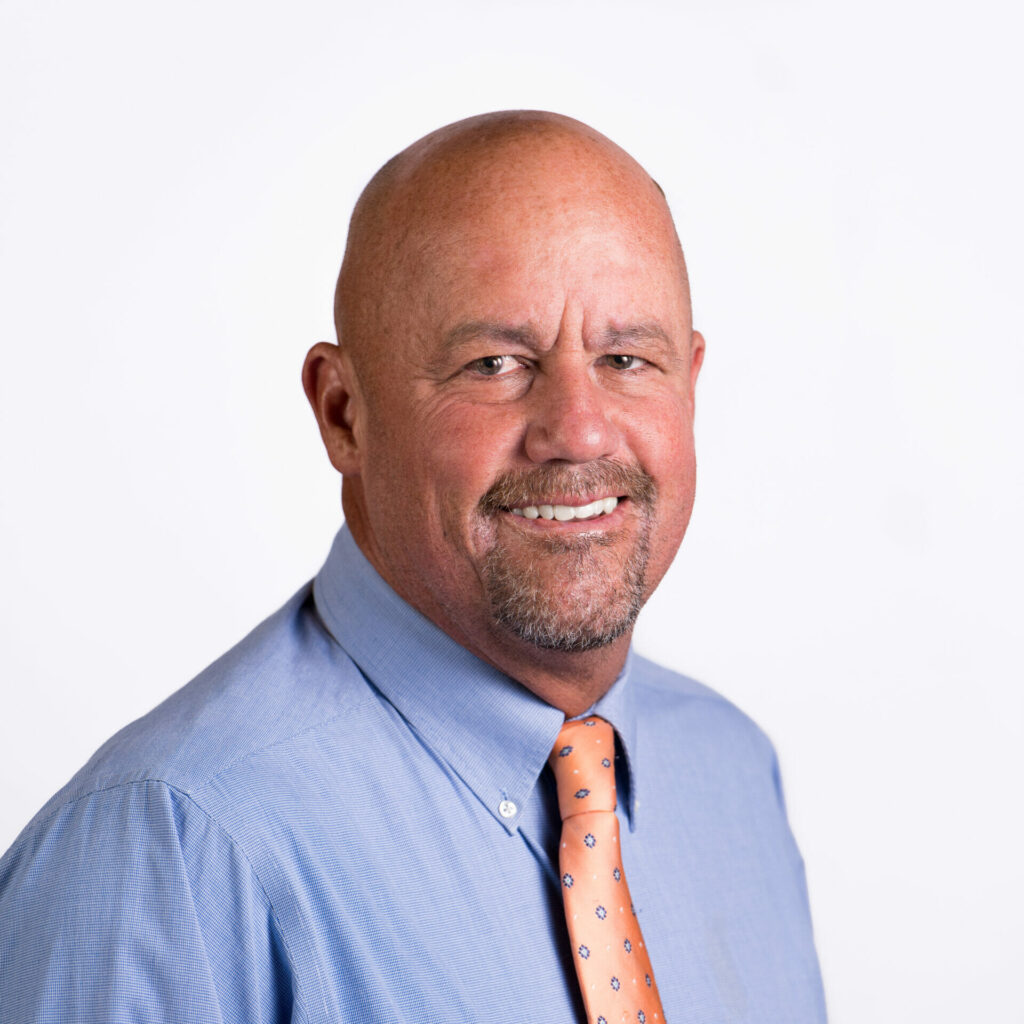
A middle-aged man with glasses, a bald head, and a short gray beard, wearing a blue collared shirt, smiling at the camera against a light gray background, reflecting warmth and strong community relationships.

Rod Lloyd

Rodney Lloyd is a primary elementary teacher with a bachelor of science degree in elementary education and a master of arts degree in language and literature with specialization in reading instruction and intervention. Rod has certifications in math recovery and is working towards a master’s degree in elementary math instruction. Rod has 30 years of teaching experience and was selected as NSBSD Teacher of the Year for 2013 and 2024. He has been teaching a Kindergarten/first grade combination class but works with students of all ages. He will be working in an intervention role at Meade River School for the 2024-25 school year. Rod is also the current presidentMeade River School, School Advisory Committee (SAC) president. Rod loves living in the Arctic and learning from the cultural members he considers close friends.

Meet our host, Ana Torres.

Ana has been an educator for 30 years, working in both the K–8 and higher education sectors. She served as an administrator and instructor at various public and private colleges and universities and as a bilingual and dual language teacher, dual language math and reading interventionist, dual language instructional coach, assistant principal, and principal in K–8 schools. Ana is currently the Senior Biliteracy and Multilingual Product Specialist on Amplify’s product specialist team, and delivers literacy and biliteracy presentations across the nation. Ana’s passion and advocacy for biliteracy and multiculturalism has led her to educate leaders, teachers, and parents about the positive impact of bilingualism and biliteracy in our world.

A woman with long dark hair and hoop earrings smiles at the camera while wearing a black blazer, standing outdoors—ready to discuss classroom challenges or share insights on her teacher podcast.
A man with short, closely-cropped hair and a trimmed beard smiles at the camera against a light gray background, ready to inspire diverse learners in the math classroom.

Meet our Classroom Insider, Eric Cross.

Eric Cross is a middle school science teacher who hopes to someday be a lifelong educator, like the guests on Beyond My Years! In each episode, Eric connects with host Ana Torres to discuss her guests’ best insights gleaned from their long and rewarding careers in the classroom. Then, Eric talks about bringing some of their wisdom into his current classroom and busy life.

Quotes

“Even though they’re coming to me at five and six years old, they are coming with a lot of rich knowledge that I don’t have. And then if I remain open and work with them, I’ve got a lot to learn.”

—Rod Lloyd

“The people that have lived there for 10,000 years; they know how to live in the Arctic. There’s architectural or archaeological evidence of 10,000 years of continued occupation of that land. So they have a lot to teach us. They’re experts there.”

—Rod Lloyd

“I wish I could go back and tell myself, ‘Don’t be so concerned with what you’re teaching but how you’re teaching it.’ Really get into the community.”

—Rod Lloyd

“We’ve just got to be quiet enough, long enough to hear what our students are saying—or not saying.”

—Patti Lloyd

“When you do make a mistake, ‘cause you’re going to make cultural mistakes, we have to kind of own up to it and then ask for advice on how to fix it or how to not make that mistake again.”

—Rod Lloyd

“Enjoy it. Enjoy the kids. Take time to enjoy your job. I know teaching now is a very high-pressure situation. There is so much pressure on us and so much to do, but we can’t forget to take that time and enjoy it because if you enjoy it, your kids will enjoy it.”

—Rod Lloyd

“Teachers are taking care of the world. So now teachers take care of you.”

—Patti Lloyd

Season 3, Episode 2

Mathematizing children’s literature with Allison Hintz and Antony Smith

In this episode, Mathematizing Children’s Literature authors Allison Hintz and Antony Smith join Bethany Lockhart Johnson and Dan Meyer to discuss what would happen if we were to approach children’s literature, and life, through a math lens – and how we can apply those techniques to classroom teaching.

Two portraits in circular frames: a smiling woman with blonde hair and a man mathematizing beards in a store. The background graphic features shirt icons in blue and orange triangles.

Meet Our Guest(s):

Two people appear in separate circular frames; the woman is smiling and wearing headphones, while the man stands in front of bookshelves, perhaps discussing Mathematizing Children’s Literature.

Allison Hintz and Antony Smith

Dr. Allison Hintz’s research and teaching are in the area of mathematics education. Her focus on mathematics came about during her years as a fifth grade teacher – it was alongside her students that she developed her own positive identity as a mathematician! Today she studies teaching and learning, specifically facilitating engaging discussion. Her research and teaching happen in partnership with educators and children in formal and informal settings and focuses on beliefs and practices that support all children in lively mathematics learning. She is a co-author, with Elham Kazemi, of Intentional Talk: How to Structure and Lead Productive Mathematical Discussions.

Antony T. Smith is an associate professor of literacy education at the University of Washington, Bothell. He works alongside teachers to create engaging literacy-mathematics learning experiences through exploring and discussing children’s literature. He is committed to the concepts of motivation, engagement, challenge, and creativity in literacy teaching and learning.

Meet our hosts: Bethany Lockhart Johnson and Dan Meyer

Bethany Lockhart Johnson is an elementary school educator and author. Prior to serving as a multiple-subject teacher, she taught theater and dance, and now loves incorporating movement and creative play into her classroom. Bethany is committed to helping students find joy in discovering their identities as mathematicians. In addition to her role as a full-time classroom teacher, Bethany is a Student Achievement Partners California Core Advocate and is active in national and local mathematics organizations. Bethany is a member of the Illustrative Mathematics Elementary Curriculum Steering Committee and serves as a consultant, creating materials to support families during distance learning.

Dan Meyer taught high school math to students who didn’t like high school math. He has advocated for better math instruction on CNN, Good Morning America, Everyday With Rachel Ray, and TED.com. He earned his doctorate from Stanford University in math education and is currently the Dean of Research at Desmos, where he explores the future of math, technology, and learning. Dan has worked with teachers internationally and in all 50 United States and was named one of Tech & Learning’s 30 Leaders of the Future.

Two people smiling at the camera, each in a separate circular frame, with geometric shapes decorating the background—perfect for a math teacher lounge or highlighting fresh math teacher resources.

Quotes

We started asking ourselves, “what would happen if we considered any story a chance to engage as mathematical sensemakers.”

—Allison Hintz

Stay connected!

Season 5, Episode 9

Making every day a “wins day” with Grammy-winning educator Mickey Smith Jr.

Mickey Smith Jr. is an acclaimed Louisiana educator, author, saxophonist, Grammy Music Educator Award winner, and self-described “solutionist” who feels a strong calling to help educators. He brings his motivational blend of music and message to this special episode in which he and Susan Lambert discuss music, perseverance, and finding purpose as educators and human beings. He shares his proven principles for helping educators create sound connections and culture in today’s classrooms. He shares his methods for providing all-purpose encouragement and offers a tangible approach to finding one’s own personal mission statement—or, as he likes to call it, our legacy song.

CKLA – Knowledge Research Units for K–5

To view this protected page, enter the password below:


Introducing new units for Amplify CKLA and Amplify Caminos K–5

As part of our commitment to creating even richer and more wide-ranging curricula, we are excited to release six new units for both Amplify CKLA and Amplify Caminos!

Click here to learn more about Amplify CKLA.

Click here to learn more about Amplify Caminos.

About these units

Our brand-new Knowledge Research units carry forward the powerful and proven instructional approach of both Amplify CKLA and Amplify Caminos while also:

  • Adding more variety to engage students from many walks of life. The rich topics and highly visual components featured in these units provide students with even more “windows and mirrors” and perspectives as they work to build knowledge.
  • Adding more authentic literature. Each new research unit revolves around a collection of high-interest authentic trade books that will spark more curiosity and inspire more inquiry.
  • Adding more flexibility. Units can be implemented for extended core instruction during flex periods, district-designated Pausing Points, or enrichment periods.

Units cover a variety of rich and relevant topics:

Three illustrations: one shows people at a gaming session, the middle depicts a diverse group standing together, and the third portrays a group gardening outdoors.

With these new units, students will soar to new heights with Dr. Ellen Ochoa, Amelia Earhart, and the Tuskegee Airmen. They’ll feel the rhythm as they learn about Jazz legends Miles Davis, Tito Puente, and Duke Ellington. And they’ll explore the far reaches of the world with Jacques Cousteau, Matthew Henson, and Eugenie Clark.

  • Grade K: Art and the World Around Us/El arte y el mundo que nos rodea
  • Grade 1: Adventure Stories: Tales from the Edge of the World/Cuentos de aventuras: relatos desde los confines de la Tierra
  • Grade 2: Up, Up, and Away: The Age of Aviation/¡A volar! La era de la aviación
  • Grade 3: All That Jazz/Jazz y más
  • Grade 4: Energy: Past, Present, and Future/Energía: pasado, presente y futuro
  • Grade 5: Beyond Juneteenth: 1865 to present/Más allá de Juneteenth: de 1865 al presente

Units are available in English and Spanish, and will include the following components:

  • Teacher Guide
  • Student Activity Books
  • Image Cards
  • Trade Book Collection
  • Digital Components (grades K–3 and 5)

Grade K: Art and the World Around Us/El arte y el mundo que nos rodea

“Every child is an artist,” said Picasso, meaning that every child uses art to explore and understand the world around them. Art and the World Around Us honors that truth by introducing Kindergarten students to some of the ways in which artists have explored and understood the worlds around them, too.

This domain introduces students to artists from different time periods, countries, and cultures. Throughout the unit, students learn about different kinds of art and how artists use the world around them as they make art. They also connect this to what they have already learned about the earth, plants, and animals in other Amplify CKLA and Amplify Caminos domains: Farms/Granjas, Plants/Plantas, and Taking Care of the Earth/Cuidar el planeta Tierra. In addition, students connect this to what they have learned about sculptors in the Presidents and American Symbols/Presidentes y símbolos de los Estados Unidos domain. As they explore different artists and artistic traditions, they develop their ideas about how humans are connected to each other and to the world around them.

As you read the texts in this unit, students may observe ways in which the characters or subjects are both similar to and different from students. This is a good opportunity to teach students awareness and sensitivity, building on the idea that all people share some things in common, and have other things that make them unique. This unit also offers an excellent opportunity to collaborate with your school’s art teacher, as many lessons have suggested activities to help students understand the kind of art they are studying.

Within this unit, students have opportunities to:

  • Use details to describe art.
  • Identify three ways to create art.
  • Identify characteristics of cave art.
  • Sequence the steps of making pottery.
  • Describe how artists can create work connected to the world around them.
  • Describe what makes Kehinde Wiley’s portraits unique.
  • Explain how the texture of a surface can affect artwork created on it.
  • Explain what a sculpture is.
  • Describe what makes James Turrell’s artwork about the sky unique.
  • Explain what a museum is and what kinds of things you can see or do there.

Instruction in this unit revolves around the following collection of high-interest authentic trade books. One copy of each trade book is included with the unit materials.

  • The First Drawing by Mordicai Gerstein
  • Van Gogh and the Sunflowers by Laurence Anholt
  • My Name is Georgia by Jeanette Winter
  • A Life Made by Hand by Andrea D’Aquino
  • Rainbow Weaver by Linda Elovitz Marshall
  • Luna Loves Art by Joseph Coelho

Grade 1: Adventure Stories: Tales from the Edge of the World/Cuentos de aventuras: relatos desde los confines de la Tierra

This domain introduces students to adventure stories set around the world and challenges students to dig into the adventures through research. By listening to the Read-Alouds and trade books, students increase their vocabulary and reading comprehension skills, learn valuable lessons about perseverance and teamwork, and become familiar with gathering information for research.

In this unit, students study the careers of real-world explorers Dr. Eugenie Clark and Sophia Danenberg, marvel at the inventions of Jacques Cousteau, think critically about how teamwork and collaboration can make greater adventures possible, learn about the science and technology that enable adventures, and research some of the ways humans have confronted challenges at the edges of the world, from the oceans below to space above.

Each lesson in the domain builds students’ research skills as they ask questions, gather information, and write a paragraph about their findings. Students share what they have learned about adventures in an Adventure Gallery Walkthrough. By taking on the persona of one of the adventurers they meet in the Read-Alouds and trade books, students deliver their final paragraphs as if they are a “speaking portrait” of that person. Students are invited to dress up as that adventurer if they desire.

In addition, teachers can set aside time outside of the instructional block to create the picture frames students will hold as they present to the Adventure Gallery Walk guests. Frames can be made from shirt boxes, cardboard, construction paper, or any art supplies that are on hand. This might be an opportunity to collaborate with the school’s art department if resources are available. Another option is to ask students to make their frames at home with their caregivers. On the day of the Adventure Gallery Walk, students will be the hosts and take on specific jobs, such as welcoming the guests, describing their work throughout the unit, and pointing out the areas of study on the domain bulletin board. You can find a complete list of student jobs in Lesson 13.

This unit builds upon the following Amplify CKLA and Amplify Caminos units that students will have encountered in the previous grade.

  • Nursery Rhymes and Fables/Rimas y fábulas infantiles (Kindergarten)
  • Stories/Cuentos (Kindergarten)

The specific core content targeted in these domains is particularly relevant to the Read-Alouds students will hear in Adventure Stories: Tales from the Edge of the World. The background knowledge students bring to this unit will greatly enhance their understanding of the trade books used in this unit.

Instruction in this unit revolves around the following collection of high-interest authentic trade books. One copy of each trade book is included with the unit materials.

  • My Name is Gabito/Me llamo Gabito by Monica Brown
  • Tomas and the Galápagos Adventure by Carolyn Lunn
  • The Astronaut with a Song for the Stars: The Story of Dr. Ellen Ochoa by Julia Finley Mosca
  • Mae Among the Stars by Roda Ahmed
  • Shark Lady: The True Story of How Eugenie Clark Became the Ocean’s Most Fearless Scientist by Jess Keating
  • Manfish by Jennifer Berne
  • Keep On! The Story of Matthew Henson, Co-Discoverer of the North Pole by Deborah Hopkinson
  • The Top of the World: Climbing Mount Everest by Steve Jenkins

Grade 2: Up, Up, and Away: The Age of Aviation/¡A volar! La era de la aviación

With this domain, students head up, up, and away with an introduction to the soaring history of aviation. Students learn the stories of early aviators, such as the Montgolfier brothers, the Wright brothers, Aída de Acosta, and Amelia Earhart.

During the unit, students study the science of flight, including the physics concept of lift, and research the social impacts of the world of flight. Finally, students let their research skills take flight as they explore key figures from the world of aviation.

The lessons in this domain build on earlier Grade 2 CKLA and Amplify Caminos domains about the westward expansion, early Greek civilizations, and Greek myths, and lay the foundation for learning about other periods of world history in future grades.

This unit builds upon the following Amplify CKLA and Amplify Caminos units that students will have encountered earlier in the year.

  • The Ancient Greek Civilization/La civilización griega antigua (Grade 2)
  • Greek Myths/Mitos griegos (Grade 2)
  • Westward Expansion/La expansión hacia el oeste (Grade 2)

The specific core content targeted in these domains is particularly relevant to the Read-Alouds students will hear in Up, Up, and Away: The Age of Aviation. The background knowledge students bring to this unit will greatly enhance their understanding of the trade books used in this unit.

Instruction in this unit revolves around the following collection of high-interest authentic trade books. One copy of each trade book is included with the unit materials.

  • Up and Away!: How Two Brothers Invented the Hot-Air Balloon by Jason Henry
  • The Glorious Flight: Across the Channel with Louis Blériot by Alice and Martin Provensen
  • The Flying Girl: How Aída de Acosta Learned to Soar by Margarita Engle
  • Wood, Wire, Wings: Emma Lilian Todd Invents an Airplane by Kirsten Larson
  • Helicopter Man: Igor Sikorsky and His Amazing Invention by Edwin Brit Wyckoff
  • The Tuskegee Airmen Story by Lynn Homan and Thomas Reilly
  • Skyward: The Story of Female Pilots in WWII by Sally Deng
  • Aim for the Skies: Jerrie Mock and Joan Merriam Smith’s Race to Complete Amelia Earhart’s Quest by Aimee Bissonette

Grade 3: All That Jazz/Jazz y más

This domain teaches students about the vibrant music, poetry, and culture of the Jazz Age in the United States. Students learn about famous writers and musicians like Langston Hughes, Louis Armstrong, Billie Holiday, Melba Liston, Tito Puente, and Miles Davis. They study how the jazz art form took root in the South, then spread to the North to become the sound of the Harlem Renaissance, eventually connecting people around the world in musical expression.

During this unit, students perform guided research to further explore both the history of jazz and what jazz is today. They develop research skills and then use those skills to find deeper connections between the stories and music of the Jazz Age and music today. As students learn about the world of jazz, they collaborate and share ideas with their classmates. They also practice sharing feedback focused on their written work, and, at the end of the unit, students present their research to the group.

The lessons give students opportunities to dive into the rhythms and stories of jazz, utilizing the knowledge sequence in this unit to:

  • Collaboratively generate research questions about jazz, jazz musicians, contemporary musicians from the state where they live or have lived, and the evolution of jazz music.
  • Utilize Read-Alouds, independent reading, and partner reading to learn about the Jazz Age, the Harlem Renaissance, jazz music, and biographies of celebrated jazz musicians and writers.
  • Research the answers to their generated questions, gather information, write a short research essay about a famous jazz musician, write a short essay about a contemporary musician from the state where they live or have lived, and give a presentation about their research.

Within this unit, students have opportunities to:

  • Ask relevant questions and make pertinent comments
  • Identify details in texts
  • Determine key ideas of texts by evaluating details
  • Make text-based inferences
  • Generate questions based on prior knowledge and gathered information
  • Synthesize details across texts to demonstrate comprehension
  • Discuss and explain an author’s purpose
  • Identify and cite reliable primary and secondary sources of information
  • Compose a well-organized and focused informative essay
  • Make connections between topics
  • Present information using appropriate media

Instruction in this unit revolves around the following collection of high-interest authentic trade books. One copy of each trade book is included with the unit materials.

  • Birth of the Cool: How Jazz Great Miles Davis Found His Sound by Kathleen Cornell Berman
  • Little Melba and Her Big Trombone by Kathryn Russell-Brown
  • Benny Goodman and Teddy Wilson: Taking the Stage as the First Black and White Jazz Band in History by Lesa Cline-Ransome
  • Tito Puente, Mambo King by Monica Brown
  • Drum Dream Girl: How One Girl’s Courage Changed Music by Margarita Engle
  • Duke Ellington: The Piano Prince and His Orchestra by Andrea Pinkney

In this unit, students also read the poem “Harlem” by Langston Hughes. (Available for free through the Academy of American Poets website and the Poetry Foundation website, with recorded audio available through the website for John Hancock College Preparatory High School.)

Grade 4: Energy: Past, Present, and Future/Energía: pasado, presente y futuro

With this domain, students become tomorrow’s problem solvers in this study of energy in the United States. Analytical reading skills are developed by examining the challenges of early energy innovators. Students then read about current energy practices and young energy change-makers across the world.

Throughout the unit, students conduct research into different sources of energy and present a proposal, putting them in the shoes of future energy innovators. They also use the knowledge sequence in this unit to:

  • Collaboratively analyze texts to identify cause-effect and problem-solution relationships.
  • Generate questions and conduct research about energy.
  • Write an opinion essay making their case for a fuel of the future.
  • Create energy proposals using primary and secondary resources.

This unit builds upon the following Amplify CKLA units that students will have encountered in previous grades as well as earlier in the year.

  • Plants/Plantas (Grade K)
  • The History of the Earth/La historia de la Tierra (Grade 1)
  • Eureka! Student Inventor/¡Eureka! El arte de la invención (Grade 4)

The specific core content targeted in these domains is particularly relevant to the Read-Alouds students will hear in Energy: Past, Present, and Future. The background knowledge students bring to this unit will greatly enhance their understanding of the trade books used in this unit.

Instruction in this unit revolves around the following collection of high-interest authentic trade books. One copy of each trade book is included with the unit materials.

  • Buried Sunlight: How Fossil Fuels Have Changed the Earth by Molly Bang and Penny Chisholm
  • Energy Island: How One Community Harnessed the Wind and Changed their World by Allan Drummond
  • The Boy Who Harnessed the Wind: Picture Book Edition by William Kamkwamba and Bryan Mealer

Grade 5: Beyond Juneteenth: 1865 to present/Más allá de Juneteenth: de 1865 al presente

Within this domain, Students learn about General Granger’s announcement in Galveston, Texas on June 19, 1865, a day marked in history as Juneteenth. Texts and multimedia sources will support foundational knowledge-building about the end of slavery in the United States. A review of the first freedom announcement, President Lincoln’s Emancipation Proclamation, provides students with background knowledge to further emphasize the significance of Juneteenth in American history.

This unit also takes students on a journey beyond Juneteenth, as they study specific contributions of African Americans from 1865 to the present day. Students participate in a virtual field trip to Emancipation Park in Houston, Texas and use the knowledge sequence in this unit to:

  • Collaboratively generate research questions about Juneteenth, The Great Migration, innovators and inventors, education, the humanities, activists, and allies.
  • Use Read-Alouds, independent, and partner reading to learn about African American contributions from 1865 to the present.
  • Research to find answers to their generated questions, gather information, and write a four-chapter Beyond Juneteenth book.

This unit builds upon the following Amplify CKLA units that students will have encountered in previous grades.

  • Native Americans/Los nativos americanos (Grade K)
  • A New Nation: American Independence/Una nueva nación: la independencia de los Estados Unidos
    (Grade 1)
  • The U.S. Civil War/La Guerra Civil de los Estados Unidos (Grade 2)
  • Immigration/La inmigración (Grade 2)
  • Native Americans/Los nativos americanos (Grade 5)

The specific core content targeted in these domains is particularly relevant to the Read-Alouds students will hear in Beyond Juneteenth: 1865 to present. The background knowledge students bring to this unit will greatly enhance their understanding of the trade books used in this unit.

Instruction in this unit revolves around the following collection of high-interest authentic trade books. One copy of each trade book is included with the unit materials.

  • All Different Now: Juneteenth, the First Day of Freedom by Angela Johnson
  • The Great Migration: An American Story by Jacob Lawrence
  • Sing a Song: How “Lift Every Voice and Sing” Inspired Generations by Kelly Starling Lyons
  • Side by Side/ Lado a lado: The Story of Dolores Huerta and Cesar Chavez/ La Historia de Dolores Huerta y Cesar Chavez by Monica Brown
  • Of Thee I Sing: A Letter to My Daughters by Barack Obama

Amplify CKLA Review for Alabama

To view this protected page, enter the password below:


Desmos Math 6–A1 correlations with Carnegie Math Texas

To view this protected page, enter the password below:


Grade 6

Module 1: Composing and Decomposing

Topic 1: Factors and Multiples

MATHbookLesson 1: Taking Apart Numbers and ShapesProducts and Sums
MATHbookLesson 5: Yours IS to Reason Why!Fill the Gap

Topic 2: Area, Volume, and Surface Area

MATHbookLesson 1: All About That Base….and HeightExploring Triangles
Triangles and Parallelograms
MATHbookLesson 2: Slicing and Dicing: Composit FigureShapes on a Plane
Letters

Topic 3: Decimals

MATHbookLesson 1: You Have a PointDishing Out Decimals
MATHbookLesson 2: Get In LineDecimal Diagrams and Algorithms
MATHbookLesson 4: Dividend In the HouseMovie Time

Topic 4: Fraction by Fraction Division

MATHiaLesson 1: Representing Fraction DivisionFlour Planner

Topic 5: Area of Triangles and Quadrilaterals

MATHiaLesson 2: Developing Area FormulasExploring Parallelograms,
Part 1
MATHiaLesson 3: Calculating Areas of Various FiguresExploring Parallelograms,
Part 2

Off the Grid, Part 1
Off the Grid, Part 2

Topic 6: Composite Figures

MATHiaLesson 2: Calculating Area of Composite FiguresPile of Polygons

Topic 8: Surface Area of Regulat Prisms and Pyramids

MATHiaLesson 1: Determing Surface Area Using NetsRenata’s Stickers

Module 2: Relating Quantitites

Topic 1: Ratios

MATHbookLesson 2: Going StrongPizza Maker
MATHbookLesson 3: Different but the SamePizza Maker
MATHbookLesson 4: A trip to the MoonFruit Lab

Topic 2: Percents

MATHbookLesson 2: Warming the BenchLucky Duckies

Topic 3: Using Tables to Represent Equivalent Ratios

MATHbookLesson 1: Many ways to MeasureMany Measurements
Model Trains
MATHbookLesson 2: What is the Best Buy?World Records
MATHbookLesson 3: A Trip to the MoonWelcome to the Robot Factory
MATHiaLesson 2: Using Tables to Determine Equivalent RatiosDisaster Preparation
MATHiaLesson 3: Problem Solving with Equivalent Rations and Rates using TablesDisaster Preparation

Topic 9: Introduction to Unit Rate

MATHiaLesson 2: Determining and Comparing RatesSoft Serve
More Soft Serve

Module 3: Determining Unknown Values

Topic 2: Equations

MATHbookLesson 2: Double TalkWeight for It
MATHbookLesson 3: Play It in ReverseWeight for It
MATHbookLesson 4: One, None, or a TonTunnel Travels
MATHbookLesson 5: Getting RealFive Equations
Swap and Solve

Topic 3: Graphing Quantitative Relationships

MATHbookLesson 3: Planes, Trains, and PaychecksSubway Fares

Topic 6: Solving One-Step Addition and Subtraction Equations

MATHiaLesson 1: Exploring One-Step Equations with Double-Number LinesHanging Around

Topic 7: Solving One-Step Multiplication and Division Equations

MATHiaLesson 1: Using Double Number Lines to Solve One-Step Multiplicaiton EquationsHanging Around

Topic 8: Solving One-Step Equations with Decimals and Fractions

MATHiaLessons 1-4:Hanging Around

Module 4: Moving Beyond Positive Quantities

Topic 1: Signed Numbers

MATHbookLesson 1: Signed NumbersCan You Dig It?

Topic 1: Introduction to Negative Numbers

MATHiaLesson 2: Representing Integers on Number LinesOrder in the Class

Module 5: Describing Variability of Quantities

Topic 1: The Statical Process

MATHbookLesson 3: SkyscrapersThe Plot Thickens

Topic 2: Numerical Summaries of Data

MATHbookLesson 1: In the MiddleToy Cars
MATHbookLesson 3: March MADnessHoops

Topic 2: Analyzing Numeric Data Displays

MATHiaLesson 1: Creating Dot PlotsMinimum Wage

Grade 7

Module 1: Thinking Proportionally

Topic 1: Circles and Ratios

MATHbookLesson 1: Pi: The Ultimate RatioMeasuring Around
MATHbookLesson 2: That’s a Spicy Pizza!Why Pi?
MATHbookLesson 2: Circular ReasoningArea Challenges
MATHbook
Lesson 4: Pound for Pount, Inch for Inch
Scaling Machines
Tiles
Scaling Robots

Topic 2: Proportionality

MATHbookLesson 1: Poultry in MotionPaint
MATHbookLesson 6: Minding Your Ps and QsTwo and Two

Topic 3: Proportional Relationships

MATHbookLesson 1: Markups and MarkdownsAll the Equations
100%
MATHbookLesson 4: More Ups and DownsMosaics
More and Less

Topic 3: Scale and Scale Drawing

MATHiaLesson 1: Critical Attributes of Similar FiguresScale Factor Challenges
MATHiaLesson 3: Calculating Measurements Using ScaleMake it Scale
Will It Fit

Topic 4: Ratio Representations

MATHiaLesson 2: Determining Characteristics of Graphs of Proportional RelationshipsDinoPops

Topic 11: Introducing Proportions to Solve Percent Problems

MATHiaLesson 2: Solving Simple Percent ProblemsBack in My Day

Topic 13: Percent Increase and Percent Decrease

MATHiaLesson 1: Calculating Percent Change and Final AmountsPercent Machines

Module 2: Operating with Signed Numbers

Topic 1: Adding and Subtracting Rational Numbers

MATHbookLesson 1: Math FootballFloats and Anchors
MATHbookLesson 2: Walk the LineMore Floats and Anchors
MATHbookLesson 4: What’s the Difference?More Floats and Anchors

Topic 5: Rewriting Expressions

MATHiaLesson 2: Evaluating Simple Numberic Expressions with IntegersInteger Puzzles

Topic 6: Using Number Properties to Interpret Expressions with Signed Numbers

MATHiaLesson 2: Operating with Signed DecimalsDraw Your Own

Module 3: Reasoning Algebraically

Topic 1: Two-Step Expressions and Equations

MATHbookLesson 4: Formally YoursKeeping it True

Topic 2: Multiple Representations of Equations and Inequalities

MATHbookLesson 3: Solving Inequalities with Inverse OperationsUnbalanced Hangers
MATHbook
Lesson 4: Deep Dive
Budgeting
Write Them and Solve Them

Topic 1: Rewriting Algebraic Expressions

MATHiaLesson 2: Rewriting Algebraic Expressions Involving Integer CoefficientsCollect the Squares

Topic 8: Solving Inequalities with Inverse Operations

MATHiaLesson 3: Solving Two-Step InequalitiesI Saw the Signs
Shira the Sheep

Module 4: Analyzing Populations and Probabilities

Topic 1: Introduction to Probability

MATHbookLesson 1: Rolling, Rolling, Rolling…How Likely
Prob-bear-bilities
MATHbookLesson 2: Give the Model a ChanceIs It Fair?

Topic 3: Drawing Inferences

MATHbookLesson 2: Tiles, Gumballs, and PumpkinsCrab Island

Module 5: Constructing and Measuring

Topic 1: Angles and Triangles

MATHbookLesson 2: Special DeliveryFriendly Angles
MATHbookLesson 3: Consider Every SideCan You Build It

Topic 1: Special Angle Relationships

MATHiaLesson 2: Exploring Angle RelationshipsMissing Measures
MATHiaLesson 3: Solving for Angle MeasuresMissing Measures

Grade 8

Module 1: Transforming Geometric Objects

Topic 1: Rigit Motion Transformaitons

MATHbookLesson 1: Patty Paper, Patty PaperTransformers
MATHbookLesson 2: Slides, Flips, and SpinsSpinning, Flipping, Sliding
MATHbookLesson 3: Lateral MovesGetting Coordinated, Part 1
Getting Coordinated, Part 2
MATHbookLesson 4: Mirror, MirrorGetting Coordinated, Part 1
Getting Coordinated, Part 2
MATHbookLasson 5: Half Turnsa and Quarter TurnsGetting Coordinated, Part 1
Getting Coordinated, Part 2
MATHbookLesson 6: Every Which WayTransformation Golf

Topic 2: Dilations

MATHbookLesson 1: Pinch-Zoom GeometrySketchy Dilations
MATHbookLesson 2: Rising, Running, Stepping, ScalingDilation Mini Golf
MATHbookLesson 3: From Here to ThereSocial Scavenger Hunt

Topic 3: Line and Angle Relationships

MATHbookLesson 2: Crisscrsoss ApplesaucePuzzling It Out

Topic 1: Rigid Motion in the Coordinate Plane

MATHiaLesson 1: Experimenting with Rigid MotionMoving Day

Module 2: Modeling Linear Relationships

Topic 1: From Proportions to Linear Relationships

MATHbookLesson 2: Jack and Jill Went Up the HillTurtle Time Trials
MATHbookLesson 4: Up, Down, and All AroundTranslations

Topic 2: Modeling Linear Relationships

MATHbookLesson 2: Been There, Done That, Got the T-shirtWater Cooler
MATHbookLesson 3: Dining, Dancing, DrivingFlags
Ups and Downs
MATHbookLesson 4: Derby DayStacking Cups (Optional)

Topic 3: Systems of Linear Equations

MATHbookLesson 1: Crossing PathsMake Them Balance
MATHbookLesson 2: The Road Less TraveledLine Zapper

Topic 11: Solving Linear Equations with Variables on Both Sides

MATHiaLesson 3: Solving with Variables on Both Sides with RationalsEquation Roundtable

Module 3: Developing Function Foundations

Topic 1: Introduction to Functions

MATHbookLesson 1: Patterns, Sequences, Rules…Guess My Rule
MATHbookLesson 2: Once Upon a GraphTurtle Crossing
MATHbookLesson 4: Over the River and Through the WoodsThe Tortoise and the Hare
Scatter Plot City
Interpreting Slopes

Topic 2: Patterns in Bivariate Data

MATHbookLesson 1: Pass the SqueezeRobots
MATHbookLesson 2: Off the ChainDapper Cats
MATHbookLesson 3: Mia is Growing Like a WeedFind the FIt (called Fit Fights in Desmos Math)
MATHbookLesson 4: The Stroop TestInterpreting Scatter Plots
MATHbookLesson 5: Would You Rather…?Finding Associations

Topic 4: Drawing Lines of Best Fit

MATHiaLesson 1: Estimating Lines of Best FitInterpreting Slopes
MATHiaLesson 2: Using Lines of Best FitAnimal Brains

Module 4: Expanding Number Systems

Topic 2: Pythagorean Theorem

MATHbookLesson 1: The Right ConnectionTriangle Tracing Turtle
MATHbookLesson 4: Catty CornerTaco Truck

Topic 1: The Real Number System

MATHiaLesson 2: Graphing Real Numbers on the Number LineRoot Down

Module 5: Applying Powers

Topic 1: Exponents and Scientific Notation

MATHbookLesson 1: It’s a Generational ThingCircles
MATHbookLesson 2: Show What You KnowPower Pairs
MATHbookLesson 3: The Big and Small of ItSpecific and Scientific (formerly Solar System)
MATHbook
Lesson 4: How Much Larger?
Balance the Scale

Topic 2: Volume of Curved Figures

MATHbookLesson 1: Drum Roll, Please!Cylinders
MATHbookLesson 2: Conse of SilenceCones

Algebra 1

Module 1: Searching for Patterns

Topic 1: Quantities and Relationships

Lesson 3: f of x, Recognizing Functions and Function FamiliesCraft-a-Graph
Pumpkin Prices

Topic 2: Sequences

Lesson 1: Is there a Pattern Here?Visual Patterns
Revisiting Visual Patterns, Part 1
Lesson 2: The Password is Operations!Sequence Carnival
Revisiting Visual Patterns, Part 2
Lesson 3: Did You Mean: Recursion?More Visual Patterns

Topic 3: Linear Regressions

Lesson 1: Like a GlovePenguin Populations
Lesson 2: Gotta Keep It Correlatin’Correlation Coefficient
How Hot Is It?
Behind the Headlines
City Data
Lesson 3: The Residual EffectResidual Fruit
Lesson 4: To Fit or Not To Fit? That Is the Question!City Slopes

Module 2: Exploring Constant Change

Topic 1: Linear Functions

Lesson 1: Connecting the DotsPlane, Train, and Automobile

Topic 2: Solving Linear Equations and Inequalities

Lesson 1: Strike a BalanceWorking Backwards
Solving Strategies
Same Position
Lesson 2: It’s Literally About Literal EquationsSubway Seats
Various Variables
Shelley the Snail
Five Representations
Lesson 3: Not All Statements Are Made EqualPizza Delivery

Topic 3: Systems of Equations and Inequalities

Lesson 1: Double the FunShape It Up
Lizard Lines
Lesson 3: Throwing ShadeSeeking Solutions
Lesson 4: Working with ConstraintsQuilts

Module 3: Investigating Growth and Decay

Topic 1: Introduction to Exponential Functions

Lesson 2: The Power WithinCarlos’s Fish

Topic 2: Using Exponential Equations

Module 4: Describing Distributions

Topic 1: One-Variable Statistics

Lesson 2: A Skewed RealityFinding Desmo

Module 5: Maximizing and Minimizing

Topic 1: Introduction to Quadratic Functions

Lesson 1: Up and Down or Down and UpQuadratic Visual Patterns
On the Fence
Stomp Rockets
Plenty of Parabolas
Robot Launch
Lesson 2: Endless Forms Most BeautifulParabola Zapper
Two for One
Shooting Stars
Lesson 4: You Lose Some, You Lose SomeSorting Relationships

Topic 2: Solving Quadratic Equations

Lesson 4: The Missing LinkSquare Tactic
Lesson 5: The Quadratic FormulaStomp Rockets in Space

Disclaimer

This document is for informational purposes only; references to third-party programs do not imply endorsement or affiliation, and all trademarks are the property of their respective owners.

Welcome, California Review Committees!

We’re so honored you’re considering Amplify Science California—the #1 most adopted NGSS curriculum across the state.

This site is designed to support your committees in conducting a thorough review of Amplify Science California.
 
Ready to get started? Click your grade level band to continue or scroll down to connect with a team member.

Two students examining a container and taking notes, a girl looking through a microscope, and a digital display showing plant mortality and pest data.

Your California team

Looking to speak directly with an Amplify Science California representative? Get in touch with a California team member to learn more about reviewing and using the program.

Dan Pier Vice President, West

Dan Pier

Vice President, West

(415) 203-4810

dpier@amplify.com

Dianne Lee State Manager

Dianne Lee, M.Ed.

State Manager

(949) 246-2083

dilee@amplify.com

Wendy Garcia Account Executive

Wendy Garcia

Account Executive

(510) 368-7666

wgarcia@amplify.com

Lisa Marinovich Account Executive

Lisa Marinovich

Account Executive

(831) 461-4187

lmarinovich@amplify.com

Demitri Gonos Account Executive

Demitri Gonos

Account Executive

(559) 355-3244

dgonos@amplify.com

Patti Savage Senior Account Executive

Patti Savage

Senior Account Executive

(626) 224-3174

psavage@amplify.com

Lauren Sherman Account Executive

Lauren Sherman

Account Executive

(949) 397-5766

lsherman@amplify.com

Kirk Van Wagoner Account Executive

Kirk Van Wagoner

Account Executive

(760) 696-0709

kvanwagoner@amplify.com

S3 – 02. Mathematizing children’s literature with Allison Hintz and Antony Smith

Math Teacher Lounge promotion for "Mathematizing Children's Literature" with Allison Hintz and Anthony Smith from the University of Washington Bothell. Includes episode 2 details and speaker photos.

In this episode, Mathematizing Children’s Literature authors Allison Hintz and Antony Smith join Bethany Lockhart Johnson and Dan Meyer to discuss what would happen if we were to approach children’s literature, and life, through a math lens – and how we can apply those techniques to classroom teaching.

Explore more from Math Teacher Lounge by visiting our main page

Download Transcript

Bethany Lockhart Johnson (00:02):

Hi, I’m Bethany Lockhart Johnson.

Dan Meyer (00:04):

Hi, I’m Dan Meyer.

Bethany Lockhart Johnson (00:05):

And we are so excited for another episode of Math Teacher Lounge. And as you know, podcast format; you’re listening now. I think one beautiful thing about the podcast format is that it gives us a little bit more time to have these rich conversations. And I promise I won’t do it, but I could talk to our guests for hours, hours! Authors Allison Hintz and Tony Smith have just released Mathematizing Children’s Literature: Sparking Connections, Joy, and Wonder Through Read-Alouds and Discussion. And today we get to talk to the authors. Allison, Tony, welcome. Welcome to the lounge.

Allison Hintz (00:53):

Thank you. We’re so grateful to be here.

Bethany Lockhart Johnson (00:55):

We’re so excited to have you here. And I wanna say that my very first—was it my first math conference? Maybe it was my first math conference—up in Seattle, the CGI conference, and I’m all like, you know, wide-eyed and just like, “Can this be a place for me, this math community?” Re-envisioning my relationship with math and thinking about myself as a math teacher, what? And I went to your session on mathematizing children’s literature, and I was just so fired up. I was so wowed by your ideas, your energy, and your passion for students’ thinking. And I feel like as I read this book, I felt like I was hanging out with you. Like you were just so encouraging all the way through. Of educators, of other folks working with young people, and really guiding us how to listen with joy and with an open curious mind.

Dan Meyer (02:03):

Yeah. I would love to hear a bit about the genesis of this book for you folks. Like, I’m coming at this from a secondary educator lens. I’ve got small kids, so that’s also part of my interest here. But I love any book, any idea that seeks to merge what seems like two disparate worlds. Like it’s often the case that we feel like, well, there’s approaches for ELA and approaches for math, and they’re kind of separate disciplines. And these poor elementary teachers have to learn all of them and be experts at all of them. And here you both come along and say, “Hey, what if they are the same kind of technique?” Can you just speak to how this came about?

Allison Hintz (02:38):

Definitely. Tony, do you wanna take a try? Do you want me to start us off?

Antony Smith (02:42):

I can start. We oftentimes present and talk together and so we kinda switch back and forth. So that’s just how we are. So probably about eight or nine years ago, Allison and I, our offices were next to each other on our small campus. We’re both professors and we just happened to have a few children’s books that we looked at together and we were just thumbing through the pages. We really liked children’s literature. And we noticed that I would stop at certain points wondering about character motive or plot or sequence of events or language use. And Allison would stop at very different points in the book and notice number and concepts or something about mathematics. And that’s when we started to wonder, what would it be like if we were sharing a children’s book with a group of children and we put our ideas together? Where would we stop? What would we talk about? What would we ask children about in terms of their thinking and what they notice?

Allison Hintz (03:42):

And so we started playing with these questions that we had and started approaching stories with multiple lenses to see what kinds of things would children notice and what kinds of things might they say. And we were also on our own journey in trying to understand how to plan for and facilitate lively discussions and classrooms that surface really complex mathematics. And it felt like stories were a place where that might be a fruitful context for hearing children’s thinking. We’ve worked with a lot of teachers and students in our region. We live in the Seattle area and we’ve applied for some funding over time that’s really helped us be in a lot of community-based organizations and educational contexts and libraries and pediatricians’ offices and classrooms, various classrooms, and see what’s interesting about this and what might teachers and children do with stories that would surface complex mathematics to think about together.

Antony Smith (04:41):

Over time, we came to the realization that if we wanted to hear children’s ideas, we had to stop bombarding them with questions. <laugh> Yeah. And at first it made it worse that we were asking them math and literacy questions at the same time. And so we realized that what we needed to do was to back off and to ask children what they noticed and wondered.

Bethany Lockhart Johnson (05:01):

Can you say more about that and how that kind of evolved into mathematizing children’s literature?

Antony Smith (05:07):

We did work with a number of very thoughtful, talented classroom teachers and children’s librarians in public library systems who were just so masterful at asking open-ended prompts and questions, rather than kind of like the de facto reading quiz, that a read-aloud can become, which I’ve always disliked as a literacy educator. And we realized in our observing these read-alouds or interactive read-alouds or shared reading experiences that given the opportunity in the space and an adult who was actually listening, that children came up with all of the ideas we would have asked them about and more. So we didn’t have to be bombarding them with questions. They were already much more thoughtful than what would’ve been sufficient to answer our questions.

Allison Hintz (05:58):

And much like mathematics, it was really an iterative process. You know, we had some clunky read-aloud discussions where we were trying to accomplish so much and toggling multiple chart papers and different colored pens and all sorts of “how do we capture these ideas” and “do we separate ’em? do we keep ’em together?” And so it’s really been over time that with partners, we’ve learned these ways of having multiple reads of the same story that allow us to hear what children notice and wonder, and then to delve more deeply into their questions and their ideas through multiple reads where we might spotlight literary ideas that they notice; we might spotlight mathematical ideas that they notice. We might make purposeful integrations between those. But we found it to be most productive—and Kristin Gray really help us think about this—to have an open Notice and Wonder, get everything out much like an open-strategy share. We welcome here, record all the ideas, and it goes all over everywhere. You know, it can be a really not math-y noticing! And those are amazing! So there’s a lot of, um, yes, there is a ladybug on this page! The grandma is wearing green triangle earrings! Oh, your grandma wears green earrings! I mean, it all comes out.

Bethany Lockhart Johnson (07:27):

Wait, have you been in my classroom? ‘Cause that’s exactly— <laugh>

Allison Hintz (07:29):

<laugh> And then, you know, we think of it a lot like if math teachers might use the 5 Practices for selecting and sequencing, or if you might move from an open-strategy share to a targeted share, how can we get out all the questions that children are asking and then step back from them, take some time to really think about what they’re telling us they’re curious about, and plan some purposeful, intentional subsequent discussions that can delve more deeply into their ideas.

Dan Meyer (08:02):

I’d love to go into that a little bit more if that’s all right. Um, I’m gonna speak from someone who doesn’t have an elementary background and I’m gonna voice some worries that I had, some anxiety. One anxiety I have like in a classroom or a curriculum is when there’s no room for student ideas. Right? When it’s like, oh, there’s just room for the curriculum author or the teacher here. That is a sadness. But I when I see an instructional environment like you’re describing here, where there is openness to all kinds of different student ideas, of different levels of formality, from different kinds of cultural fonts of knowledge or wherever, I also get a little bit nervous because that, like, increases the risk that a student might come to understand that “my ideas are not good enough,” whereas in the class with no room for their ideas from their home or their language or their hobbies, like, they’re not gonna internalize the message that, “that wasn’t good enough.” And so I’m really curious as you move from the open Notice and Wonder where kids share all of themselves with you, and then you move to a targeted focus on some sort of disciplinary objective, how do you navigate that tension and help students feel like their contributions are valuable, even though we aren’t taking them up per se?

Allison Hintz (09:18):

That’s such an important question. I mean, I think we’ve grappled with this broadly in math education. I think any time we’re thinking about which ideas we choose to take up to pursue to consider, we have a responsibility to think carefully about whose ideas are being taken up and heard and considered. And so one of the tensions I hear you naming, I think, Dan, is when we engage in lively discussion where children’s thinking’s at the center, how do we make sure to upend and interrupt kinda status norms that run the risk of being deepened? Um, and I think by paying attention to whose ideas are taken up as much as which ideas are taken up, and what’s the mathematics we wanna explore is one tension. Um, another tension I might hear you naming is, you know, the complications that teachers face with time and pressure and coverage, and which mathematics ends up getting worked on. And, um, you know, it’s something we’ve really had to struggle with in mathematics education, where we move to more discussion-oriented classrooms that are really centered in sense-making to know that it takes a lot of time to do this thoughtful, thoughtful work. Um, does that begin to get at some of the tensions you’re raising? Is there, is there more you’re thinking about?

Dan Meyer (10:53):

I think it’s really helpful that you kind of broadened the scope of the question beyond your book to “this is an issue that we are, you know, really challenged by and focused on broadly in math education.” And, um, I appreciate you bringing the element in of whose idea—not just which idea is taken up, but whose idea is taken up—is an opportunity where, let’s say, multiple people raise an idea that is towards an objective the teacher has, they have the opportunity to disrupt certain kinds of status, like ideas about status, in that moment. From your perspective, like, are there techniques to say, I don’t know, parking-lot certain kinds of questions and say like, “Hey, like these are awesome”? I don’t know. I just know that I see kids at like ninth grade. They are very reticent, often. They’ve internalized totally this sense of like, “I’m not gonna just, like, share about the pants the grandma’s wearing, you know; that will not be received well.” And so I’m just kinda wondering how that happens and like, what are the ways we can disrupt that? That process?

Antony Smith (11:54):

So thinking about that, Dan, from the teacher’s perspective, in those kinds of scenarios where you wanna honor each child’s contribution, a couple of things that come to mind: One is that by, you know, initially by modeling what I as a teacher, something that I notice or wonder about, helps kind of set the expectation for what kind of response would be encouraged. And it’s broad, but it gives an example. And then also we really try to record or to chart all of the ideas that are shared so that we can revisit and honor those together. And then either later or on another day, if we choose one or two of those to explore in some way within a more focused read, then another thing that we do is have the idea investigation afterward that continues that thought, but goes back to being as open-ended as possible, so that those students or children who maybe didn’t have their idea as the one that was focused on by the group could go back to that or explore some other idea of their own, so that the idea investigation isn’t a lockstep extension activity, which is why we don’t call it that. So they could again bring in their own perspective. But I have to say from the teacher’s point of view, there is that moment of potential panic <laugh> because there is that power transfer when you’re asking children to help steer where this is going. And if you really mean it, you have to let them steer a little bit. And that can be terrifying. And, um, I always think of one teacher, Ashley, we worked with who read an adorable book, Stack the Cats, by Susie Ghahremani. And in that book, there’s a point where there are eight cats and they’re kind of trying to be a tower of cats and they fall and they’re sort of in the air on that page. And she asked her first graders—she stopped, and she asked, “How, do you think, how will the cats land?” And for about a minute and a half, the entire <laugh> class, was silent. They had their little papers; they had chart paper; they had clipboards; they had everything they needed. But that unusual phenomenon of a group of six- and seven-year-olds actually just sitting and thinking and not being peppered with activities was really stressful, but amazing. And then, after about the 90 seconds, they started out into their exploration of how the eight cats might land. They just needed a minute to think. And it’s so rare that we’re able to let children have that.

Allison Hintz (14:40):

In that same moment, Ashley, who’s a learning partner to us, she turned to us kind of quietly, like, “Should I pose a different question?” And <laugh>, we’re like, “No, let’s stick with it. Let’s see what happens.” So I think it creates this space too, this thinking culture, right? And this culture of “what does that mean to really pose a rich task?That’s open-ended, where there’s multiple access points?” Those eight cats could land in so many different ways. And there was broad access, there was a wide range of all the cats landing, and one’s on their feet, ’cause cats always land on their feet <laugh>, and there was every combination. And so, um, I think what’s really interesting—and to me, this brings back to your wonder, Dan—is, you know, “What’s the risk in openness?” And there’s always risk in openness. Um, it’s scary as a teacher, right? If I’m not the authority of knowledge and I don’t have control over where we’re gonna go, it might get into places that I didn’t anticipate. Or I don’t really feel as solid in the math as I want to. Or I don’t know what it sounds like to stick with silence and wait time, to know if my students are really in productive struggle or if that question was a flop. And so, um, I think this is some practice space for young mathematicians and teachers of mathematics, and just teachers, to explore with that openness and kind of the risk of the openness required for complex thinking to emerge.

Bethany Lockhart Johnson (16:12):

You know, it feels like the way you’re both describing this, it really is a culture shift, right? I kept feeling like I was given permission to be a beginner as I read this book. Like I was really…I loved how you said, I believe it was you, Allison, when you were in the class, you had a couple index card that you kept on your clipboard and that as you walked around, you were like, “Hey, if I don’t know what to ask, I ask one of these questions.” You know? And just this idea that, that, like Dan was saying, there is that loss of control, but that’s also a way to create this culture where students ideas are valued and we are allowing students to really generate the questions, which I thought was such an important idea to explore.

Allison Hintz (17:00):

We started this work long ago, super-excited about math-y books. And we saw a lot of potential in them and we still do. But the limitation we saw is that math-y books, they, they put forth a certain mathematics to be curious about. In some ways they tell you what mathematics to think about. So we started asking ourselves what would happen if we considered any story a chance to engage as mathematical sense-makers. And we started playing with non-math-y books and we got to a place where we could consider every story an opportunity to engage in mathematical thinking. And so we started noticing things over times, oh, these books tend to be really math-y. We call those text-dependent. We’d have to pay attention to the mathematics to understand the story. Whereas this pile of stories, these, they’re not overtly math-y. You could really enjoy the story and not pay attention to mathematics and have an amazing conversation. But what would happen if we thought of about this story as mathematical sense-makers and how might it deepen our understanding of the story? And then this other teetering pile of books, these are books where, you know, children didn’t tend to engage as overtly as mathematicians in it, but there’s opportunities in this story to go back to something—to a moment, to an illustration, to a comment—and think as mathematicians. And those were more about illustration exploring. And so, as we notice these different kinds of books, we really broaden what we thought about. And I think one of the things we really wanna think about in community through this book is what happens if we approach any story, every story, as mathematical sense-makers, because stories are alive in children’s lives, in homes and communities and in schools. And it’s a broad opportunity that we wanna take up. I was thinking, as I stay in this strait for just a moment about book selection, before we move into that process, um, Bethany in a previous MTL, you talked about representation.

Bethany Lockhart Johnson (19:12):

Mm, yeah.

Allison Hintz (19:14):

And do you remember when you shared the image of hair braiding?

Bethany Lockhart Johnson (19:19):

Yes. Vividly, yes. <laugh>.

Allison Hintz (19:22):

Yeah. And can you say just what that meant to you? What that….

Bethany Lockhart Johnson (19:27):

Yeah. Well, it was from a conference; Sunil Singh had used it and was talking about the artistry in mathematics and beauty in hair braiding. And, um, particularly, he was showing this particular image of this Black woman with her hair braided in profile and looking at the angles and the symmetry. And I shared that, you know, I spent so many hours in the beauty shop with my aunties and my mom and my grandma and continue to, to this day, that it just, it struck me immediately as familiar. And it struck me immediately as seeing an image that was reflective of my lived reality, projected as valuable and worthwhile for consideration in the world of mathematics. Which is not what I felt as a student of mathematics as a young adult or child. So it was this beautiful moment of, for me, the power of when we see images and we allow opportunities for re-envisioning what may be a common practice for that student, or may be something that they see every day.

Allison Hintz (20:44):

And in that same way, that image that was put up, we wanna think really carefully about representation in the stories that we select. And when we think of stories as mirrors or windows, we really wanna be mindful in story selection of whose stories are told and whose stories are heard. And when you said that you would sit down to listen to a story and you felt at ease or that you saw an image and you saw yourself that can be and should be something we really think carefully about when we select the stories that we select.

Dan Meyer (21:21):

It’s a wider path for representation of different kinds of people in literature, because people’s stories seem so much more present and towards the surface of their lives, versus, say, the abstractions and numbers and shapes in mathematics. It feels like more of a struggle to find ways to show people, hey, like you’re here, this, this place belongs to you. So in all these reasons, I think it’s really great you folks are using literature, which has this history of humanities, literally humanities, as a vehicle for mathematics. That seems pretty special here.

Antony Smith (21:56):

We both go to libraries and bookstores and look through books as often as we can, but also our partner, a children’s librarian, Mie-Mie Wu, helped us go through—when we would meet, she would bring three or four hundred books at a time.

Bethany Lockhart Johnson (22:13):

When you described her wheeling in the cart, oh, I wish I been in that room! <Laugh>

Antony Smith (22:18):

And the cart was, you know, probably three or four times bigger than she was sometimes. And we would go through hundreds of books and look at them and listen to her thoughts as a skilled librarian sharing with families, diverse families, and what catches the attention of a three-year-old sitting with her grandfather. And that was really a valuable, helpful experience. And it’s a partnership that continues. So in Last Stop on Market Street—and this is in the book; we talk about this, this children’s book quite a bit—in this story, CJ with his Nana, his grandmother, are riding the bus to the last stop on Market Street in San Francisco, to go, as we will find out, to help serve in a soup kitchen to help the community. And the teacher, Susan Hadreas, had the children record their ideas. She charted them in an open Notice and Wonder read. And one of the ideas that a young boy noticed was that CJ on the bus…a man with a guitar starts playing the guitar on the bus and CJ closes his eyes and it says CJ’s chest grew full. And he was lost in the sound and the sound gave him the feeling of magic. So this boy said, “I wonder, what does that feel like if you’re feeling the magic? What’s that?” And that was one of many ideas in the open Notice and Wonder, and Allison will talk about the math lens read, but first Susan went back and read with them. She had that idea, she circled it on the chart paper, and another day that week, she said, let’s go back and visit this story we really liked. And remember, we wondered what feeling the magic was like. Let’s go back through and let’s keep track of all the feelings and emotions that CJ had across the journey to the soup kitchen in this book. And so they did another read of the story; they were very familiar with it, of course, but they noticed new things and they also, every few pages, stopped and she helped chart all of the emotions that CJ experienced from envy to excitement to sadness. There’s a huge range in this book. And it was fascinating.

Allison Hintz (24:36):

I think one of the things that the children noticed was that CJ’s feelings were shaped by community. And that he shaped and shaped…he was shaped by and helped shape his community. And so the ways that he felt across the story were impacted by the other characters that he comes across. The guitar man on the bus. The bus driver who can pull a coin out from behind someone’s ear. The lady with the butterflies in the jar. Nana helping him to see the rainbow. And the students started, you know, being curious about that. How do we shape and how are we shaped by community? What communities are we a part of? This class is one community. I’m in many communities across my life. And they started to quantify the number of people in the story. So Mrs. Hedreas went back for a math lens read, and she said, let’s just keep track of and pay attention to how many people are in CJ’s life in this day. Because I can hear you starting to think about quantity. This class at the same time in other areas of the day had been working on counting collections, how to keep track, so they got out their tools. Some people pulled out ten frames, some people pulled out clipboards. They had a wide range of things they could use to help them keep track. They developed their own strategy, keep track however you want. She did a quicker read through it, flipping the pages, and then they get into these debates: <laugh> “We already counted that person!” “But they took their hat off and put it down to collect money!

Antony Smith (26:10):

“What about the dog?”

Allison Hintz (26:11):

“That’s the same person!” “Yeah, there’s a dog pound in his community!” <laugh> “Do animals count in our community?”

Bethany Lockhart Johnson (26:17):

I love it!

Allison Hintz (26:17):

“Yes, they count!” Uh, and so we went through and quantified and there was really this understanding as you saw these people throughout the story that communities can be of different sizes, but community has impact. And you have responsibility in your community to show up and to lean in and to know that bringing your full, authentic, vulnerable self, you shape people and they shape you. And what communities are people a part of. And it turned into this really interesting discussion about quantity and helped us think more about quantity and community. I think a really important moment for us and for that class was the transition from being people who almost did mathematics to a story, like counted things on a page, um, count acorns on a page in an autumn book, to being mathematicians who thought within the story.

Antony Smith (27:17):

And then two idea investigations that came from that —not at the same time, of course, but with the same group of children—one was they identified an emotion of their own and wrote and drew about that. And also, who helped them address or get out of or acknowledge that emotion. And then the other idea investigation was that all of the children drew or kind of mapped out a community that they were part of. Whether it was their neighborhood or their classroom or their soccer team or whatever it was. And so then those investigations strengthened the connections of those concepts to the lives of those children.

Bethany Lockhart Johnson (28:05):

Well, I, actually wanted to ask you about idea investigations. Because I feel like that was such an important invitation in your book. And the way I understood the idea investigation is you’re really paying attention to what’s coming up in your other reads. Right? And then these are opportunities to extend the thinking, or like you said, to extend a particular aspect: What’s your community? Can we map your community? Or what’s a particular emotion? And it was in such contrast to what I think I have probably done in my classroom more than once, which was like, “Oh, we read this story about seals. So now my story problem is gonna be about seals, right? <laugh> Like in the story, you know, Jojo, the seal had five balls. <laugh> So if Jojo still had five balls and two of them bounced away…” You know, or whatever. Right? But that’s not what an idea investigation is. Right?

Allison Hintz (29:03):

Yeah. I think this is where we also had some stumbles and can totally relate to what you’re saying as previous classroom teachers as well. We have come to a place where we are pretty in favor of a super open-ended idea investigation that takes up the things that have surfaced in the multiple reads and making sure it’s a rich task with many, many ways children can engage with that. There’s many, many, many right answers or ways to engage. Less is more there. So we moved way away from, like, even a worksheet that might have an idea from it to blank paper and math tools and places to get into some productive struggle around some of the complex things that were raised.

Antony Smith (29:59):

A challenge with worksheets is that they put a frame around children’s ideas. So either there are only three lines to write on, or there’s only a small box to draw in. Whereas a blank page really opens up the possibility. Um, and so—is it Ann Jonas who wrote Splash!? sorry, I don’t have it in front of me—the book Splash!, about animals that end up in and out of the pond, including a cat that is not happy about ending up in the pond, an idea investigation after that for very young children was, with the list of the different creatures displayed at the front of the room: On blank paper, hey, draw your own pond and decide how many of which and each type of animal you want in your pond and then write about it. Just on blank paper. And so that allowed some children to draw, like, three giant goldfish. But other children drew 17 frogs and three cats. And, and just, it lets children follow—

Bethany Lockhart Johnson (31:02):

It was theirs, right? It was theirs.

Antony Smith (31:04):

Their idea. <laugh> And that comes partly from, I think, as Allison mentioned, we both were classroom teachers before moving into academia. And I remember giving children worksheets, particularly math worksheets, where they weren’t necessarily bad, but right at the bottom, it says like, explain your strategy. And it gives two lines.

Bethany Lockhart Johnson (31:23):

Right! <laugh>

Antony Smith (31:25):

The only thing a seven-year-old can write there is “I thought.” Or “I solved it.” <laugh> And that’s not where we need to go.

Dan Meyer (31:34):

Yeah. If I could just ask the indulgence of the primary crowd here, like, I’m trying to make sense of all this. And I just wanna like, offer my perspective. My summary statement of what’s going on here. I’m trying to—I love how you both came here—

Bethany Lockhart Johnson (31:45):

<laughs> How ya doin’, Dan? How ya doin’?

Dan Meyer (31:47):

<laughs> I’m, ah, A, I’m loving this a lot. Um, B, I came in here loving how you folks are broadening the work of primary education to kind of find commonalities between these sometimes seemingly disparate kinds of teaching in ELA and math. Love that, I wanna say. But I think you folks are describing, with all these teachers you observed and your own work, is the work of attaching meaning to what students might not realize yet has meaning. Or they might think it only has one kind of meaning. But you, the teacher, with their knowledge, realizes that there are many more dimensions of meaning that can be attached to those thoughts. And I’m hearing that from you folks, when you describe A, what math is and the power of a teacher to name a thing as mathematical. Like, “Oh, you didn’t think math was that, but math is noticing; math is wondering; math is asking questions,” for one. But also this work you’re describing of how, like, first the task has to invite lots of student thoughts and then to say like, “Oh, I see that there’s a similarity to these two.” And to raise those up for a conversation or to ask a question like to extend one person’s, one student’s question a little bit more. But it’s always…I’m just hearing you folks attaching more meaning than the student might have originally thought. I appreciate the conversation. That’s really interesting.

Bethany Lockhart Johnson (33:03):

Well, and now that the book is out, I think it’s gonna keep evolving, right? Now that it’s gonna be in the hands of teachers and librarians and educators and caregivers, it’s exciting to see kind of where it goes next. Which actually brings us to our MTL challenge. Dan Meyer, do you wanna share?

Dan Meyer (33:22):

Math Teacher Lounge, we have a challenge for the folks who listen and we’d love for them to hop into the Facebook group Math Teacher Lounge, or hit us up on Twitter at @MTLShow and just, like, kind of exercise beyond listening, exercise the ideas you folks are talking about, some kind of a challenge that can help us dive deeper into your ideas. So what would you folks suggest for our crowd, for our listeners?

Allison Hintz (33:42):

I would love to invite people to playfully experiment with a favorite story, with a story that’s new to you. I would love to invite listeners to sit with a story maybe on your own, and just ask yourself as a mathematician: What do you notice and wonder in this story? Don’t feel any pressure. Maybe sit with a child or some children and listen to what they notice and wonder. Like, really listen! Don’t ask questions! But hear their questions and place children at the center and consider multiple reads. Consider continuing to pursue their questions. And we have a planning template that might support people in kind of sketching out some ideas if you’re open to playing with that too.

Bethany Lockhart Johnson (34:34):

And we will post—

Dan Meyer (34:36):

That’s awesome.

Bethany Lockhart Johnson (34:36):

—a link for that planning template in our Facebook group and on Twitter as well. So thank you so much for that resource, because I think it’ll definitely help. It could help you, like you said, it could help you kind of organize your thoughts or help you think about this work in a new way. So thank you for that resource and thank you for the amazing resource that is Mathematizing Children’s Literature. I am so excited to continue to engage with you both and with listeners as they dive into this book. If folks want to engage with you more, where can they find you? How can they reach you?

Allison Hintz (35:12):

Well, we’re on Twitter.

Bethany Lockhart Johnson (35:14):

Great.

Dan Meyer (35:15):

What’s your home address? <laugh>

Bethany Lockhart Johnson (35:24):

Wait, let me try that again. <laugh> ‘Cause it does sound like I’m like, <fake ominous voice> “Where can they find you?”

Allison Hintz (35:29):

4-2-5…. <laughs>

Antony Smith (35:32):

At the bookstore!

Bethany Lockhart Johnson (35:34):

Y’all, if folks want to continue this conversation or share these ideas or the math challenge, how can they tag you? How can they, they reach you on the World Wide Web, besides the Math Teacher Lounge Facebook group?

Antony Smith (35:50):

Yeah. Well, we are both on Twitter, and we’ve been trying to promote the hashtag #MathematizingChildrensLiterature. It’s very long, but once you type it once, your phone or computer…

Bethany Lockhart Johnson (36:01):

Easy. Yeah, those click, right? Is that what it is now?

Antony Smith (36:03):

<laugh> The other is that we do for our project, we have an Instagram account that is @MathematizeChildren’sLiterature.

Allison Hintz (36:11):

We care really deeply about hearing from people. You know, we think our ideas are constantly evolving and that there’s such exciting room to grow. And we just felt compelled to share what we were learning now so that together we could learn and build vibrant experiences for young children and teachers and families through stories. So we want to hear from people! We wanna learn about stories that are important in your lives and what children say, and grow these ideas together.

Bethany Lockhart Johnson (36:42):

And credit to Dan, you told me you went and ordered a bunch of the books they have on the suggested read list.

Dan Meyer (36:48):

Oh my gosh.

Bethany Lockhart Johnson (36:49):

You read ’em to your son.

Dan Meyer (36:50):

I got such a side-eye from my significant others around here for what I dropped on Amazon in one night! <laugh> Uh, all these books I didn’t have. Some of them I did. We are not fully illiterate around here! We do love the written word at the Meyer household! But there were a bunch that that I grabbed. I’m morseling them out day by day.

Bethany Lockhart Johnson (37:09):

Wait, at bedtime I read my one-year-old One Is a Snail, Ten Is a Crab. <laugh> And let me tell you, he had vigorous pointing and “Da? Da da da da?”

Allison Hintz (37:22):

<laugh> Aww, da da!

Bethany Lockhart Johnson (37:22):

So hey, we’re on the road. <laugh> <music> Deeply grateful, not only for your work and your beautiful book and your work, but also for the invitation to dive into the world of children’s literature in a way that many of us have not before. And it’s fun! Thank you, Tony. And thank you, Allison. And thanks for hanging out in the lounge.

Allison Hintz (37:48):

Thanks for having the lounge!

Antony Smith (37:49):

It’s been fun!

Allison Hintz (37:52):

Thank you both.

Stay connected!

Join our community and get new episodes every other Tuesday!

We’ll also share new and exciting free resources for your classroom every month.

What Allison Hintz says about math

“We started asking ourselves, “what would happen if we considered any story a chance to engage as mathematical sensemakers”.”

– Allison Hintz

Author and Associate Professor, University of Washington Bothell

Meet the guests

Allison B. Hintz: Dr. Hintz’s research and teaching are in the area of mathematics education. Her focus on mathematics came about during her years as a fifth grade teacher – it was alongside her students that she developed her own positive identity as a mathematician! Today she studies teaching and learning, specifically facilitating engaging discussion. Her research and teaching happen in partnership with educators and children in formal and informal settings and focuses on beliefs and practices that support all children in lively mathematics learning. She is a co-author, with Elham Kazemi, of Intentional Talk: How to Structure and Lead Productive Mathematical Discussions.

Twitter: @allisonhintz124

Antony T. Smith: Antony T. Smith is an associate professor of literacy education at the University of Washington, Bothell. He works alongside teachers to create engaging literacy-mathematics learning experiences through exploring and discussing children’s literature. He is committed to the concepts of motivation, engagement, challenge, and creativity in literacy teaching and learning.

 Twitter: @smithant  Instagram: mathematizechildrensliterature

Two circular frames featuring close-up portraits; a smiling woman with a microphone on the left, and Juan Vivas of SpaceX, smiling in a bookstore surrounded by children’s literature, on the right.
A graphic with the text "Math Teacher Lounge with Bethany Lockhart Johnson and Dan Meyer" on colored overlapping circles.

About Math Teacher Lounge: The podcast

Math Teacher Lounge is a biweekly podcast created specifically for K–12 math educators. In each episode co-hosts Bethany Lockhart Johnson (@lockhartedu) and Dan Meyer (@ddmeyer) chat with guests, taking a deep dive into the math and educational topics you care about.

Join the Math Teacher Lounge Facebook group to continue the conversation, view exclusive content, interact with fellow educators, participate in giveaways, and more!

S3 – 06. Bethany and Dan take on Twitter!

Promotional graphic for Math Teacher Lounge Season 3, Episode 6, featuring Bethany Lockhart Johnson, Educator, and Dan Meyer, Director of Research at Desmos.

In this episode, Bethany and Dan take a look at several tweets that caught the most fire on Twitter during the 2021-2022 school year. The pair answer questions about viral teaching methods, the best teaching advice you can give in three words, and if students should use pencils or pens in class. Join them as they take on those questions and several others in a fast-paced episode.

Explore more from Math Teacher Lounge by visiting our main page

Download Transcript

Dan Meyer (00:02):

Hey folks. Welcome back to the Math Teacher Lounge. I’m your co-host, Dan Meyer.

Bethany Lockhart Johnson (00:07):

And I am Bethany Lockhart Johnson. And I’m your co-host, Dan! Hi!

Dan Meyer (00:12):

We’re co-hosts! Hey! Great to see you.

Bethany Lockhart Johnson (00:13):

Dan, this is the last episode of Season 3. Three seasons!

Dan Meyer (00:19):

It’s gotta have a cliffhanger. What will the cliffhanger be? You know?

Bethany Lockhart Johnson (00:22):

The cliffhanger is that we love having guests! It’s one of our most favorite things, because selfishly, we love to talk to all of these amazing folks who are doing this interesting research and thinking about amazing things. But for this last episode, it’s just you and I, Dan. Cliffhanger!

Dan Meyer (00:40):

Yeah. I like this. I like this. So the cliffhanger was last episode, and people are all like, “So who’s the last guest gonna be of the season before we roll out into summer?” And yes, as Bethany said, we love all the fascinating guests we’ve had on throughout these last few seasons. And we realized…who is more fascinating to each other than both of us? You know, let’s talk to each other about things, right? <Laughs> You get that! You get that! Or am I alone here in this? We had this idea about what we should talk about here, and that’s this: I am on Twitter a lot. I’m @DDMeyer on Twitter; throw me a follow; might follow back; who knows? I don’t tweet much. Bethany, what’s your handle on Twitter? Let ’em know.

Bethany Lockhart Johnson (01:22):

I’m @LockhartEdu, and I was much more active pre-mamahood. But I’m still up in there. Go ahead.

Dan Meyer (01:30):

Yep. In there. Yeah, great. So I’ve been keeping track of the hottest conversations in math education Twitter, the conversations that the most people who kind of describe themselves as math teachers in their bios and whatnot have been replying to. We’ve got some little things working in the background, keeping track of this sort of thing. And so we are gonna bring you folks some of those extremely hot conversations, and even better than the questions—which we hope you’ll reply to and tag us in your replies—even more than those questions, we’ll bring you our answers—our answers!—to those questions. Can you believe that? We’ll fully settle these questions! Won’t we, Bethany? My gosh, won’t we?

Bethany Lockhart Johnson (02:15):

Jeez Louise! No! Dan Meyer, the point is not our final word on it! The point is this episode, we’re furthering the conversation. We wanna hear from listeners about what do you think?

Dan Meyer (02:25):

Right. You’re right. You all need someone in your life like Bethany who will help you become the best version of yourself. So here’s the deal. We have several questions in a few different categories. We’re gonna bust through some quick ones, pretty quick. And, uh, there’s some meaty ones as well. Let’s get into it! The first questions come to you all, and us, courtesy of MTL guest Howie Hua, who has a renowned knack for just creating math memes, but also conversation starters that really capture the curiosity and answers of of a grateful nation. So Howie’s first question, which I’ll pose to Bethany, is, “What’s your favorite number?” Bethany? And why is it your favorite number?

Bethany Lockhart Johnson (03:14):

Oh, I love it. OK. Well, the first thing that came to my mind is 12. ‘Cause It’s a highly divisible number. I mean, 2, 6, 3, 4—I love it. And it coincides with the day and month of my birth. Which, like, the double-digit…come on, 12, 12, 12, 12. I dunno, am I giving away, like, my bank security code <laugh> or anything by saying that?

Dan Meyer (03:41):

Yeah. What’s your favorite PIN?

Bethany Lockhart Johnson (03:43):

Let me change my PIN. Yeah, it’s just such a happy, happy number. Well, 12 is, you know, 10 and 2. Two more. Anyway. Love it. What about you, Dan? What’s your favorite number and why?

Dan Meyer (03:55):

I’m into it. I’m into it. I think I would choose 16. Because it’s the first number for me when it was like, “Oh, you can keep on making numbers forever!” Where I’m like, OK, 2times 2 is 4. Great. That’s kind of an elemental expression in mathematics. Four times 2 is 8. OK. But then, 8 times 2 is 16, and it’s like, “Oh, you can just keep doubling that thing over and over and over again!” And I can recall feeling pretty excited that numbers are just like, out there for the finding. For the taking. Cool stuff.

Bethany Lockhart Johnson (04:33):

I’m sorry. Wait, I have to interrupt. You went 2 times 4 is 8 and you didn’t go 4 times 4 is 16? You went 8 times 2 is 16? You wanted to keep the 2 the same?

Dan Meyer (04:49):

Yup. Yup. You can keep on doubling. You can keep on doubling numbers and it just keeps on going.

Bethany Lockhart Johnson (04:53):

More evidence that our brain works very differently.

Dan Meyer (04:56):

We learn more about each other…let me keep this rolling with Howie questions. OK? Howie says, “If you could co-teach with one teacher from Twitter, who would you choose?”

Bethany Lockhart Johnson (05:06):

Oh, oh, it has to be a teacher?

Dan Meyer (05:11):

Or anybody, I guess. I mean, like, I know you love Oprah.

Bethany Lockhart Johnson (05:15):

Can I co-teach with Oprah?

Dan Meyer (05:16):

Yup, yeah, so there we are. <Laugh> Yup. OK. Fair enough. We have to work Oprah into every single episode.

Bethany Lockhart Johnson (05:23):

I’d just love to sit and like, we’d read together, we’d read to the students, and then we’d talk…I mean, obviously it’d be Oprah. But if we’re thinking more of like MTBoS, like math Twitter blogosphere-land, I suppose the person I would wanna co-teach with honestly would probably be Allison Hintz. One of our former guests as well. Her book, Mathematizing Children’s Literature, with Antony Smith, that book—I just love the idea of sitting and doing a read-aloud and then diving into some juicy math that’s inspired by what comes out of that read-aloud. So yes, that’s who I pick. Allison! Let’s co-teach!

Dan Meyer (06:00):

<Laugh> Shout-out to Allison.

Bethany Lockhart Johnson (06:01):

What about you?

Dan Meyer (06:03):

I would choose MTL guest Idil Abdulkadir—because, and this relates to Allison and also Elham Kazemi—they talked about, in our episode about teacher time-outs. And I’m choosing someone who I think is—like I’ve never seen Idil teach, but I work with Idil at Desmos and think she’s fantastic. But what I really want in a co-teacher is someone that I can say, “Whoa, time out, do you see what’s going on here? This is really interesting. What should we do next about this?” And have a little strategy sesh in front of the kids and no one gets freaked out by that. And I think that that’d be a pile of fun. Idil seems like she’d be receptive to that kind of interaction, teacher to teacher. So that’s my vote right there.

Bethany Lockhart Johnson (06:48):

Opportunity for you to grow your own practice, Dan.

Dan Meyer (06:52):

Yeah, yeah, exactly. 100%.

Bethany Lockhart Johnson (06:56):

So Dan, I actually have a question for you from Howie. If we’re on the Howie tweet train, I have one from Howie too.

Dan Meyer (07:04):

Howie had some fire tweets, some fire tweets this current year. Yep.

Bethany Lockhart Johnson (07:08):

Dan, I wanna know: Do you prefer doing math in pen or pencil?

Dan Meyer (07:16):

Ooh, yeah. Oh, I see that Howie says, “I don’t mean to start any drama, BUT,” and then asks the question–

Bethany Lockhart Johnson (07:23):

But!

Dan Meyer (07:24):

I think that Howie lives for drama. I think he knows he’s messy. He lives for drama. He knows what he’s doing this with this question here. He knows.

Bethany Lockhart Johnson (07:32):

DRAAAAMAAAA!

Dan Meyer (07:32):

He knows what he’s doing. Yup. So I would just say it depends. Is that cheating? Like if I’m doing math to learn, or if we are learning in that process, then I want to use pen, actually. I wanna see the tracks of the thinking. And if we’re doing it for presentation, like if I’m presenting something, I wanna…I guess that’s an area where I’d be fine to not erase things. I don’t wanna prep it so it’s, you know…I guess you could use pen for presentation also. Just pen. Period. But I wanna see the tracks of the thinking if we’re doing some learning versus presentation. What about you?

Bethany Lockhart Johnson (08:09):

Well, I heard the voice in my head telling one of my kindergartners, “No, you cannot do that in sparkly pen. You need to do it in pencil.” And I was like, “Wait, whose voice is that?” It was one of my math teachers telling me I couldn’t do it in pen! Why couldn’t this kid do it in pen? Sure! Do it in a sparkly pen! So I wanna say do it in pen. And since usually pen is what I have around…I mean, I do crosswords in pen, Dan.

Dan Meyer (08:36):

Wow, wow. With a piece of paper and math, you have lots of room to re-revise and cross off…but those little, little boxes on the crossword, that says a lot about your commitment to pen.

Bethany Lockhart Johnson (08:46):

I got really good at making an A into an H or a P or whatever we need. So I would say, “Hey, if you’re in the room with your kiddos and you’re doing math, if somebody wants to do pen, let them do pen.” But I do know that I’ve seen teachers say you need to do pen so that I can see all of your thinking. So I think I hear what you’re saying. But do you think it should be like a classroom rule or something?

Dan Meyer (09:13):

Oh, no, no, no. I mean, I’m gonna ask you like, “How’d you get to this destination?” And I wanna know process somehow, and I think you’ll get tired of having to explain it verbally rather than just, like, showing. Just don’t erase stuff. Don’t scratch stuff off. Let’s let’s see how you’re getting there. That is what I’m into.

Bethany Lockhart Johnson (09:30):

Thanks, Howie, for that trio of thought-provoking tweets, because I genuinely wanted to know what Dan thought and what our listeners think. I mean, Dan, I gotta say: Howie, you say you don’t wanna cause drama, but I gotta say I’m with Dan on that—

Dan Meyer (09:50):

Got the gift. Got the gift for drama. We’re still friends though. So I’m happy about that. Our next section, I got a few more questions queued up here and these ones relate to advice for educators, advice for yourself. Good advice, bad advice, that kind of thing. So let’s jump in. I would love to know—this one’s from Pernille Ripp—I’m very curious, Bethany, what is the worst teaching advice you have gotten in your life, ever?

Bethany Lockhart Johnson (10:19):

<Laugh> Ooh. OK. Um, worst teaching advice was: “That’s OK, just move on anyway.” And that was in terms of pacing. It was like, students needed to do a deeper dive and the teacher who I was chatting with said, “No, no, it’s fine; it’s fine; just move on. Just move on to the next chapter.” That was probably the worst advice, because no, I don’t think that’s what I should have done at all! <Laugh>

Dan Meyer (10:48):

Right.

Bethany Lockhart Johnson (10:48):

But I was a first-year teacher and I was trying to figure it out. And I learned that that was not good advice. And I understand the pressure of pacing. But it was totally antithetical to the type of listening to my students that I want to do in my craft. And this teacher meant well, but that was not good advice, teacher! <Laugh> What about you, Dan? What is the worst teaching advice?

Dan Meyer (11:13):

I dig that. That feels similar to one of the replies to Pernille here. Frances Klein says, “Never let them know you’ve made a mistake” being particularly bad advice. You know, just this like idea of like moving along, covering your tracks, not backtracking or admitting mistakes, those all feel kind of a piece. The worst advice I think I’ve ever received, and I wasn’t given this often, but it’s echoed by a lot of the commenters here on this tweet, which is “Don’t smile until X, Y, or Z,” where X, Y, and Z are like Christmas, October, December, January. Just the idea that you’ve gotta develop—

Bethany Lockhart Johnson (11:54):

Wait, what?

Dan Meyer (11:55):

<Laugh> Did you never hear this from anybody? Don’t smile until Christmas? Perhaps this is more—

Bethany Lockhart Johnson (11:59):

I’m a kindergarten teacher! Can you imagine? If I don’t smile the second they walk in? The tears?! The parents’ tears?! The kids’ tears?! If I’m just like, stoic?

Dan Meyer (12:07):

Yeah. Well.

Bethany Lockhart Johnson (12:08):

So explain it to me.

Dan Meyer (12:10):

Well, the idea is, is that, you know, for older kids, they’re scoping you, they’re clocking you for weakness, they’re looking at you, they’re looking to take advantage. And so “don’t smile until Christmas” is like, hey, you can always relax. You can always relax your discipline, but you can’t UN-relax it if you start out, you know, Mr. Happy Pants Meyer. Which—

Bethany Lockhart Johnson (12:33):

Smile perceived as weakness.

Dan Meyer (12:36):

Yeah. Very obviously poor advice. Eventually you come to realize that like having a rapport and a relationship that is trusting and warm and demanding, that has high expectations, that’s the best kind of classroom management. Not some kind of persona built around intimidation or stoicism, that kinda thing. So, terrible, terrible advice!

Bethany Lockhart Johnson (13:01):

I feel like I did have a few of those math classes. Yeah.

Dan Meyer (13:04):

Yeah, exactly. <Laugh> You loved them, right? They were like your favorite math classes. It was a blast, right?

Bethany Lockhart Johnson (13:11):

<Laugh> So we have to ask the opposite. Thank you, Daniel Willingham, who said, “What’s the best advice you got?” But hold on, Dan, he didn’t just want the best advice. He wanted the best advice in three words.

Dan Meyer (13:26):

Oh yeah. He doesn’t, he doesn’t want a book or dissertation or even a blog post or even a tweet. He wants just three words.

Bethany Lockhart Johnson (13:32):

I think maybe that might have been to me. <Laugh>

Dan Meyer (13:34):

This is someone who’s doesn’t have much time for this advice, wants it distilled down. I’m just obviously stalling here as I try to think about this. I don’t know, there’s just like so much nuance lost here. I would say, listen to students, listen to students. I can’t say more that, I guess. I guess I’m done. I can’t say more than that there. But you’re in a bad place if you’re not listening carefully to students. How about you?

Bethany Lockhart Johnson (14:04):

  1. Mine is “Ask…lots…questions.”

Dan Meyer (14:11):

Nice. ‘Cause I filled in the word! I filled in the word! I was able to kinda infer that. I did that. I got that.

Bethany Lockhart Johnson (14:17):

Wait, wait, wait, wait! I could have said many! Wait, I could have said “Ask many questions.”

Dan Meyer (14:22):

Strong, strong.

Bethany Lockhart Johnson (14:25):

So yeah. You know, no isolation, like don’t put yourself in a bubble. Ask, not just, not just your students, but the teachers! Ask a lot of questions. You don’t have to have it all figured out.

Dan Meyer (14:34):

Into it. Very much into it.

Bethany Lockhart Johnson (14:37):

Thanks. Daniel. Thanks, Pernille.

Dan Meyer (14:40):

Yeah. Daniel and Pernille, Both great questions there about advice, best and worst. Another fire tweet popped up earlier this year from Dr. Khristopher Childs, which was “Name one thing every educator should stop doing.”

Bethany Lockhart Johnson (14:57):

Oh, I don’t know. This kind of ties into my best advice about asking questions.

Dan Meyer (15:03):

Stop not asking questions?

Bethany Lockhart Johnson (15:06):

<Laugh> Avoid the isolation. I really love this idea of when we can, popping into each others’ classrooms, co-teaching, building this collaborative nature. Elham Kazemi, in our interview, talked about this idea of, like you said, the teacher time-outs, learning from each other. So I feel like if we could stop isolating ourself…and I don’t mean at lunch—sometimes you need to not be in the teacher lounge at lunch. Like if you need a minute, take the minute! But in general, as a practice, how can we not be isolated and instead be learning with, and from, each other? How can we stop the isolation? That’s what I would hope every educator would stop doing. What about you, Dan?

Dan Meyer (15:54):

I think that educators should…this is gonna require a little bit of elaboration. I think educators should stop taking responsibility for things that are not in their zone of influence. I think that as a society we are asking teachers to do more and more, to become more and more of a central fixture holding together with chewing gum and twine all the various parts of a student’s life. From their health, their fitness, emotional health, that we feed students at school. It becomes very tempting, I think, there’s a lot of pressures to blame outcomes, disparate and unjust outcomes later on in life, on teachers. And teachers should just flatly refuse. And to yeah, understand what the job has been set up to do. What it’s good for. And do that with excellence and intent and a lot of effort. And then not take responsibility for the rest of it.

Bethany Lockhart Johnson (16:53):

If I asked five different people about the definition of what a teacher should be doing, I would get five different answers. So I think it’s really interesting that you say that because yeah, many, many hats, which I think, yes, can lead to burnout. Can lead to all sorts of things. We’re asking schools to be all things to all, all people. Interesting. I’m gonna think about that more. I need to hear folks’ response on that, Dan.

Dan Meyer (17:18):

Mm-Hmm. I’m curious too. I mean, yeah, there are definitely things that are in teachers’ responsibility and some that are not. That’s a tough one.

Bethany Lockhart Johnson (17:26):

OK, for help, name an example of each. And what’s something that you think every teacher should not and should be doing. ‘Cause I feel like my brain goes to some things like, you know, I had teachers who were saying, “Well, I don’t wanna have my kids have to have breakfast in my classroom in the morning. That shouldn’t be my responsibility to serve breakfast in the morning.” But I’m like, “But then your kids are eating and they’re gonna be able to learn and be more focused.” Should that be the teacher’s responsibility? I’m not saying it necessarily should, but I’m saying…I don’t know. It gets murky for me.

Dan Meyer (18:06):

Yeah, for sure. I mean, I think that we should, as a country, have a really generous social welfare net so that everyone has food at home. Where a school is not the place where some students have to go to in order to receive nutrition and nourishment. That seems sad to me. And uncommon in developed nations. I think that teachers should watch out for, should be responsible for, the mathematical development of the students they teach, up to a point, they should be responsible for learning math and creating relationships in their classes. I don’t think that teachers should accept responsibility for larger kinds of outcomes, like the health of a democracy or international competition, who goes to the moon first. That kind of thing has historically been placed at the feet of teachers. And it’s tempting when you’re a teacher, I think, to take on that responsibility because it kind of develops your social importance. And I just say, we should say no to that. And get compensation, not in terms of social importance, but rather like in spendable dollars and monies.

Bethany Lockhart Johnson (19:10):

I’m learning more about you, Dan. And you know, this is what I’ve gotten from that answer: If you’re gonna dream, dream big. Right?

Dan Meyer (19:17):

Is that what you got from that? I don’t know. I think I’m trying to dream realistically.

Bethany Lockhart Johnson (19:23):

No, like if we’re gonna say, “Maybe teachers shouldn’t be responsible for serving breakfast in the morning,” well, because we want every child to have access to nutritious and filling food at home and time to eat it in the morning, right? It’s bigger than just, “I don’t want the teacher to have to do this.” So we’re dreaming big. We’re saying this should be the LEAST that students have access to, right?

Dan Meyer (19:53):

Yeah. Yeah. I’m here now. I’m with you. I like that dream. Where we take care of folks in their lives outside of schools. So schools don’t have to be the one linchpin for every kind of social outcome. Like currently a lot of them run through a school ’cause we don’t do a good job of setting up other ways to meet those needs. And we should.

Bethany Lockhart Johnson (20:16):

And we’re also recording this in, what, two weeks, a week, after a tragedy where students and teachers were killed in the classroom. And I think both of us are taking some deep breaths and recognizing that there’s a lot of debate that is happening about what teacher’s role should be in preventing this in the future. And I don’t know if you’ve done drills in your classroom that are supposed to help mitigate disaster, but you know—collective deep breaths— <laugh> is where we’re at right now.

Dan Meyer (20:52):

Yep. The idea of “we should arm teachers” is another example of no, we should not do that. We should solve the tendency towards violence outside of the classroom so that teachers and students can teach and learn. That sounds awesome to me.

Bethany Lockhart Johnson (21:06):

Collective deep breath. Whew. OK. So what else you got for me, Dan?

Bethany Lockhart Johnson (21:33):

Ooh. So I feel like I’ve heard that in many teaching PDs. “I Do, you do, we do.” Actually I feel like I’ve seen like more “I do, we do, you do.” Like graduated release. I do it, then we’ll do it a little bit together, and then now you have permission to do it. And I feel like in directed draw, that’s a hundred percent true. Like I’m gonna show you this and then you draw it. And then you cut here and then you do it. If we’re trying to create this, like I’m teaching this new art technique. But in mathematics, I feel like that’s really not what I want my classroom to look like. I want to support my students and set them up for sense-making, and then I want them to try it out and I don’t want them to solve it the way it first comes to mind for me. I wanna see how they make sense of it and how they solve it. And then I want us to share it with each other so we can grow together. So I think time and place for “I do, you do, we do,” or “I do, we do, you do.” Or shoo-be-doo-be-doo-be. Yeah. You?

Dan Meyer (22:44):

I’ve got nothing. I have nothing to add. I thought that was just an excellent summary of a classroom I would love to be a part in, love to teach. I think it’s a certain tool in the toolbox that I think is overused. But it’s also a tool that can be useful in the case of certain kinds of operations. There are some operations that do benefit from “let me just show you how, like one way you might do this.” I don’t know. I’m like helping my kid whack a nail into a board and there’s a moment where it’s like, “Hey, actually, lemme just show you one way you can do this,” and do it, and then that’s helpful in some moments. But for so much of math, a lot of math does not relate to the operational kinds of fluency. And in those instances, it’s a little bit…it’s not a useful tool, I don’t think, for those kinds of skills and ideas.

Bethany Lockhart Johnson (23:34):

I’m thinking of tool talks in my classroom. So in kindergarten, many of the tools that we use in math and just in class in general, are new to the students. And if I tell them, this is exactly how you should use this tool, then I feel like I’m taking a lot of the sense-making away from them. But if I introduce the tool, show them how to use the tool safely, show them this is not a safe way to use the tool, chewing on this is not safe. That’s not how we use this tool. This is how we take care of it, et cetera. But then support different modes of using the tool that are gonna help them use it to solve problems and make sense, I think…but I guess—Dan, have you heard “I do, you do, we do,” or is it “I do, we do, you do”?

Dan Meyer (24:22):

I’m with you. And I think that it got clarified post-tweet. But yeah, it typically is “I do, we do, you do,” the gradual release of responsibility it’s often called. And I, I have heard people do what you described, which is…what is it? It’s “You do, we do, I do”? Like an inversion of that? Like have people do a thing that I can do that’s not too, too abstract for them, and then like “We all do something together, and then I’ll offer a summary of what we learned,” is one way that goes. I like that tool as well.

Bethany Lockhart Johnson (24:53):

I think particularly, at least I’ve seen in elementary classrooms, there’s sometimes this fear of letting students just try it out before I’ve really showed them, “but this is how it has to be.” And what I am most excited about is supporting students and creating a classroom environment where students don’t need my permission or need my direct “this is the only way to do it.” Instead, it’s like, yes, there’s lots of things we model. But there’s also like, “Hey, what do you think? How do you think this should be used?” And the joy of that exploration.

Dan Meyer (25:30):

Yeah. There’s a feeling of efficiency that comes from “I do, we do, you do,” for some kinds of math, but it’s undercut in my experience by what it cultivates in the students, which is “I’ve gotta wait until the teacher does before I can do anything.” So it pays off real diminishing returns over time. And it’s, just for me, an exhausting way to teach. Always being the bottleneck for new learning is a total drag.

Bethany Lockhart Johnson (25:55):

Ooh, what a great way to describe it. You do not wanna be the bottleneck. You want to be…what’s the other thing? The facilitator? What’s the opposite of a bottleneck? The flowing river? The…The…Help me!

Dan Meyer (26:10):

Hit us up in the replies. I dunno. The opposite of a bottleneck. That’s what you wanna…you wanna not be the opposite? No, you want, yeah. We got this here. We’ll figure it out. We’ll get back to you. <Laugh> OK. Well, folks, those were a few of this year’s fire tweets. It’s been fantastic chatting with you—

Bethany Lockhart Johnson (26:29):

Dan.

Dan Meyer (26:29):

—Bethany, About all those—

Bethany Lockhart Johnson (26:32):

Dan. You know, my favorite thing to do is interrupting you, Dan. I have to interrupt you because we can’t end fire tweets, Dan, without including a tweet from you.

Dan Meyer (26:43):

Oh, that’s true. I do have my moments. Yeah, we should. We really should. <Laugh> Do you have one in mind?

Bethany Lockhart Johnson (26:50):

No. Dan. Yes. I loved…you tweeted recently, “How many years have you been teaching?” Which, OK. “What Has been like the most influential? Like, what, OK, blah, blah, blah.” <blathering noises> You tweeted, “How many years have you been teaching? And at this point, what has most influenced how you teach?” And you gave some ideas: A methods course, PD sessions, curriculum, TV and movies, et cetera, et cetera. And I love that you put that out there because this episode is coming out as we’re wrapping up another school year. And it also got me thinking about summer and what teachers sometimes do during the summer, but what we might need to do this summer for self-care. But I’m really curious. I love that tweet. And I’m curious, Dan, what did folks say was the thing that had most influenced their teaching and what’s most influenced your teaching?

Dan Meyer (27:49):

Ooh, yeah. People’s responses to this one were really fantastic. I came into this, I was flying to the Association of Mathematics Teacher Educators conference. And I just found myself wondering, so, the pre-service year, the one year of, like, you’re learning how to teach, is how we did it in California. Like how much of that has still infused my practice? And in what ways? I don’t think I think about that stuff consciously, but I think that did like set me up with a lot of images that I would be unpacking for going on two decades now working in education. I think conversations with people, I think observing classes, I don’t think that like the one-day PDs, the one-day development days throughout the year, four times per year, I don’t think those stuck to me much. I think that this summer, I have learned so much, just an embarrassment of riches, from non-educational sources. From other disciplines. From storytelling, for instance. From how people have constructed movies I like. I am proud of the way…one of the aspects of my character that I’m proud of—it takes a lot to admit this, as I’m sure you understand, Bethany—but to integrate lots of wacky stuff and pick from it and use that to affect my practice and teaching has been really positive. So for this summer, I hope that people read a good beach book and just kinda let your teaching mind rest a little bit. And in doing so, create some openings for new ideas about education from other parts of the world. Kids! Having kids has been helpful. I don’t know! Just everything! It’s such a big job, education. Everything has so helpful. What about you? What’s an influence on your practice that might surprise me or other folks out there in MTL land?

Bethany Lockhart Johnson (29:52):

Well, I don’t know about surprise. I mean, I definitely feel similarly, like methods courses absolutely impacted my teaching. But I feel like opportunities where I was able to observe other teachers and where I was able to have conversations with folks about their practice, that has deeply impacted me. And books I’ve read. I mean, honestly, I’ve learned so much from sharing with other teachers. Like, for example, maybe I’ll bring student work and we’ll talk about it. And we kind of create this conversation together about how we wanna come back to the students based on the work we see. Those type of moments where we’re collaborating and we’re bringing multiple perspectives to the table, that I think, has really often shifted me out of my first initial reaction or what I thought I was going to do in the classroom the next day. So that continues to surprise and delight me. And thinking about this summer, I think there’s a lot of creativity and joy that can come out of the marination process, when you’re just kind of sitting back and healing yourself, whether through sleep or sunshine or time with friends and family or whatever that looks like for you. I think there’s a lot of creativity that can come from that place of fertile, you know, wellness. I never think of that as wasted time. I think of that as getting the soil ready for all that’s gonna come in the fall. And that being said, I also think it could be a fun time to dip your toes into something that you are excited to read, that you might not have a chance to read during the school year that could be teaching-related. So it’s like very low pressure, like, “Oh, I’ve really wanted to read more by this author. I’ve wanted to read this article. I’ve wanted to dip into this topic.” And not with a pressure, but just with a curiosity. And, yeah, I think so often we as teachers love learning, and to give yourself space to learn in whatever that looks like can be a real gift.

Dan Meyer (32:09):

Yes. And if you need book recommendations, hit the MTL back catalog of episodes. Loads of folks that we interviewed have real good books out.

Bethany Lockhart Johnson (32:16):

Yes!

Dan Meyer (32:16):

Think about it. Think about it.

Bethany Lockhart Johnson (32:22):

One quick recommendation: Again, gotta plug Antony Smith and Allison Hintz’s book. I read Mathematizing Children’s Literature before we did the interview, but this summer I wanna read all the children’s books that they mention. I just wanna go to the library and read all those children’s books. I wanna read them to my son. I wanna read ’em to myself. So, you know, diving into some good YA, children’s books, just, like, TLC. Dan, thank you for such a rich season and a chance to have so many interesting conversations. It is genuinely a joy to learn with and from you.

Dan Meyer (33:00):

Likewise. And always hope to see you folks on Twitter now and then. Let us know what you’re up to this summer at MTLShow on Twitter or in our Facebook group, Math Teacher Lounge. We’ll be there tuning in now and then. It’s been a treat interacting with you folks over this last season. Take care and until the new season, so long.

Stay connected!

Join our community and get new episodes every other Tuesday!

We’ll also share new and exciting free resources for your classroom every month.

What Bethany Lockhart Johnson says about math

“I’ve learned so much from sharing with other teachers… Those type of moments where we’re collaborating and bringing multiple perspectives to the table, I think, has really often shifted me out of my first initial reaction or what I thought I was going to do in the classroom the next day.”

– Bethany Lockhart Johnson

Meet the guests

Dan Meyer

Dan Meyer taught high school math to students who didn’t like high school math. He has advocated for better math instruction on CNN, Good Morning America, Everyday With Rachel Ray, and TED.com. He earned his doctorate from Stanford University in math education and is currently the Dean of Research at Desmos, where he explores the future of math, technology, and learning. Dan has worked with teachers internationally and in all 50 United States and was named one of Tech & Learning’s 30 Leaders of the Future.

Bethany Lockhart Johnson

Bethany Lockhart Johnson is an elementary school educator and author. Prior to serving as a multiple-subject teacher, she taught theater and dance and now loves incorporating movement and creative play into her classroom. Bethany is committed to helping students find joy in discovering their identities as mathematicians. In addition to her role as a full-time classroom teacher, Bethany is a Student Achievement Partners California Core Advocate and is active in national and local mathematics organizations. Bethany is a member of the Illustrative Mathematics Elementary Curriculum Steering Committee and serves as a consultant, creating materials to support families during distance learning.

A woman with curly hair and glasses smiles outdoors; a man with short dark hair smiles indoors in front of a blurred math teacher lounge, highlighting valuable math teacher resources.
A graphic with the text "Math Teacher Lounge with Bethany Lockhart Johnson and Dan Meyer" on colored overlapping circles.

About Math Teacher Lounge: The podcast

Math Teacher Lounge is a biweekly podcast created specifically for K–12 math educators. In each episode co-hosts Bethany Lockhart Johnson (@lockhartedu) and Dan Meyer (@ddmeyer) chat with guests, taking a deep dive into the math and educational topics you care about.

Join the Math Teacher Lounge Facebook group to continue the conversation, view exclusive content, interact with fellow educators, participate in giveaways, and more!
Season 8, Episode 1

Knowledge and comprehension: Never one without the other, with Reid Smith and Pamela Snow

In the premiere episode of Season 8 of Science of Reading: The Podcast, Susan Lambert is joined by guests Reid Smith and Pamela Snow to lay the groundwork for a season entirely centered on knowledge and knowledge-building. Reid and Pamela—of the SOLAR Lab at La Trobe University in Melbourne, Australia—recently co-authored (along with many others) a review of the literature on background knowledge and literacy. In this discussion, they share what they learned, including some surprising takeaways. This episode examines the  complexity of building background knowledge, the important role it plays in literacy, and the reasons we’ve decided to spend a whole season exploring it!

Meet Our Guest(s):

Pamela Snow

Pamela Snow

Pamela Snow, Ph.D., is a professor of cognitive psychology in the School of Education at La Trobe University in Australia and co-director of the Science of Language and Reading (SOLAR) Lab. She is both a speech-language pathologist and a registered psychologist, and her research focuses on ensuring language and literacy success across the school years.

Reid Smith

Reid Smith is an elementary school teacher and curriculum leader at a school in Australia, and is also a doctoral candidate at La Trobe University’s Science of Language and Reading (SOLAR) Lab. His research focuses on the contribution of background knowledge to the act of reading. He is also co-CEO of Ochre Education, a not-for-profit organization committed to closing educational gaps by providing teachers with free, high-quality curriculum materials.

Meet our host, Susan Lambert

Susan Lambert is the Chief Academic Officer of Elementary Humanities at Amplify, and the host of Science of Reading: The Podcast. Her career has been focused on creating high-quality learning environments using evidence-based practices. Susan is a mom of four, a grandma of four, a world traveler, and a collector of stories.

As the host of Science of Reading: The Podcast, Susan explores the increasing body of scientific research around how reading is best taught. As a former classroom teacher, administrator, and curriculum developer, Susan is dedicated to turning theory into best practices that educators can put right to use in the classroom, and to showcasing national models of reading instruction excellence.

Retrato de una mujer caucásica sonriente con cabello rubio corto, involucrada en un podcast sobre la ciencia de la lectura, con gafas, lápiz labial rojo y un collar de perlas.

Quotes

“This idea of having a coherent curriculum that systematically builds knowledge and skills over time is something that we think is really important for our kids.”

—Reid Smith

“I'd just point to making sure that you really give students the opportunity to learn more about the world that they're in and the cultures that we have in the past, present, and future. They're all really important things for our kids. And, you know, from an instrumentalist point of view, because it helps their reading comprehension.”

—Pamela Snow

"I think we respect teacher autonomy when we give them the knowledge that they need about how the English writing system works, right across the Reading Rope, and how the English language works, right across the Reading Rope.”

—Pamela Snow

Welcome, California Review Committees!

To view this protected page, enter the password below:


S5-01. Investigating math anxiety in the classroom

A blue graphic with text reading "Math Teacher Lounge" in multicolored letters and "Amplify." at the bottom, with abstract geometric shapes and lines as decoration.

Season 5 is here! This season, we’ll be talking all about math anxiety: what it is, what causes it, and what we can do to prevent or ease this anxiety in the math classroom. To launch this very important theme, we sat down with Dr. Gerardo Ramirez, associate professor of educational psychology at Ball State University.
 
As someone who’s been studying math anxiety for more than a decade, he had some interesting research and advice to share on why math anxiety affects so many students (and adults), and tips for how to start reducing it.
 
Listen now and don’t forget to grab your MTL study guide to track your learning and make the most of this episode!
 
Enjoy this episode and explore more from Math Teacher Lounge by visiting our main page.

Download Transcript

Dan Meyer (00:01):
Hey, folks. Welcome back to Math Teacher Lounge. I’m one of your hosts, Dan Meyer.

Bethany Lockhart Johnson (00:05):
And I am your other host. I’m Bethany Lockhart Johnson. Season five! Hello!

Dan Meyer (00:11):
Bethany, how are you doing? How have you been spending the long break between our recording sessions?

Bethany Lockhart Johnson (00:16):
As much as I loved sharing content from previous seasons, I am so thrilled that we’re back for season five. I have been, you know, chasing a toddler. I think he’s already tired of me saying, “Ooh, can we count that?” He’s like [sighs] “One two, one two.” Like, he’s done already.

Dan Meyer (00:36):
Too much counting. Yeah, I worry about that so much, that my love of mathematics might be perceived by my kids as smothering. Yeah, I worry about the same. We shared with you folks some bangers of reruns, in my humble opinion. Some great guests. But, we’ve been excited—me and Bethany—to hop back on the mics, on the ones and twos, and explore some new ideas together.

Bethany Lockhart Johnson (01:01):
Well, I loved our season talking about joy in mathematics. And personally I could…like, we could turn this whole podcast into joy in mathematics. However, we’re kind of going a different route. Because if you ask folks why they don’t feel joy in mathematics, a lot of times at the root of that is some really intense math anxiety. So this whole season, we’re going to be delving into math anxiety. Exploring what it is, who has it, why do we think it happens, what do we think we can do about it, and how can we navigate through it, so that we can experience that joy in math? These are questions that we’re gonna explore over the course of the season. Dan Meyer, how do you feel about that?

Dan Meyer (01:49):
It feels big and it feels personal. I mean, as we shared in our math stories back from season…whatever it was, math anxiety was a huge part.

Bethany Lockhart Johnson (01:59):
It was last season, Dan.

Dan Meyer (02:00):
Last…? I mean, who can remember? Big part of your journey. I’ve had some very punctuated but intense moments of anxiety in math class. And socially, we have built math up to be this incredibly powerful thing. You know, restricting movement on economic ladders, preventing people from getting into careers they want. Whether or not they have much to do with math class, math anxiety is a really large part of educational but also social life. And yeah, I’m really excited to explore it with you. We’re bringing on some really excellent guests. Some researchers, yes. But not just researchers! Also people who practice in the field and know firsthand what it looks like to resolve issues of anxiety with students.

Bethany Lockhart Johnson (02:45):
Yeah, you’re right, Dan. My math story contained quite a bit of math anxiety, so I am particularly invested in this season. I mean, I still navigate math anxiety. And, you know, many of us do, and let’s talk about it. And let’s—I love that you reminded me. We’re gonna have a lot of great researchers all throughout the season, and a lot of times folks feel like the research happening, there’s sometimes a gap between researchers and what’s actually happening in the classroom. Not in all cases, but a lot of times. Right? And I remember a lot of conversation about the latest research when I was in grad school, but unless you’re actively studying something, sometimes we don’t know what’s happening. Right? We’re really focused on what’s happening right in front of us in our classroom. So let’s take some of that research; let’s break it down; let’s talk to some of the folks who are thinking about this for the bulk of their day, right?

Dan Meyer (03:41):
Yep. So we got our first guest coming up in a moment here.

Bethany Lockhart Johnson (03:45):
So to kick off this season, we’re starting episode one by talking to Dr. Gerardo Ramirez, Associate Professor of Educational Psychology at Ball State University. And he’s been researching math anxiety for more than a decade. He’s worked with so many amazing folks in the field. He’s worked with students, he’s worked with teachers, with educators…I’m just so excited to talk to him. If you look up math anxiety, you see his name as one of the folks who is really thinking about this at so many different angles, and we get to talk to him. So enjoy our conversation with Dr. Gerardo Ramirez.

Dan Meyer (04:29):
We are so excited to have Dr. Gerardo Ramirez on the show with us. Dr. Ramirez is an Associate Professor of Educational Psychology at Ball State University. Thanks so much for joining us.

Dr. Gerardo Ramirez (04:40):
Yeah, thank you for inviting me to talk about math anxiety.

Bethany Lockhart Johnson (04:43):
So with your interview, Dr. Ramirez, we are actually launching the season. We’re gonna be talking about all different aspects of math anxiety, and it feels pretty perfect that you are first guest of the season, because of the sheer breadth of research and conversations you’ve had about math anxiety. Could you start us off kind of telling us a story of how did you get interested in studying math anxiety? Or why, you know, why did you dive into this topic that, you know, I think a lot of folks might…like, if you’re on a plane, and you say, “Oh, I study math anxiety,” what kind of reaction are you gonna get?

Dr. Gerardo Ramirez (05:24):
Oh, sure. Yeah. I think most people are actually very interested because they all have their own story about feeling anxious about math, or just being anxious about evaluation situations that involve math. And, yeah, they wanna share those stories. People feel quite comfortable talking about their anxiety about math, for some reason. But for me, I started off, when I was in undergrad, I was studying to take the GRE quiz. I was hoping to go into a psych program. But I wasn’t exactly sure what direction yet. As I took some of the practice tests, there’s some situations in which I was very nervous about taking the practice test. And I just noticed that I did really poorly on some of these exams. And so I became very interested in issues like choking under pressure, which means when you underperform relative to what you expected to perform. And so, as I was researching these issues, I started to come across this whole field of math anxiety. And I saw that while there are some people who choke under pressure during tests, there are other people who just have a strong general fear of mathematics.

Dan Meyer (06:29):
That’s really helpful. I can imagine you’re doing a lot of free psychology sessions, free therapy for people on airplanes when they bring to you their own stories of math. So let’s thank you for your service in that sense. I’m super-curious. So Bethany and I have both taught math. We both have seen firsthand what it looks like when a student is anxious in math class, though maybe we don’t have kind of the clinical language to describe it. And I’m curious, from a clinical sense, how do we define math anxiety?

Dr. Gerardo Ramirez (06:57):
Sure. So first off, math anxiety is not something that you would find in the DSM, for instance. But we generally define that as a fear or apprehension to situations that involve math. So it doesn’t have to necessarily be educational situations. It could be someone asks you a math-related question during a party, or you have to calculate the tip at a restaurant, for instance. It doesn’t have to be about schooling situations, although that’s obviously where it seems to matter a lot for many people. So it is basically a fear or apprehension to situations that involve math. And I think distinguishing the term “fear” from “anxiety” is really important here. A lot of times people use those terms interchangeably, and the term “fear” is obviously within our definition of math anxiety. But oftentimes what differentiates anxiety from fear is that, anxiety is—think of it like a recipe. Anxiety is fear plus a little bit of unknown. OK? So if, for instance, if you hated snakes, and they threw a snake at you, you’d be in intense fear. Whereas if you hated snakes and they said, “There is a snake in the room, but I’m not gonna tell you where,” that’s gonna cause anxiety. And so the reason why we call it math anxiety is because a lot of times people experience this fear for a possible unknown future that involves math or possible unknown evaluations that people might have about your competence, because of math. And so for a lot of kids, they feel anxious about how they’re gonna do on a test or whether they’re gonna be able to pass a class or whether they’ll be able to understand what you’re saying in your lessons, for instance. And so the anxiety component really gets at fear of something that’s unknown, but related to mathematics situations.

Dan Meyer (08:47):
Math is somewhere in the ceiling right now. Perhaps I might be surprised with a math situation!

Dr. Gerardo Ramirez (08:52):
Yeah. yep.

Dan Meyer (08:52):
So I have this tendency to assume that every other subject that we teach has it better and easier than math does. It’s not true. I know this is not true. But I’m kind of curious here. Is math anxiety, like, part of a general just set of anxiety around schooling itself? Like, is there a reading anxiety, a writing anxiety, and does that all just flow from the same kind of fount of anxiety around schooling or situations about learning? And what makes math special in this regard? If it is its own special anxiety, for instance?

Dr. Gerardo Ramirez (09:27):
There are different…so some people obviously suffer from generalized anxiety. Right? And so they would, you know, feel anxious both for evaluative and non-evaluative situations. But in the research that we’ve done and that other people have done, there are differences between things like reading anxiety, math anxiety; I’ve also studied spatial and creativity anxiety. A lot of times what we’re trying to do in these studies is we measure all of the above, and we try to show that, look, math anxiety predicts math situations above and beyond these other things. So yeah, we definitely distinguish those things. And so what’s special about math is that, well, I think the symbolic nature is a big part of it. The abstract symbolic nature is just not as tangible to students. They can’t touch it. And so it doesn’t allow ’em to use their full cognitive faculties to play with it, as you might see, for instance, in science. Or it doesn’t allow people to relate math to their own interests the way you might see, for instance, in English. So maybe I hate reading novels, but I’m interested in zombies and you give me a book on zombies, well, ok, great, you’ve connected my personal assets to the topic. Whereas with math, either that’s harder to do or instructors don’t do such a good job of setting that connection up.

Bethany Lockhart Johnson (10:46):
Also, I think, you know, I’ve heard of students being really anxious, let’s say, during a reading session, when teachers used to do—hopefully they’re still not doing it—the popcorn reading, where you just randomly call on a student to read out a sentence. Right? But you don’t really hear students or adults talking about, “Oh, no, no, no, I don’t read; I don’t mess with reading.” You know? Whereas with math, you do hear, “Oh, I’m not a math person. Oh no, no, no, don’t ask me any math questions.” And that is such a distinction.

Dr. Gerardo Ramirez (11:18):
Yeah. And I think a lot of that’s because it’s just so common. As an adult, to be nervous about reading is kind of an uncommon thing. So people feel a stigma around admitting that. But math is something that everyone feels like they’re inadequate in. And so there’s a lot of comfort in telling you how they’re just one of the many people who don’t like math. And that, you know, can have a lot of different consequences and outcomes. I think on the one hand, I think for a lot of kids it becomes a normalized message that if you fear math, that’s OK, join the club. Right? But we have to be careful about that, ’cause a lot of math anxiety researchers will oftentimes say, part of what leads to math anxiety is adults normalizing that it’s OK to be scared of math. So I think a lot of times adults, teachers, for instance, math teachers, they’ll tell kids, “You know, if you’re scared, that’s OK.” And so a lot of the math anxiety community says, “No, no, no, you’re not supposed to do that.” But my recent view is different. I view that as a form of validation. Because math is hard. And so telling kids, “Hey, look, it’s actually easy if you just try,” I don’t think that’s true. It’s actually just hard. And I think even if it was easy, to the kid, it feels hard! And I think something that’s not really well-studied right now in our field is the value of validating people’s math negative math experiences. We don’t want to validate that, ’cause we think that we’re gonna reinforce that. But actually, I think the opposite. I think when you validate people’s negative math experiences, it helps ’em to feel that they can handle it. They can start to take control over their own emotions.

Bethany Lockhart Johnson (12:52):
I love that. And I, I actually, I think that’s so powerful, what you’re talking about, that validation. I taught kindergarten, and I vividly remember being in a parent-teacher conference and that parent saying, “Oh, I wasn’t a math person either,” right? Or, you know, their language and their experience with their own math schooling, their anxiety about math was actually impacting their students’ experience of math. Or the conversation that, when I would go to talk about a math assessment, let’s say, you could see the parent actually tensing up. And there was this moment of validation, that I felt like we needed to make space for that in the conversation with the parents, right?

Dr. Gerardo Ramirez (13:38):
Yeah.

Bethany Lockhart Johnson (13:38):
Like, this is a real thing. And we are working on teaching students that math is something that gets to—your experience with math gets to look all sorts of different ways. And it’s OK if we, you know, make a mistake, or if we kind of only get this part, but we’ve really got that part. Or let’s talk about it; let’s write about it. So I really feel like that that validation is something that’s so missing. And instead of the validation, like you said, you see folks being like, “Oh yeah, me neither. I’m not a math person either.” Right?

Dr. Gerardo Ramirez (14:10):
Yeah. I think…part of the reason why people are comfortable sharing this because they’re looking for validation also. When they say, “Oh, I’m not a math person,” you know, I think they’re hoping that, you’ll say like, “Yeah, me neither,” or “Of course not, ’cause math is terrible.” Right? They’re looking for validation, not to reinforce their perspective, but to feel that it’s OK not to be a math person. And I think that’s one of the techniques that I’m trying to work on in my research right now, is to provide evidence that actually people will work harder when you validate their math experience. You don’t have to tell them a positive story per se. If your current story is “Math is hard and I’m very, very anxious; I’m scared,” then we can just validate that and help you work through that. And it actually will strengthen our relationships. Because if you’re a student and you’re struggling with math and I tell you, “Yeah, it’s hard; it’s OK to struggle with math,” that makes you feel seen. And that’s gonna lead you to want to ask me more for help, because I’m someone who understands you. And that’s a great, you know, remediation opportunity.

Dan Meyer (15:14):
A common thread that I think I’m seeing here in several answers is that math sometimes asks students to disassociate part of themselves. Where success in math oftentimes means working from an a level of abstraction with symbols, like you said, that can feel alien. Like, who am I here? And in the same way, I love that you’re proposing we validate and reassociate people with a very deeply felt part of themselves that is anxious about mathematics.

Dr. Gerardo Ramirez (15:44):
Yeah. I mean, I think that’s what validation’s supposed to do, right? So a lot of us, when we feel these strong emotions, we wonder, “Is this even a real thing? Are other people feeling this? Is there something wrong with me?” So we feel the emotions, but we can’t actually deal with them, because we wonder if they’re legitimate. And so when someone says, like, “Yeah, this is hard,” it crystallizes that emotion. And once something is made real, you can actually choose how you want to deal with it. Some kids are gonna deal with it by staying anxious. But some people are gonna choose to deal with it by saying, “Well, there’s nothing I can do about it now; I have to take this math test, so I’m just gonna think positive.” And that’s great. If the kid can end up saying that to themselves, that’s much more effective than me telling the kid, “Hey, you just gotta think positive. You’re gonna start the test anyway.” And so we want the kid to make meaning of their experience, and the way we do that is by crystallizing their emotions through validation.

Dan Meyer (16:36):
Yeah. I love that. And so what you’re proposing there, I think, sounds like, a solution, like a post-talk solution after students are feeling anxiety.

Dr. Gerardo Ramirez (16:43):
Yes.

Dan Meyer (16:43):
To validate and empathize.

Dr. Gerardo Ramirez (16:45):
Yes.

Dan Meyer (16:45):
And over the course of our season, we hope to explore a lot about solutions to math anxiety that are preventative, that reduce the odds of anxiety arising, through instruction and curriculum, before it arises. And I’m just wondering if you’ve seen anything that would hint at either specific or general words of wisdom you wanna share with the educators, about not just addressing it after the fact, but preventing math anxiety before it arises?

Dr. Gerardo Ramirez (17:14):
To be honest, at this point, I haven’t seen enough evidence for me to recommend anything concretely as an intervention for math anxiety, or an intervention to prevent its development. All I can really do here is rely a lot on the more broad cognitive-behavioral research on anxiety, which says that one of the ways we prevent people from developing anxiety is by helping them to make more positive appraisals of challenge situations. So a lot of times, when kids are challenged, they don’t know how to interpret that. “What does it mean that I’m struggling with this thing?” And so that’s where I think a lot of teachers can help students’ interpretations of that. ‘Cause if you leave kids to their own devices, they’re gonna think, “I’m struggling because I’m stupid. I’m struggling because I’m not good enough. I’m struggling because my dad is right; I’m gonna be a failure.” You know? They’re going to impose an interpretation to a challenge situation regardless. And so, as teachers, one thing we can do is we can help shape that interpretation and say, “What does it mean to struggle with math? People will say it means you’re stupid. That’s one interpretation. What’s another one? It means that your brain is working really hard to think through something. That’s another interpretation. What’s better? What do you think is more helpful?” And then, helping students to see how interpretations matter to how you ultimately feel about something. And that’s a very metacognitive way of thinking about things. So yeah, I would say that one way to prevent it is to help students to take more positive interpretations of their experience. But another way, and I think a more successful way, I think, is to give students early experiences where they feel efficacious dealing with math. One of the ways you do that, for instance, is by obviously making sure that the students understand the material—but that’s obvious; people are trying to do that. One of my favorite recommendations is to keep reassigning assignments, the same exact assignment, for, say, three weeks, back-to-back. So if in week one you do the homework assignment, you do OK, you don’t do so great, when week two you do it, you give the exact same assignment, and now the student can see like, “Wow, OK, this was much easier.” And then, week three, you give the exact same assignment; now the kid’s feeling really confident. And the reason why that’s great is because it helps kids to see that they’re growing in confidence. A lot of times kids don’t get to see that because we’re constantly throwing new assessments at them. And so they’re never seeing that growth. All they’re seeing is a new challenge, a new challenge, a new challenge. So I think we need to set up situations where they can feel that they’re growing, when we keep the assessment static. That can be a formative assessment, for instance—doesn’t have to be a summative assessment.

Bethany Lockhart Johnson (19:55):
That feels so powerful and it feels like it really connects to that validation piece, right? We are actually helping to create a culture in our math classroom where we might struggle with something, but we keep revisiting it. And it’s not so much to reach mastery, but as Dr. Megan Franke — we talked to her about this partial understanding and about pulling on those threads of things that you do understand, so that you can build your confidence…build, not just confidence, but build your…I guess, kind of get your footing, right? You’re saying, “Well, I do understand this. I see how this works.” And if I’m revisiting an assignment, I feel like that would give me permission to like, “Hey, I don’t have to have this figured out on the first pass. You know?

Dr. Gerardo Ramirez (20:44):
Yes, yes. Yeah. I mean, I’m gonna give you a silly analogy, but I think it works. You know, a lot of times people will have nightmares, right? And they’ll keep having the same nightmare over and over again, right? And so one reason that we suspect this happens is because they haven’t worked through whatever that nightmare’s supposed to be about. So if, say, I’m scared of driving, I may be having the same dream about driving and crashing over and over. And we keep having these nightmares. And I think math anxiety is kind of like a waking nightmare, where you keep rehashing something because you haven’t had the chance to finally address that dragon. You know? And so if someone was having a lot of fear over driving, then one behavioral approach would be, you know, to work with a therapist to actually get behind the wheel and maybe drive around the same track over and over until you feel comfortable at that, and then the nightmares stop. Well, the same thing is true, I think, about math, math and math anxiety, is that you wanna give people these opportunities to feel confident by going back to that original experience that caused them to feel anxious, and saying, “This one assignment that we did in week three that really freaked you out, let’s try it again now in week five. How was that?” “Yeah, it wasn’t so bad. It was still kind of annoying.” “OK, we’ll we’ll come back to it.” “Now it’s week seven. Now let’s go back to that assignment. How is it now?” “That’s actually…it wasn’t that terrible.” And that gives people the opportunity to reflect on how they’ve grown past that nightmare.

Bethany Lockhart Johnson (22:05):
I have to say, Dan talked about you being like a therapist. I’m like, wait, “How did you know, Dr. Ramirez? I did have this recurring dream! I did! And I had to face it. No, but I had such intense math anxiety in high school and it was debilitating. And the biggest thing for me, I thought I was the only one. I thought there was something wrong with me. I thought, “Why can’t I figure this out?” There wasn’t a conversation about “Here are some tools,” or “Here are some, some, some…”. Like, “This is OK, for you to feel scared about this or overwhelmed!”

Dr. Gerardo Ramirez (22:41):
Mm-hmm. Mm-hmm.

Bethany Lockhart Johnson (22:42):
You know, I think often when we talk about how widespread math anxiety is, I think a lot of folks automatically jump to high schoolers or college students avoiding math courses. But we see this in really young kids.

Dr. Gerardo Ramirez (22:56):
Yeah. So people are…people are just constantly making meaning of themselves, regardless of the age range. And that’s true even with young kids; they are trying to figure out who they are. Right? And so one of the things you see oftentimes with young kids is you ask ’em, “What are you good at?” And they say, “Everything!” And that’s their attempt to, you know, make meaning of themselves. But sometimes they’re not good at everything. Sometimes they actually struggle in math. And I think even early on, they have to make meaning of that. They say, “Well, I’m good at everything except math.” And how do you make sense of that? Well, why not math? “Oh, because math is terrible. It’s not for everybody. You know, it’s not something that I like.” And so, yeah, in a lot of the studies that we did early on, we basically went into these first-grade classrooms with the purpose of trying to assess whether we can actually show variability in kids’ math anxiety, even early on. In other other words, do kids even report feeling anxious about math situations? Or do they tell us that they’re great at everything? And what we found was that in fact, a good chunk of kids are, again, perfectly willing to tell you that “No, certain situations involving math make me very anxious.” Counting or addition, or doing a problem on the board. And the way we do that is by—I think there are probably more sophisticated ways that can be done, but this is the best we have at this point—is we go in there and we ask them, we show them a bunch of smiley faces and anxious faces. And we say, “I want you to tell me how you feel about these different situations that involve math.” And so we say, “If you feel kind of nervous, I want you to point to this face. If you feel very nervous, point to this face.” And we basically will read to them situations. We’ll say, “How would you feel if your teacher asked you to open up your new math textbook and you saw all the numbers inside of it?” And they’ll point to the really nervous face. So right now, those are some of the more reliable assessments for math anxiety among young kids. And that work showed us that even young kids are self-reporting math anxiety.

Dan Meyer (24:51):

Obviously this is worth our study, because we would hope people would not feel anxious in general, and especially if we have a mandated…kids are mandated to be in math classes for their entire childhood. So I see the need for this study, these studies. I’m curious: What are the consequences, though? Like what, what correlates with math anxiety? What are other reasons why we should care about math anxiety and work to remediate it?

Dr. Gerardo Ramirez (25:16):
Oh, sure. So it correlates with their actual math performance. It can correlate when they choose to do homework. Right? So a lot of times, the parents report having to fight with their kids over math homework a lot. And you also oftentimes see a lot of frustration over mathematics specifically. And so it can, you know, not only affect their academic ongoing outcomes, like math tests and math assignments, but it can also affect their relationship with their parents. So if every time you come home, your dad’s screaming at you because you haven’t done your math homework, and when he asks you to solve the problem in front of them, you don’t remember, ’cause you were checked out, ’cause you’re so stressed out, that’s gonna cause a really negative experience. You know, a lot of times people grow up and they still remember their dad screaming at them over the math homework. You know, it’ll affect your relationship with your teacher. So if you’re making me feel incompetent, if you’re stressing me out, you’re not the kind of person I wanna come to for help. So it can predict relational outcomes as well as academic outcomes. And down the line, of course, when it affects students’ opportunities to get into things like AP classes, it affects students standardized test performance and their choice of colleges, as well as scholarship opportunities.

Dan Meyer (26:29):
Once you show that it correlates to performance, then that opens up a whole range of other correlations that are pretty important, it sounds like. Whether that’s career options or, you know, post-secondary education and the like.

Dr. Gerardo Ramirez (26:40):
Yeah. And a lot of times, when people are choosing a career at college, a lot of times students will make a decision specifically based on what career has less math requirements or less math courses. So I think this finding needs to be verified further. But, there’s some studies showing that, for instance, elementary ed teachers, one factor that feeds into the decision to go into elementary ed is the math requirements are very low in elementary ed. So that can…obviously it’s not what we wanna hear, because these are our first formal math teachers, right? For our kids.

Bethany Lockhart Johnson (27:16):
It feels so powerful, the impact that math anxiety can have, not only while you’re in, let’s say, elementary school, high middle school, high school, but then the impacts beyond that in terms of your career. And I shared this last season, when we talked about our personal math story, but I know when I was navigating the deepest part of my math anxiety, I really felt like, maybe this is a reason I can’t be an elementary school teacher. Because I was so worried that I wouldn’t be able…not that I wouldn’t understand the math for fourth grade, fifth grade, but that there was something about my ability to teach it or understand it or develop a love and passion for it that I wouldn’t be able to do. And I really had to reclaim it in my own way. But, you know, something that I think is so powerful about your research is just the applicability — not only to the field of mathematics, but folks’ everyday lives. And the way that you have talked in the past about math being a gatekeeper…I have a family member who, brilliant American Sign Language interpreter. I mean, amazing. Like a dance with her fingers. I could just watch it all day. And she actually didn’t complete the program because she couldn’t complete the math requirements. And I remember talking to her about like, “Well, have you gone to the free tutoring? Have you gone to, you know, this or that?” But it was a paralyzing fear, you know? So Dr. Ramirez, what do you wish educators understood about math anxiety? Or the research about math anxiety? Or maybe even the general public at large, what do you wish folks understood about math anxiety?

Dr. Gerardo Ramirez (28:58):
Oh, I think that a lot of students, they struggle with math. And I think we wanna normalize that struggle as much as possible. We want to create a culture where it’s OK to do math slow; it’s ok to take your time. And I know that’s not possible with a lot of these requirements that a lot of math teachers have to do. But I think if we want to prevent math anxiety, we have to create opportunities to tell better stories. So that’s ultimately what I tell people is, why do people develop math anxiety? Because they had experiences that challenged their competency and they told a negative story. And so making space to reflect in math classrooms about what does it mean to go slow in math, or what does it mean to make mistakes, and then helping kids to tell better stories, I think it’s really the best thing we can do as math educators. ‘Cause you know, your job is not to be a therapist ultimately. You know, there’s only so much math teachers can do. But I think one of the most powerful things we can create is setting up students’ experiences where they feel confident, and they can tell better stories, so they can have better dreams about math.

Dan Meyer (30:06):
Really appreciate this introduction to math anxiety. It’s been a fantastic kickoff to our season. Dr. Ramirez, thank you so much for joining us.

Dr. Gerardo Ramirez (30:14):
Sure. Thank you.

Dan Meyer (30:16):
Thank you folks so much for listening to that conversation with Dr. Gerardo Ramirez, Associate Professor of Educational Psychology at Ball State University.

Bethany Lockhart Johnson (30:25):
Dan, OK, if not for your frantic signaling, I would’ve probably asked another 20 questions. I need to know what you thought .

Dan Meyer (30:34):
I found it interesting at all points. And especially I think I started to understand a little bit better where the anxiety comes from for some students. I got a little bit here, which is that I think math, more than other disciplines, involves alienation. Check that word. You like that? Alienation? I’m into it. I’m feeling it. It’s like…to get good at math, to be successful in math, you gotta, as a kid, lose your attachment to the world you understand. And I mean, “got to” as in like, “you are asked to” — many times, unfortunately, by curriculum and instruction. Which is to say, you’re turning things you can hold onto into numerals. Right? You’re turning the world and its patterns that you can see and touch into Xs and Ys. And I just don’t know that other disciplines deal with that as much. Maybe I’m wrong and just guilty of, you know, “grass is always greener” syndrome here. But I think that’s an experience that kids have in math. And I thought that Dr. Ramirez got at that when he’s talking about the need to validate a student’s experience of anxiety. Like, in treating anxiety, sometimes we alienate people further by just like saying, “Oh, no, no, no, it’s just like, you need to, you know, drill yourself more, practice more,” and kind of invalidate that. So this feeling of alienation, I think permeates a lot of math instruction. I’m looking forward to learning more about that with our future episodes

Bethany Lockhart Johnson (32:00):
Alienation. That’s interesting. I definitely felt, I definitely felt isolated and alone many times in my math journey, when I was having my…you know, in high school, when I was feeling like, “Clearly everyone can look at tan, sign, cosign, and that means something to them.” Right? I think it’s really interesting, because I’m thinking about the other disciplines; I’m running through them, and I’m like, even in science, which can seem abstract, so oftentimes there’s these experiments that accompany these concepts, where you’re like, “Look at this concept made real in front of you.” Right? . And so yeah, that’s really interesting.

Dan Meyer (32:39):
You’re always one step away from blowing something up! Or, you know, dissecting something that’s tangible to you.

Bethany Lockhart Johnson (32:46):
Yeah. That’s really interesting. I did really love how he brought up the abstract. And how, I think, even validating it…he talked so much about validation. Which to me was like, YES. If somebody just said, “Hey, it’s not only possible to have math anxiety, but it also doesn’t mean that you don’t belong here.” If somebody had said that, it would’ve literally changed the trajectory, you know? And I wonder what those conversations could look like in our classrooms, where teachers celebrate that. Like, WHOA, this is a new way to think of this. This is a new way. Asking how many, or what do you notice for this image, through a mathematical lens, or looking…we talked to Alison Hintz and Antony Smith, like mathematizing books, like looking through these lenses — it’s an invitation to step into this other world, right? But there’s not only one way to do it. And I think oftentimes it’s like that anxiety of “Am I gonna say the right thing?” or “Am I gonna notice the right thing?” Right? How do we create that space more, where there’s so many possibilities and we want kiddos to notice what they notice, right?

Dan Meyer (33:54):
You gotta become a certain kind of person to be successful in math class. I feel like is part of the implied deal. Where you’ve gotta—like how you said—say a certain thing or think about a certain thing a certain kind of way. You’re trying to become someone who is not necessarily you. Which I think is fundamentally an experience of alienation, separating you from important parts of yourself.

Bethany Lockhart Johnson (34:19):
I will never, ever dive into mathematics on the scale and level that you have with your PhD. You understand math in a way that my brain just…I won’t get there, right? And yet I’m allowed to call myself a mathematician, with all of my deep dives in elementary math and my love of early numeracy and thinking about how we start thinking about counting and numbers. Right? It’s like, if we make more space for what mathematicians can look like, and what is your personal relationship with math…I mean, that to me feels really exciting. ‘Cause I think we both have something to offer each other.

Dan Meyer (35:03):
I think I have never found early math more interesting than when I talk to early math educators. And learn just like all the different ways that students come to understand a concept that I had thought was simple. Like addition of whole numbers. Whoa! There’s a lot of ways kids do that work, and their brains think those thoughts. And, yeah. That’s a good word there you’re offering us and our listeners.

Bethany Lockhart Johnson (35:27):
Yeah. Yeah. I’m really excited about this season. I think there’s — again, there’s no way we’re gonna cover all facets of math anxiety. But I think having the chance to explore it over the course of a season is going to be really fascinating. And really, I hope, destigmatize it and open up the conversation for our listeners. And, you know, if you listeners…we wanna know what you thought of this episode. Do you have any particular questions? Do you have questions related to math anxiety? Questions related to this episode? We are in development for this season, so we’re gonna do our best to get those questions answered. You can keep in touch with us in our Facebook discussion group, Math Teacher Lounge Community, and on Twitter at MTLshow.

Dan Meyer (36:14):
Next time, we’re gonna go deeper into the causes and consequences of math anxiety.

Dr. Erin Maloney (36:20):
It’s not just the case that people who are bad at math are anxious about it. It’s actually that the anxiety itself can cause you to do worse in math. And that for me is really exciting, ’cause it means that if we can change your mindset, then we can really set you on a path with several more options available to you.

Dan Meyer (36:41):
Til next time folks,

Bethany Lockhart Johnson (36:41):
Bye.

Stay connected!

Join our community and get new episodes every other Tuesday!

We’ll also share new and exciting free resources for your classroom every month.

What Dr. Gerardo Ramirez says about math

“A lot of students struggle with math, and we want to normalize that struggle as much as possible. We have to find opportunities to tell better stories and reflect on our experiences.”

– Dr. Gerardo Ramirez

Associate Professor of Educational Psychology, Ball State University

Meet the guest

Dr. Gerardo Ramirez obtained his Ph.D. from the University of Chicago, where he studied the  role of teachers and parents in shaping the math attitudes of their students, as well as reappraisal techniques to help students cope with anxiety during testing situations.

Dr. Ramirez is currently an associate professor at Ball State, where he examines the role of frustration, empathy, and cultural capital in shaping students’ success and persistence.

A man with glasses, a beard, and a receding hairline wearing a suit and tie, pictured inside a circular frame with simple graphic accents—perfect for representing math teacher resources or the math teacher lounge.
A laptop displaying a Facebook group page for "Math Teacher Lounge Community," featuring profile photos, a group banner, and geometric shapes in the image background.

About Math Teacher Lounge

Math Teacher Lounge is a biweekly podcast created specifically for K–12 math educators. In each episode co-hosts Bethany Lockhart Johnson (@lockhartedu) and Dan Meyer (@ddmeyer) chat with guests, taking a deep dive into the math and educational topics you care about.

Join the Math Teacher Lounge Facebook group to continue the conversation, view exclusive content, interact with fellow educators, participate in giveaways, and more!

Winter Wrap-Up 03: Ideas to build math fluency

Promotional graphic for "Math Teacher Lounge" episode featuring Valerie Henry, Ed.D., on ideas to build math fluency, with a photo of Valerie Henry in the bottom right corner.

Join us for the third episode in our Winter Wrap-Up! In this episode from season 3 of Math Teacher Lounge: The Podcast, we sit down with Dr. Valerie Henry to talk about math fluency and what that means for students. Listen as we dig into the research, hear Val’s three-part definition of fluency, and explore her five principles for developing it.

Explore more from Math Teacher Lounge by visiting our main page

Download Transcript

Dan Meyer (00:03)

Hey folks. Welcome back. This is Math Teacher Lounge, and I am one of your hosts, Dan Meyer.

Bethany Lockhart Johnson (00:07):

And I’m your other host, Bethany Lockhart Johnson. Hi, Dan.

Dan Meyer (00:11):

Hey, great to see you. We have a big one this week to chat about and some fantastic guests. We are chatting about fluency, which is the sort of word and concept that I feel like people have very, very non-neutral associations with it. A lot of them are very negative, for a lot of people.

Bethany Lockhart Johnson (00:26):

I saw you frown a little. What’s up with that, Dan? You kind of, like, shrank.

Dan Meyer (00:30):

I have strong feelings about it. You know, there’s lots of ways that people go about helping people become fluent in mathematics. And a lot of them are harmful for students, and ineffective. And it got me thinking about fluency as it exists outside of the world of mathematics, where we have a lot of very clear images of it. We’re getting fluent in things all the time. Like, as humans. Human development is the story of fluency. And I just was wondering….Bethany, would you describe yourself as fluent at something outside of the world of mathematics? What is that? How’d you get fluent at it? What was the process?

Bethany Lockhart Johnson (01:05):

Hmm, I think I’m a pretty fluent reader. I read all the time. I’m a happier person if I’ve read that day. I once saw this poster in a classroom; it said “10 Ways to Become a Better Reader: Read, Read, Read, Read, Read…you know, 10 times. Get it? Reading? You get better at reading by reading! So I would say reading. And it’s been kind of cool—I have a one-year-old who, it’s been really exciting slash overwhelmingly anxiety-producing to see him get very fluent with walking slash running, ’cause he’s getting faster every day. And it’s kind of fun. When I think of what’s something somebody’s trying to get fluent with…walking! He’s trying to be more fluid. He’s practicing transitions. He doesn’t wanna hold my hand while he traverses rocky terrain. He’s getting better at it. He’s practicing. What about you? What’s something…?

Dan Meyer (02:08):

I think about driving a lot. I’m a very fluent driver and I think a lot about when I was first a driver, you know? And how l have my hands on 10 and 2, vice grip, and do not talk to me; do not ask me anything; don’t ask me my NAME. I need to focus so hard. And then a year later, you know, I’m driving with one hand, smash the turn signal, take a sip off of whatever, change the CD. And then it’s no big deal.

Bethany Lockhart Johnson (02:38):

Wait, did you pass the first time? Your test?

Dan Meyer (02:40):

Yeah, I don’t like to brag about it. <laugh> But I do all the time. <laugh> But I got a hundred on my driving test. I don’t care who knows it. And I hope it’s everybody. But I guess all of this is just to say there are areas of life where fluency feels natural, with the case of walking. There’s areas of life where fluency feels motivating, with like driving—I wanna be able to switch the CD out or whatever. And there’s areas where fluency feels terrifying and hard to come by, like mathematics, sometimes. So we have a set of guests here. Our first guest will help us figure out what do we mean by fluency? And what’s the research say about what fluency is and how students develop it in mathematics? And then our other guests will help us think about what it looks like in practice in the classroom. What are some novel, new ways to work on fluency? So first up we have Val Henry, Dr. Val Henry.

Bethany Lockhart Johnson (03:32):

So we knew we needed help with the fluency definition, because when we think about it, it’s kind of big, right? And we wanted to look at what research about fluency really says. So we called on Valerie Henry. Val is a nationally board-certified teacher, taught middle school for 17 years, and since 2002 has worked with undergraduates graduates, credential candidates as a lecturer at the University of California, Irvine, one of my alma maters. So after doing her dissertation on addition and subtraction fluency in first grade, Val created a project to study ways to build addition and subtraction and multiplication and division fluency while also developing number sense in algebraic thinking. And the pilot grew and grew over the last 18 years into a powerful daily mini-lesson approach to facts fluency called FactsWise. And when we thought of fluency, the first person I thought of was Val. Welcome, Val Henry, to the Lounge! I’m so excited to have you here. Welcome.

Valerie Henry (04:36):

Thanks, Bethany. And thanks to you, Dan. It’s great to be here today.

Dan Meyer (04:41):

Great to have you; help yourself to whatever you find in the fridge. The names that people write down on those things in the bags are just recommendations. It’s potluck-style here. I’m curious, Val, if you’re, like, on an airplane, someone asks you what you do, and you say you study fluency…what is the layperson’s definition of what does it mean to be fluent in mathematics? And if you can give a brief tour through what the research says about what works and what doesn’t that would really help us orient our conversation here.

Valerie Henry (05:12):

The first thing I have to do when I talk to somebody on a plane is define the idea of fluency. And I often use an example of tying your shoelaces. Because that works with first graders as well as adults. This idea that when we first start trying to put our shoes on and get those shoelaces tied, somebody tries to, first of all, just do it for us. But then of course maybe tries to teach us the bunny-ears approach. And we struggle and struggle as little kids and eventually either the bunny-ears approach or something else starts to work for us. But we still have to pay attention to it. We have to think hard and it’s not easy. And then over time we get to the point where we basically don’t even think about it. When I tie my shoes in the morning. I’m not thinking about right-over-left and left-over-right and all of those things. I just do it. And so that’s a good, easy example of becoming fluent with something. I think what we’re talking about today though, is the basics, the adding and subtracting that we hope kids are going to have mastered maybe by second grade, and the multiplication and division facts that we wanna maybe have mastered by third, maybe fourth grade. So now what does that mean to become fluent with those basics? I have a three-part definition that seems to match up really nicely with the common core approach to fluency. Which is, first of all, we want the answers to be correct. And then second, we want the answers to be easy to know. And so what does that mean? Well, to me, it means without needing to count,

Bethany Lockhart Johnson (07:12):

You mean without having to kind of muscle through it? Or say more about you mean.

Valerie Henry (07:16):

Well, I guess what I mean is that when you watch a young child try and solve something even as simple as two plus three, they might put up two fingers and then go 3, 4, 5 with three more fingers winding up on their hand, one or the other of their hands. While they’re doing that, they don’t really have a sense of whether even their answer is right or not, quite often. Especially when you get to the larger adding and subtracting problems, you can see a lot of errors happening as they’re trying to count. And it’s taking up cognitive energy to do that counting process, especially as you get to the larger quantities. So my definition of fluency now is “getting it right without needing to do that hard work like counting.” Now, some people might say, well, we just want them to have ’em memorized. But in my research, I’ve learned that a lot of very fluid adults don’t always have every fact memorized. In fact, if you ask a room full of adults, what’s seven plus nine, you might learn that they can all get it correct quickly, quickly…but they don’t all have it memorized. And so when you ask them, “How did you get that?” Many of them will say, “Well, I just gave one from the 7 to the 9 and I know that 10 plus 6 is 16.”

Bethany Lockhart Johnson (08:53):

That’s such an important distinction. My brain literally just did that actually!

Valerie Henry (08:58):

<laugh> Right? <laugh> But you’re fluid with it, because it doesn’t take you much cognitive energy at all.

Bethany Lockhart Johnson (09:05):

Right.

Valerie Henry (09:07):

So now we have “correct without needing to put that cognitive energy,” which usually means that you’re counting. And then the third thing is “relatively quickly,” so that you’re not spending 15 seconds trying to figure it out. Even that part-whole strategy approach can be done really quickly, almost instantaneously. Or it can take a long time. So if a student can get the answer correct within, you know, three or four seconds— is I’m pretty generous—I figure that they’re pretty darn fluent with that fact. So that’s my three-part definition of these basics, fluency.

Dan Meyer (09:55):

I love the distinction between getting it correct and getting it quick. It’s possible to be quick with wrong answers. It’s possible to be like, “Those are separate components there.” And I echo Bethany’s appreciation for this third option in between knowing it instantaneously through memorization and muscling through it. But there’s like a continuum there of how much energy it took you to come up with it that all feels extremely helpful.

Valerie Henry (10:21):

And you know, one of the things that I’ve noticed is that when kids are pressured to come up with those instantaneous answers, they often default to guessing and get it wrong.

Bethany Lockhart Johnson (10:30):

Mm, yeah.

Valerie Henry (10:30):

So that’s one of the things that I’ve learned is that as we’re trying to help students develop fluency, it’s important to start with building their conceptual understanding of what it means to do, you know, 3 times 9 and what the correct answer is, maybe using manipulatives or representations of some sort. Not skip-counting! I really have found that skip-counting just perpetuates itself in many students’ minds and that they never stop skip-counting, which means they’re putting in not very much mental energy if it’s 2 times 3 but a ton of mental energy if it’s 7 times 8. Because frankly, it’s really hard to skip count by sevens. And by eights.

Bethany Lockhart Johnson (11:18):

I can get to 14 and then I’m like, wait, wait, what was next? Right? No, no, no…21! What do you feel are some misconceptions that maybe teachers, maybe parents have about fluency in math?

Valerie Henry (11:30):

I think maybe one of the first ones is that if students count or skip-count, their answers repetitively over and over and over and over, that they’re bound to memorize them. And the study that I did back in 2004, I actually had a school that had decided that they were going to do time tests with their students every day, all year. And that undoubtedly by the end of the year, those students would be fluent.

Bethany Lockhart Johnson (12:06):

And to clarify by time test, you mean like, sit down, pencil, paper, ready, go, worksheet kind of thing.

Valerie Henry (12:15):

Yes.

Bethany Lockhart Johnson (12:16):

Some of us might remember quite vividly.

Valerie Henry (12:18):

<laugh> Very vividly. And you know, you have to get it done within a certain amount of time. So they made it fun for the students. Apparently the students enjoyed it. I was a little leery about that, but in the end, when I went and checked on the students and I did one-on-one assessments with half of the students in every class that were randomly selected so that I could get a sense of where they were with their fluency—and these were first graders—they basically had nothing memorized. They were simply counting as fast as they possibly could. And, you know, mostly getting the right answers. But they had not memorized. So that’s one of the myths, I think, is that repetitive practice of counting gets you to memorization.

Bethany Lockhart Johnson (13:10):

If I put it in front of you enough times, you’ll become fluent.

Valerie Henry (13:14):

Right, right. Now these students didn’t really get any instruction, any help learning these. They just simply tested over and over and over. So that’s another thing that I think is a misconception. It’s that if we test students, but don’t really teach them fluency, then they’re going to become fluent. If we just test them every Friday or that kind of thing. And that they’ll learn them at home. But really what that means is a few lucky kids who have parents who have the time and the energy and the background to know how to help will take that job on at home. Not that many students are really that fortunate.

Dan Meyer (14:01):

It’s almost like the traditional approach, or the approach you’re describing, confuses process and product. It says, “Well, the product is that eventually fluent students will be able to do something like this, see these problems and answer them, answer them quickly,” and says, “Well, that must be the process then as well; let’s give them that products a whole lot.” But as I hear you describe fluency with bunny ears on shoelaces, there’s these images and approaches and techniques that require a very active teacher presence to support the development of it. That’s just kind of interesting to me.

Valerie Henry (14:35):

My initial project, the pilot project that I tried, was to simply ask teachers to follow five key principles. And the first one was to do something in the classroom every day for—I told them, even if you’ve only got five or 10 minutes, work on fluency for five or 10 minutes a day, and let’s see what happens. So that was one key element was just to teach it and to give students opportunities to get what the research calls for when you’re trying to memorize, which is actually immediate feedback. When I talk about immediate feedback with my student teachers, I say, “I’m talking about within one or two seconds of trying a problem, and then sort of immediately knowing, getting feedback of whether you got the answer right or not so that your brain can kind of gain that confidence. ‘Oh, not only did I come up with an answer, but somebody’s telling me it’s the correct answer.’”

Dan Meyer (15:38):

There’s a lot of apps now in the digital world that offer students questions about arithmetic or other kinds of mathematical concepts and give immediate feedback of a sort: the feedback of “You’re right; you’re wrong” sort. Is that effective fluency development, in your view?

Valerie Henry (15:57):

I haven’t heard and I haven’t seen them being super-effective. The ways I think about this are “Immediate feedback isn’t the only thing we need.” Probably one of the biggest things that we need is for students to develop strategies. And this is one of the other things I’ve learned from international research, from countries that do have students who become very fluent very early, is that they don’t shoot straight for memorization, but they go through this process of taking students from doing some counting and then quickly moving them to trying to use logic. So, “Hey, you really are confident that 2 + 2 is 4; so now let’s use that to think about 2 + 3.” Actually, as an algebra teacher, I would much rather have students that have a combination of memorization and these strategies, than students who’ve only memorized. Isn’t that interesting that my most successful algebra students were good strategy thinkers. Not just good memorizers.

Bethany Lockhart Johnson (17:09):

So you mentioned there were five that kind of helped root this idea in like, “What can teachers do? What is the best thing that teachers can do to support with fact fluency?” So, everyday was key.

Valerie Henry (17:22):

Then the next principle that I really focus on is switching immediately to the connected subtractions so that students—

Bethany Lockhart Johnson (17:33):

Not waiting until you’ve gotten all the way through addition. But making “Ooh!”

Valerie Henry (17:38):

Totally. And I didn’t do that the first year. And when we looked at the results of the assessments at the end of the year, we realized that our students were so much weaker in subtraction than addition. So the following pilot year, we tried this other approach of doing subtraction right after the students had developed some fluency with that small chunk of addition. And we got such better subtraction results.

Bethany Lockhart Johnson (18:11):

What are the other principles?

Valerie Henry (18:13):

The biggest one is to use these strategies. So the strategies makes the third. And then the fourth I would say is to go from concrete to representational to abstract.

Bethany Lockhart Johnson (18:27):

Don’t put away those manipulatives. Don’t put away those tools.

Valerie Henry (18:31):

Oh, so important to come back to them for multiplication and division. And my fifth principle is to wait on assessment. To use it as true assessment, but not race to start testing before students have had a chance to go through this three-phase process. Which is conceptual understanding with manipulatives; building strategies, usually with representations; and then working on building some speed until it’s just that natural fluency.

Bethany Lockhart Johnson (19:07):

I wanna say thank you so much for offering your really learned perspective, because you have not only done the research, but seen it in action and seen how shifting our notions of fluency and what fluency can be and what a powerful foundation it can be for all mathematicians. Really, that shift is so powerful. And I appreciate you sharing it with our listeners and with us. So we’re so excited that we got to talk with you today, Val—

Dan Meyer (19:35):

Thank you, Dr. Henry.

Valerie Henry (19:37):

You’re welcome!

Dan Meyer (19:41):

With us now we have Graham Fletcher and Tracy Zager, a couple of people who understand fluency at a very deep and classroom level. I wanna introduce them and get their perspective on what we’re trying to solve here with fluency. So Graham Fletcher has served in education in a lot of different roles: as a classroom teacher, math coach, math specialist, and he’s continually seeking new and innovative ways to support students and teachers in their development of conceptual understanding in elementary math. He’s the author, along with Tracy, of Building Fact Fluency, a fluency kit we’ll talk about, and openly shares so much of his wisdom and resources at gfletchy.com. Tracy Johnson Zager is a district math coach who loves to get teachers hooked on listening to kids’ mathematical ideas. She is a co-author of this toolkit, Building Fact Fluency, and the author of Becoming the Math Teacher You Wish You’d Had: Ideas and Strategies from Vibrant Classrooms. Tracy also edits professional books for teachers at Stenhouse Publishers, including, yours truly. Thank you for all that insight, Tracy, and support on the book.

Bethany Lockhart Johnson (20:49):

Dan and I were talking at the beginning of the episode about things we feel like, “Hey, I’m fluent in that. I’m fluent in that.”

Dan Meyer (20:55):

Just very curious: What’s something you would like to get fluent in outside of the world of mathematics, let’s say?

Tracy Zager (21:00):

I’ll say understanding the teenage brain, as the parent of a 13-year-old and 15-year-old. That’s the main thing I’m working on becoming fluent in!

Bethany Lockhart Johnson (21:10):

Ooh!

Dan Meyer (21:13):

A language fluency, perhaps. All right, Graham. How about you?

Graham Fletcher (21:16):

For me typing, it’s always been an Achilles heel of mine. So voice-to-text has been my friend. But it’s also been my nemesis in much of my texting here and working virtually over the last couple years. So yeah, typing.

Dan Meyer (21:33):

Do you folks have some way of helping us understand the difference in how fluency is handled by instructors and by learners?

Tracy Zager (21:40):

I would say that the lay meaning of fluency is definitely a little different than what we mean in the math education realm. When we’re talking about math fact fluency, which is just one type of fluency. So you gotta think about procedural fluency and computational fluency; there are lots of types of fluency in math. And Graham and I had the luxury of really focusing in specifically on math fact fluency. We’re looking at kind of a subset of the procedural fluency. So the words you hear in all the citations are accurate, efficient, and flexible. There’s this combination of kids get the right answer in a reasonable amount of time and with a reasonable amount of work and they can match their strategy or their approach to the situation. That’s where that flexibility comes in. And there’s like lots more I wanna say about that about sort of…I think one issue that comes up around fluency is that people are in a little bit of a rush. So they tend to think of the fluency as this automaticity or recall of known facts without having to think about it. And that is part of the end goal, but that’s not the journey to fluency. So this is one of the things that Graham and I thought about a lot was the path to fluency. The goal here it’s that student in middle school who’s learning something new doesn’t have to expend any effort to gather that fact. And they might do it because they’ve done it so many different ways that they’ve got it, and now they just know it, or they might be like my friend who’s a mathematician who still, if you say, “Six times 8,” she thinks in her head, “Twelve, 24, 48…” and she does this double-double-double associative property strategy. And it’s so efficient, you would never know. And that’s totally great. That’s fine. That’s not slowing her down. That’s not providing a drag in the middle of a more complex problem or new learning. So we’re really focused on having elementary school students be able to enter the middle and high school standards without having that pull out of the new thinking.

Graham Fletcher (23:53):

And as I think about that, I think about how so many students will memorize their facts, but then they haven’t memorized them with understanding. So that when they move into middle school and they move into high school, it’s almost like new knowledge and new understanding that’s applied from a stand-alone skill.

Bethany Lockhart Johnson (24:10):

So something that felt really unique to me, Graham, as I was diving into the toolkit, is your use of images, Tracy, Graham, is the way that you use images to help students notice and wonder to start making sense of these quantities and the decomposition of numbers using images. Can you talk a little bit about how images played a part in the way that you think about this building a fact fluency?

Graham Fletcher (24:41):

What I realized is so many times when we approach math with just naked numbers with so many of our elementary students, the numbers aren’t visible. The quantities. They can’t see them; they can’t move them. They’re just those squiggly figures that we were talking about earlier on. So how is it that we make the quantities visible, to where students feel as if they can grab an apple and move it around? Because a lot of times we start with the naked numbers and then if kids don’t get the naked numbers, then we kind of backfill it. But what would happen if we start with the images? And then from there, these rich, flourishing mathematical conversations develop from the images. And I think that was the premise and the goal of the toolkit.

Tracy Zager (25:22):

When you look at how fact fluency has traditionally been taught, it’s all naked numbers. And sometimes we wrote ’em sideways. Like, that’s it. That was our variety of task type. Right? Sometimes it’s vertical; sometimes it’s horizontal. And that was it. And I’ve just known way too many kids who couldn’t find a hook to hang their hat on with that. It didn’t connect to anything. And so part of why I knew Graham was the perfect person for this project was his strength in multimedia photography, art, video. And so we started from this idea of contexts that for each lesson string in the toolkit, there’s some kind of context. An everyday object, arranged in some kind of a way that reveals mathematical structure and invites students to notice the properties. So we start with images of everyday objects: tennis balls, paint pots…um, help me out; here are a million of them. Crayons—

Bethany Lockhart Johnson (26:18):

Crayons, markers.

Tracy Zager (26:18):

Shoes, right? Sushi, origami paper, all kinds of things in the different toolkits. So there’s a series of images or a three-act task or both around those everyday objects, and then story problems grounded in that context. And then there are images with mathematical tools that bring out different ideas, but relate in some way to the image talks. And we do all of that before we get to the naked number talk. Which we do, and by the time you get to the number talk, it’s pretty quick, ’cause they’ve been reasoning about cups of lemonade. And now when you give them the actual numerals, they’re all over it.

Bethany Lockhart Johnson (27:03):

I have to say too, as somebody who—particularly in middle school—navigated math anxiety, we recently talked with Allison Hintz and Anthony Smith about their amazing book Mathematizing Children’s Literature.

Tracy Zager (27:14):

Yay!

Bethany Lockhart Johnson (27:14):

And I was explaining, like, if I sat down at the beginning of a math class and my teacher opened a picture book and said, “We’re gonna start here,” I felt my whole body relax. And if we start with this image, if we start with just looking at an image and making sense of an image, I feel like that could be such a powerful touchstone for all the work you do from there.

Tracy Zager (27:41):

That’s core. That’s a core design principle, is that invitational access. There are no barriers to entry. There’s nothing to decode. There’s nothing formal. We’ve been learning from Dan for years about this, right? Of starting with the informal and then eventually layering in the formal. I was in a class in Maine where they were doing an image talk and it’s these boxes of pencils. It’s a stack of boxes of pencils and they’re open and you can see there are 10 pencils in each box. And so there are five boxes of pencils each with 10 pencils in it. And then the next image is 10 boxes of pencils and each box is half full. So now it’s 10 boxes each with five. And the kids are talking and talking and then the third image, I think there are seven boxes each with 10 pencils in it. And she said, “What do you think the next picture’s gonna be?” And this girl said, “You just never know with these people!” <laugh> I dunno!”

Bethany Lockhart Johnson (28:37):

That’s kinda true. Knowing you both, it’s kinda true.

Tracy Zager (28:42):

Like if it’s seven boxes with 10 in it, one kid said, I think it’s gonna be 14 boxes of five. And other kids are like, I think it’s gonna be 10 boxes with seven. And they start talking about which of those there are and the relationships between—

Bethany Lockhart Johnson (28:58):

But they’re making sense of numbers!

Tracy Zager (28:59):

Totally. So all the kids felt invited. They can offer something up. They’re noticing and wondering about that image. They’re talking about it in whatever informal language or home language that they speak. And that was core to us. That was a huge priority, because honestly, one of the motivations to talk about fluency is that it’s always been this gatekeeper. It has served to keep kids out of meaningful math. Particularly kids from marginalized or historically excluded communities. So they’re back at the round table, doing Mad Minutes, while the more advantaged kids are getting to do rich problem solving. And so, we thought, what if we could teach fact fluency through rich problem solving that everybody could access? That was like square one for us.

Bethany Lockhart Johnson (29:45):

That’s huge.

Dan Meyer (29:46):

That’s great to hear. What’s been helpful for me is to understand that students who are automatic, that’s just kind of what’s on the surface of things. And that below that might be some really robust kind of foundation or scaffolding that bleeds to a larger building being built, or it might be just really rickety and not offer a sturdy place to build farther up. It’s been really exciting to hear that. I wonder if you’d comment for a moment about, in the digital age and—I’m at Desmos and our sponsors are Amplify and we all work in the digital world quite a bit. There are a lot of what report to be solutions to the fluency issue, to developing fluency in the digital world. Just lots and lots of them. Some that are quite well used, others that are just like X, Y, or Z app on the market. You can find something. Do you have perspectives on these kinds of digital fluency building apps? Like, what about them works or doesn’t work? Let us know. Graham, how about you? And then Tracy, I’d love to hear your thoughts too.

Graham Fletcher (30:47):

Yeah, I think that’s a great question, ’cause there’s a lot of shiny bells and whistles out there right now that can really excite a lot of teachers. But I always come back to what works for me as a classroom teacher is probably gonna work in a digital world as well. So what are the things that I love and honor most about being in front of students, and how can I capture that in that virtual world? I think one of the things that really helps students make connections is coherence. I think coherence, especially when you leave students for—you don’t get to talk with them after the lesson is done—so I think about how we can purposefully sequence things through a day-to-day basis. I think coherence is something that gets really lost when we talk about fluency, especially with whether it be digital or whether it be print, because what ends up happening is we say, “OK, we have all these strategies we need to teach,” and it becomes a checklist. So how is it that we can just provide students the opportunity to play around in a space, whether it be digital or in person, but in a meaningful way that allows them the time and the space and that area to breathe and think, but be coherent. And connecting those lessons along the way. And I think coherence is one thing that a lot of the times it’s harder to—when we’re in the weeds, it’s so hard and difficult to zoom back out and say, “Do all these lessons connect? How do they intentionally connect? And how do they purposefully connect?” And without coherence, everything’s kind of broken down into that granular level. So when looking at—I think about Desmos and I think about the Toolkit and I think about how Tracy and I talked a lot about, “Well, this, does it connect with the context problem, does it connect with the image talk, or the lessons? Like, how does it all connect and how are we providing students an opportunity to make connections between the day-to-day instruction and lessons that we tackle?”

Tracy Zager (32:44):

I’m reminded of a conversation that Dan, you and I had a long time ago, in Portland, Maine, in a bar. I’ll just be honest. <laugh> And we were talking about how, in the earlier days of Desmos, you were stressed out by what you saw, which was kids one-on-one, on a device, in a silent room. And you were like, no, this is not it. This is not what technology is here to serve. We can do so many things better using technology appropriately, but we can’t lose talk and we can’t lose relationships and we can’t lose formative assessment and teachers listening to kids and kids listening to each other and helping each other understand their thinking. Right? So when I think about the tech that’s out there for fact fluency, most of it is gonna violate all rules I have around time testing. So that a whole bunch of it, I would just toss on that premise. They’re really no different than flashcards. It’s just flashcards set in junkyard heaps. Or, you know, underground caverns. Or with a volcano or whatever. It’s the same thing. There are some lovely visuals—I’m thinking of Berkeley Everett’s Math Flips. Those are really pretty. Mathigon has some really nice stuff that’s digital. And I think that those resources invite you to kind of ponder and notice things and talk about them. All the tools that we design in the toolkit are designed to get people talking to each other, and give teachers opportunities to pull alongside kids and listen in and understand where they are. For example, our games, we didn’t design the games to be played digitally, even though you could, and people did during COVID, because we want kids on the rug, next to each other, on their knees; I’ve seen kids like across tables. I was in a school recently where a kid was like, “I hope you believe in God, ’cause you’re going…!” You know what I mean? <laugh>. Like they’re all pumped up.

Bethany Lockhart Johnson (34:41):

They’re invested!

Tracy Zager (34:45):

They’re psyching each other up and down and they’re interacting and it’s social and the teacher’s walking around and she’s listening to the games. And they don’t actually need any bells and whistles. They need dice and they need counters and they need this game that is actually a game. In all of our conversations, games have to actually be games. Games cannot be “roll and record.” Games have to involve strategy. They have to be fun. So in designing those games, we didn’t feel like it brought any advantage to make that a digital platform. But things that did bring advantages digitally, like the ability to project these beautiful images or to use short video in the classroom, that really was a value-add that enabled us to do something different in math class than we had done before, and to get kids talking in a different way than they ever had before. When I think about fluency, historically, if you say like, “OK, it’s time to practice our math facts,” you hear a lot of groans. And when I see a Building Fact Fluency classroom and I say, “OK, it’s BFF time!” There’s like a “YEAAAAHHH!” You know? And so that’s what we’re after.

Graham Fletcher (35:47):

It’s all about kids, really, for us. And I think at the heart of it, we made all the decisions with teachers and kids at the forefront of it.

Tracy Zager (35:55):

I know of high schoolers who are newcomers, who have experienced very little formal education, and speak in other languages, are using it as high schoolers, because it involves language and math and all the deep work in the properties and it’s accessible, but it’s also not at all condescending or patronizing. Like we designed it to be appropriate for older kids. So that’s just something that I think we’re both really proud of. One thing we thought a lot about, especially in the multiplication-division kit is how a classroom teacher could use it and a coordinating educator in EL, Title, special education, intervention could also use it because there’s so much in it, that students could get to be experts, if they got extra time in it, using something that’s related and would give them additional practice. So they could play a game a little bit earlier than the rest of the classes. And they could come in already knowing about that game, or they could do a related task. We have all these optional tasks that no classroom teacher would ever have time to teach it all. So the special educator could use it and have kids doing a Same and Different or a True/False, or some of the optional games. And then the work in both special education and general education could connect.

Dan Meyer (37:20):

I just wanna say that this is an area that for so many students, as you’ve said, Tracy, it presents a barrier. It’s a very emotionally fraught area of mathematics. And we really appreciate the wisdom you brought here. And just the care you’ve brought to the product itself. Your knowledge of teaching, knowledge of math, and yeah, especially a love for students feels like it’s really infused throughout Building Fact Fluency. If our listeners want to know more outside of this podcast, outside of the product itself, where can they find your words, your voice? Where you folks at these days? Tell ’em, Graham would you?

Graham Fletcher (37:57):

You can find us at Stenhouse, Building Fact Fluency. And then Tracy and I, currently playing around, sharing ideas a lot on Twitter, under the hashtag #BuildingFactFluency. That’s kind of where we can all come together and share ideas. And then also on the Facebook community, where there’s lots of teachers sharing ideas.

Bethany Lockhart Johnson (38:19):

If you were to ask our listeners like, “Hey, if you wanna keep thinking about this, here’s something you could try or here’s something you could go do,” what could be a challenge that we could share that could help us continue this conversation?

Graham Fletcher (38:35):

Online you can actually download a full lesson string. And a lesson string is a series of activities and resources that are purposefully connected. You can pick one or two of those from the Stenhouse web site, Building Fact Fluency. You can try the game. You can try one of those strategy-based games. You can try an image talk and just see how it goes. And just share and reflect back, whether on Twitter or on Facebook. But it’s kind of there, if you wanna give it a whirl. And as Tracy was sharing, even if you’re a middle-school teacher or a high-school teacher, we really tried to think about those middle-school and high-school students keeping it grade level-agnostic. Just so every student has those opportunities for those mathematical conversations. So download a lesson string and give it a whirl, and we’d love to hear how it goes.

Dan Meyer (39:25):

Bethany and I will be working the same challenge with people in our life.

Bethany Lockhart Johnson (39:29):

Yes.

Dan Meyer (39:29):

Enjoying some fact fluency with people in our homes, perhaps. We’ll see. And we’ll be sharing the results in the Math Teacher Lounge Facebook group. Graham and Tracy, thanks so much for being here. It was such a treat to chat with you both.

Bethany Lockhart Johnson (39:42):

I love learning with you and just helping to shift this idea of fluency into something that can be accessible and powerful and positive.

Stay connected!

Join our community and get new episodes every other Tuesday!

We’ll also share new and exciting free resources for your classroom every month.

What Valerie Henry says about math

“A lot of very fluent adults don’t always have every fact memorized. ”

– Val Henry

Meet the guest

Valerie Henry has been a math educator since 1986. She taught middle school math for 17 years and has worked as a lecturer at University of California Irvine since 2002. After doing her 2004 dissertation research on addition/subtraction fluency in first grade, Valerie created FactsWise, a daily mini-lesson approach that simultaneously develops  fluency,  number sense, and algebraic thinking. Additionally, she has provided curriculum and math professional development for K-12 teachers throughout her career, working with individual schools, districts, county offices of education, Illustrative Mathematics, the SBAC Digital Library, and the UCI Math Project.

An older person with short gray hair and glasses, wearing a blue sweater, is outdoors with greenery and a fence in the background.
Podcast cover for "Math Teacher Lounge" with Bethany Lockhart Johnson and Dan Meyer; bold text on orange and teal semicircle background.

About Math Teacher Lounge: The podcast

Math Teacher Lounge is a biweekly podcast created specifically for K–12 math educators. In each episode co-hosts Bethany Lockhart Johnson (@lockhartedu) and Dan Meyer (@ddmeyer) chat with guests, taking a deep dive into the math and educational topics you care about.

Join the Math Teacher Lounge Facebook group to continue the conversation, view exclusive content, interact with fellow educators, participate in giveaways, and more!

Open book with abstract shapes, arrows, and icons like a brain, rocket, and lightbulb emerging from its pages, symbolizing ideas and creativity.

Finding a Path for Equitable Mathematical Student Discourse

Read the research findings

Profound things happen when one human being lets another know that their voice matters. For students, the more they feel their voice is heard, the greater their opportunity to learn.

These sentiments were the driving force for the project team that created the prototype for the 5 Practices Pathfinder, a teacher-facing app designed to support the implementation of the 5 Practices for Orchestrating Productive Mathematics Discussions (Smith & Stein, 2011).

Through a partnership between Amplify and the Bill & Melinda Gates Foundation, this project aimed to create a prototype for a digital tool to support teachers in operationalizing the pedagogical model of the 5 Practices.

Researchers and authors
Sean Nank, Ph.D.
Kathleen Sheehy, M.A.T.
Claire Chang, Ph.D.

Two mobile screens displaying the pathfinder app interface, one showing a chat on mathematical discourse and the other highlighting app features for monitoring math progress.

Welcome to Amplify!

A powerful partnership

Amplify Science was developed by the science education experts at UC Berkeley’s Lawrence Hall of Science and the digital learning team at Amplify.

The word "Amplify" is written in orange bold letters with a period at the end against a white background.
The logo for The Lawrence Hall of Science, University of California, Berkeley, features blue text on a light background and is recognized by educators using Amplify Science for middle school science programs.

Remote learning resources

Click the link below to access our remote learning resources. Content includes: Lesson Guides, Student Investigation notebook pages, unit-specific books and articles, Classroom Slides, home investigations, and video recordings of teachers teaching the lessons for every grade level!

For FCPS modeled lessons, videos, and content click here.

Fayette Navigator site

Click the orange button below to access the Fayette County Public Schools Navigator site which includes all district specific information on K–8 curriculum.

Administrator resources

Resources for grades K–5

Click the button below for elementary school resources for grades K–5.

Resources for grades 6–8

Click the button below for middle school resources for grades 6–8.

Professional learning support

Learn more about professional learning support in Lexington from Patti Works, Amplify’s Professional Learning Partner.

Caregiver resources

Click the button below to visit our brand-new Caregiver Resources Site, with overview information for families about the Next Generation Science Standards and Amplify Science, as well as resources to support back-to-school nights at your school.

Spanish resources

Student facing materials available in Spanish include the Student Books (K–5) and the Student Investigation Notebooks (K–8), as well as printed classroom materials and assessments (K–8).

Click here for more information on K–5 Spanish resources.

Click here for more information on 6–8 Spanish resources.

Tech requirements

To ensure that your hardware and network meet the minimum technical requirements for optimal performance and support of your digital curriculum products, please see Amplify’s customer requirements page.

To ensure access to Amplify Science, add the URLs on this page to the corresponding district or school-level filters.

Help

Our technical and program support is included and available from 7 a.m. to 7 p.m. ET, Monday through Friday, through a variety of channels, including a live chat program that enables teachers to get immediate help in the middle of the school day.

For your most urgent questions:

  • Use our live chat within your program
  • Call our toll-free number: (800) 823-1969

For questions regarding ongoing support, professional learning, partnerships and implementation:

Contact: 

Chrissy Affleck , Senior Educational Partnerships Manager, caffleck@amplify.com

Patricia Works, Professional Learning Specialist, pworks@amplify.com

For less urgent questions:

What is mCLASS?

mCLASS is a best-in-class assessment platform that houses a suite of proven, gold-standard assessment measures and tools that can be flexibly combined to meet the unique literacy needs of both teachers and students across grades K–6, including:

  • Universal screening
  • Diagnostic assessment
  • Dyslexia screening
  • Text Reading and Comprehension (a.k.a. running records via mCLASS: Reading 3D)
  • Progress monitoring
  • Dual language reporting
  • Targeted teacher-led instruction

What is the DIBELS 8th Edition assessment?

Developed by the University of Oregon, the DIBELS 8th Edition is the latest version of the DIBELS® (Dynamic Indicators of Basic Early Literacy Skills) assessment.

With this latest version, the University of Oregon Center on Teaching and Learning (UO CTL) made significant efforts to ensure measures would meet state-level screening requirements for universal screening, diagnostic assessment, and dyslexia screening. To support this, measures were updated based on the latest research to meet increased standards of reliability and validity. In addition, adaptive procedures and discontinue rules focus on the assessment of priority skills and prevent over-testing.

Summary of changes:

  • Consistent measures within grades will provide improved growth measurement.
  • All subtests have been revised to be grade-specific and to increase in difficulty, covering a full progression of skills and minimizing floor and ceiling effects. This provides the opportunity for students to demonstrate what they know and further pinpoint what they don’t know.
  • Phoneme Segmentation Fluency replaces First Sound Fluency. The expanded coverage minimizes floor effect and provides information about difficulty in Phonemic Awareness skills without the additional First Sound Fluency measure.
  • A new subtest, Word Reading Fluency, helps identify students with poor sight word reading skills that other subtests miss.
  • For all measures, the basic scoring procedures remain the same. For Nonsense Word Fluency, credit is given for recording words as whole words even if the student misses in the first attempt.
  • Oral Reading Fluency is now only one passage, instead of three. Retell has been removed. Thus, Oral Reading Fluency assessment will take a third of the time.

Assessment measures by grade

DIBELS measures at each grade level 
Measure Grade K Grade 1 Grade 2 Grade 3 Grades 4–6
Letter naming fluency A large, light peach-colored checkmark on a transparent background. A large, light peach-colored checkmark on a transparent background.      
Phonemic segmentation fluency A large, light peach-colored checkmark on a transparent background. A large, light peach-colored checkmark on a transparent background.      
Nonsense word fluency A large, light peach-colored checkmark on a transparent background. A large, light peach-colored checkmark on a transparent background. A large, light peach-colored checkmark on a transparent background. A large, light peach-colored checkmark on a transparent background.  
Word reading fluency A large, light peach-colored checkmark on a transparent background. A large, light peach-colored checkmark on a transparent background. A large, light peach-colored checkmark on a transparent background. A large, light peach-colored checkmark on a transparent background. A large, light peach-colored checkmark on a transparent background.
Oral reading fluency   A large, light peach-colored checkmark on a transparent background. A large, light peach-colored checkmark on a transparent background. A large, light peach-colored checkmark on a transparent background. A large, light peach-colored checkmark on a transparent background.
Maze (basic comprehension)     A large, light peach-colored checkmark on a transparent background. A large, light peach-colored checkmark on a transparent background. A large, light peach-colored checkmark on a transparent background.
Amplify measures at each grade level
Oral language A large, light peach-colored checkmark on a transparent background. A large, light peach-colored checkmark on a transparent background. A large, light peach-colored checkmark on a transparent background. A large, light peach-colored checkmark on a transparent background.  
Vocabulary A large, light peach-colored checkmark on a transparent background. A large, light peach-colored checkmark on a transparent background. A large, light peach-colored checkmark on a transparent background. A large, light peach-colored checkmark on a transparent background. A large, light peach-colored checkmark on a transparent background.

Assessment measures sample videos

DIBELS 8th Edition measure: Phonemic Segmentation Fluency (PSF)

DIBELS 8th Edition measure: Nonsense Word Fluency (NWF)

DIBELS 8th Edition measure: Letter Naming Fluency (LNF)

DIBELS 8th Edition measure: Word Reading Fluency (WRF)

DIBELS 8th Edition measure: Oral Reading Fluency (ORF)

What makes mCLASS with DIBELS 8th Edition different?

mCLASS with DIBELS 8th Edition combines the power of the mCLASS assessment platform and the effectiveness of the DIBELS 8th Edition assessment measures. As a result – educators are empowered with the latest and greatest assessment tool.

More than a test, mCLASS with DIBELS 8th Edition is an integrated system that closes the knowing-doing gap by helping teachers take immediate instructional action that’s right for each and every student.

Assessment systems must enable and compel educators to answer not just the “What” questions, but also the “So What” and “Now What” questions. These are the questions that are essential in transforming classroom instruction, and the questions that mCLASS with DIBELS 8th Edition helps teachers answer with confidence.

What makes mCLASS with DIBELS 8th Edition different?

  1. It gives teachers access to the latest digital version of the DIBELS assessment. Amplify is the only licensed provider of the digital DIBELS 8th Edition assessment. As such, our solution is the only one to enhance the DIBELS 8th Edition assessment with the power, reliability, and quickness of the mCLASS system.
  2. It makes it faster and easier to understand where every student is in their early literacy journey. By combining 1:1 observational diagnostic assessments, dyslexia screening, progress monitoring, instant scoring, rigorous reporting, automatic student grouping, and targeted instruction all in one place, it reduces the instructional delays associated with manual scoring, manual data analysis, and manual lesson planning.
  3. It makes every instructional minute count. In addition to one-minute measures that quickly gauge student progress toward reading proficiency, it leverages a teacher’s most powerful instructional tool — their own 1:1 observations.
  4. It drives growth more efficiently. Rather than relying on broad composite scores alone, granular data and in-depth insights for every student help teachers pinpoint exact skill gaps and areas of unfinished learning, making whole-group, small-group, and 1:1 instruction more targeted and effective.
  5. It saves teachers time. Instant reports, automatic student groups, and ready-to-teach lessons mean teachers spend less time cobbling together materials and more time working directly with students and responding to their needs.

How does mCLASS with DIBELS 8th Edition support screening for dyslexia risk?

DIBELS 8th Edition measures have been updated based on the latest research. They now offer stronger measures of processing speed, phonological awareness, and alphabetic principles for dyslexia screening purposes.

To support this, a new subtest in Word Reading Fluency was introduced and revisions were made to Letter Naming Fluency, Phonemic Segmentation Fluency, and Nonsense Fluency subtests to improve their ability to screen for deficits commonly associated with dyslexia risk, such as phonological awareness, rapid naming ability, and alphabetic principle. These measures provide early warning signs for neurological processing difficulties that contribute to risk for dyslexia (Wolf & Bowers, 1999; Denckla & Rudel, 1974).

Moreover, measures in Oral Language and Vocabulary are included to provide additional information to help evaluate additional risk areas associated with dyslexia risk.

How does mCLASS with DIBELS 8th Edition support the use of running records?

Track your students’ reading progress from every angle with the Text Reading and Comprehension (TRC) assessment. When TRC is paired with the DIBELS 8th Edition assessment, classroom teachers unlock the ability to record reading behaviors through running digital records. Available in English and Spanish, it measures reading comprehension and provides insight into how each student finds meaning in text.

A laptop screen displays a student reading assessment report with benchmark levels, progress data, and color-coded reading categories for Jon Smith in the mCLASS platform.

Measures include:

  • Lesson plans for whole class, small-group, and one-on-one instruction.
  • Small-group advisor, which organizes students into groups based on strengths and gaps.
  • Item-level advisor, which drills deep into student responses to uncover patterns, strengths, and gaps.
  • Instructional resources for each student’s parent/guardian(s).

How does mCLASS with DIBELS 8th Edition turn data into instant action?

mCLASS with DIBELS 8th Edition gives you instant results and clear next steps for each student.

Quick and actionable reports provide detailed insight into students’ reading development across foundational literacy skills for teachers, specialists, administrators, and caregivers.

Tablet displaying a student performance table. Columns for assessment times; rows for performance levels. Percentages and student counts are provided in each assessment area and level.

Diagnostic assessment

mCLASS with DIBELS 8th Edition analyzes individual student response data through a proprietary scoring algorithm that pinpoints a student’s specific area(s) of growth and improvement, providing classroom teachers in-depth insight into a students’ instructional needs.

Ready-to-teach instruction

Immediately following the analysis of individual student responses, mCLASS with DIBELS 8th Edition provides an in-depth diagnostic report complete with suggested next steps, also known as “mCLASS Instruction.”

mCLASS Instruction evaluates each student’s responses on each individual subtest and instantly:

  • Provides a list of specific needs by student, such as struggling with medial vowel sounds or difficulty reading words with consonant blends.
  • Groups students automatically based on similar discrete skill needs, not simply composite scores like other assessment tools.
  • Recommends a variety of ready-to-teach lessons that specifically target each individual student’s areas of need or common areas of need for small-group instruction.

Classroom skill and benchmark summary

The Classroom Skill Summary report is a dashboard showing benchmark performance on each skill. Teachers can use it to determine which skill areas need instructional focus at a classroom level.

The Classroom Benchmark Summary report is a classroom-wide view of overall reading performance. Teachers can use this report to determine if composite scores improved, declined, or remained the same each semester.

Detailed benchmark performance

Teachers can see each student’s performance during the current school year, on each subtest as well as the overall composite. The benchmark goal displays below the subtest name when applicable. The ability to sort the columns in this report gives teachers more flexibility to analyze data the way they prefer.

Dyslexia screening

Identify students who are at risk for reading difficulties, including dyslexia, based on their results from foundational skills measures and additional measures as needed by local policies.

Progress monitoring summary

See which subtests have been assessed since the most recent benchmark assessment, how students performed on the three most recent progress monitoring assessments for each measure, and which students have not been progress monitored since the benchmark assessment.

Goal setting tool

The Zones of Growth (ZoG) analysis uses a rich set of national data to determine student goals for the next benchmark period. Teachers can use the Goal Setting Tool to view these recommended goals or modify the default goals for individual students as they see fit, if the default goal is too challenging or not challenging enough.

Growth outcomes

Teachers and interventionists can see each student’s actual growth achieved and how it compares to the goal that was set for the student.

Caregiver supports

The mCLASS Home Connect website houses literacy resources for parents and caregivers, including at-home lessons organized by skill. Our mCLASS parent/caregiver letters in English and Spanish ensure that families know how to best support their child.

Screenshot of the mclass home connect website showing educational activities in three categories: word race, count the ways, and mystery game, with navigation options at the top.

Self-guided tour

Our self-guided tour is a great way to orient yourself to the organization of our mCLASS platform. Click the button below to get started.

A webpage titled "mCLASS overview" featuring text about the mCLASS early literacy suite for grades K-6. The page includes photos of children engaged in reading activities and navigation options on the left.

Demo access

Follow the instructions below to login to your demo account.

  • Click the mCLASS Demo button below.
  • Select Log in with Amplify.
  • Enter the username: d8demoD
  • Enter the password: 1234
  • Click the Reading tile.

 
Once you are logged in:

  • Find the Class/Group dropdown field and select Grade 1.
  • Right above the Class Summary, click Beginning of Year or Middle of Year and explore the data.
  • Scroll down to the class list. Each column within the class list is sortable by clicking the double arrow in the column header.
  • Click on any score to see the measure transcript.
  • Click on a student’s name to see historical data and progress monitoring graphs.

After exploring the Benchmark tab in the purple bar:

  • Click on the Instruction tab.
  • If you don’t see groups, click Updated recommendations.
  • Explore freely! The Groups, Students, and All Activities tabs have rich information.
  • Click the Progress tab.
  • Click on Home Connect to see a sample of our caregiver letters.

What is mCLASS?

mCLASS is a best-in-class assessment platform that houses a suite of proven, gold-standard assessment measures and tools that can be flexibly combined to meet the unique literacy needs of both teachers and students across grades K–6, including:

  • Universal screening
  • Diagnostic assessment
  • Dyslexia screening
  • Text Reading and Comprehension (a.k.a. running records via mCLASS: Reading 3D)
  • Progress monitoring
  • Dual language reporting
  • Targeted teacher-led instruction

What is the DIBELS 8th Edition assessment?

Developed by the University of Oregon, the DIBELS 8th Edition is the latest version of the DIBELS® (Dynamic Indicators of Basic Early Literacy Skills) assessment.

With this latest version, the University of Oregon Center on Teaching and Learning (UO CTL) made significant efforts to ensure measures would meet state-level screening requirements for universal screening, diagnostic assessment, and dyslexia screening. To support this, measures were updated based on the latest research to meet increased standards of reliability and validity. In addition, adaptive procedures and discontinue rules focus on the assessment of priority skills and prevent over-testing.

Summary of changes:

  • Consistent measures within grades will provide improved growth measurement.
  • All subtests have been revised to be grade-specific and to increase in difficulty, covering a full progression of skills and minimizing floor and ceiling effects. This provides the opportunity for students to demonstrate what they know and further pinpoint what they don’t know.
  • Phoneme Segmentation Fluency replaces First Sound Fluency. The expanded coverage minimizes floor effect and provides information about difficulty in Phonemic Awareness skills without the additional First Sound Fluency measure.
  • A new subtest, Word Reading Fluency, helps identify students with poor sight word reading skills that other subtests miss.
  • For all measures, the basic scoring procedures remain the same. For Nonsense Word Fluency, credit is given for recording words as whole words even if the student misses in the first attempt.
  • Oral Reading Fluency is now only one passage, instead of three. Retell has been removed. Thus, Oral Reading Fluency assessment will take a third of the time.

Assessment measures by grade

DIBELS measures at each grade level 
Measure Grade K Grade 1 Grade 2 Grade 3 Grades 4–6
Letter naming fluency A large, light peach-colored checkmark on a transparent background. A large, light peach-colored checkmark on a transparent background.      
Phonemic segmentation fluency A large, light peach-colored checkmark on a transparent background. A large, light peach-colored checkmark on a transparent background.      
Nonsense word fluency A large, light peach-colored checkmark on a transparent background. A large, light peach-colored checkmark on a transparent background. A large, light peach-colored checkmark on a transparent background. A large, light peach-colored checkmark on a transparent background.  
Word reading fluency A large, light peach-colored checkmark on a transparent background. A large, light peach-colored checkmark on a transparent background. A large, light peach-colored checkmark on a transparent background. A large, light peach-colored checkmark on a transparent background. A large, light peach-colored checkmark on a transparent background.
Oral reading fluency   A large, light peach-colored checkmark on a transparent background. A large, light peach-colored checkmark on a transparent background. A large, light peach-colored checkmark on a transparent background. A large, light peach-colored checkmark on a transparent background.
Maze (basic comprehension)     A large, light peach-colored checkmark on a transparent background. A large, light peach-colored checkmark on a transparent background. A large, light peach-colored checkmark on a transparent background.
Amplify measures at each grade level
Oral language A large, light peach-colored checkmark on a transparent background. A large, light peach-colored checkmark on a transparent background. A large, light peach-colored checkmark on a transparent background. A large, light peach-colored checkmark on a transparent background.  
Vocabulary A large, light peach-colored checkmark on a transparent background. A large, light peach-colored checkmark on a transparent background. A large, light peach-colored checkmark on a transparent background. A large, light peach-colored checkmark on a transparent background. A large, light peach-colored checkmark on a transparent background.

Assessment measures sample videos

DIBELS 8th Edition measure: Phonemic Segmentation Fluency (PSF)

DIBELS 8th Edition measure: Nonsense Word Fluency (NWF)

DIBELS 8th Edition measure: Letter Naming Fluency (LNF)

DIBELS 8th Edition measure: Word Reading Fluency (WRF)

DIBELS 8th Edition measure: Oral Reading Fluency (ORF)

What makes mCLASS with DIBELS 8th Edition different?

mCLASS with DIBELS 8th Edition combines the power of the mCLASS assessment platform and the effectiveness of the DIBELS 8th Edition assessment measures. As a result – educators are empowered with the latest and greatest assessment tool.

More than a test, mCLASS with DIBELS 8th Edition is an integrated system that closes the knowing-doing gap by helping teachers take immediate instructional action that’s right for each and every student.

Assessment systems must enable and compel educators to answer not just the “What” questions, but also the “So What” and “Now What” questions. These are the questions that are essential in transforming classroom instruction, and the questions that mCLASS with DIBELS 8th Edition helps teachers answer with confidence.

What makes mCLASS with DIBELS 8th Edition different?

  1. It gives teachers access to the latest digital version of the DIBELS assessment. Amplify is the only licensed provider of the digital DIBELS 8th Edition assessment. As such, our solution is the only one to enhance the DIBELS 8th Edition assessment with the power, reliability, and quickness of the mCLASS system.
  2. It makes it faster and easier to understand where every student is in their early literacy journey. By combining 1:1 observational diagnostic assessments, dyslexia screening, progress monitoring, instant scoring, rigorous reporting, automatic student grouping, and targeted instruction all in one place, it reduces the instructional delays associated with manual scoring, manual data analysis, and manual lesson planning.
  3. It brings more equity to the classroom. When used in conjunction with mCLASS Lectura, teachers have access to dual language reports that highlight a student’s strengths and weaknesses in both English and Spanish.
  4. It makes every instructional minute count. In addition to one-minute measures that quickly gauge student progress toward reading proficiency, it leverages a teacher’s most powerful instructional tool — their own 1:1 observations.
  5. It drives growth more efficiently. Rather than relying on broad composite scores alone, granular data and in-depth insights for every student help teachers pinpoint exact skill gaps and areas of unfinished learning, making whole-group, small-group, and 1:1 instruction more targeted and effective.
  6. It saves teachers time. Instant reports, automatic student groups, and ready-to-teach lessons mean teachers spend less time cobbling together materials and more time working directly with students and responding to their needs.

How does mCLASS with DIBELS 8th Edition support screening for dyslexia risk?

DIBELS 8th Edition measures have been updated based on the latest research. They now offer stronger measures of processing speed, phonological awareness, and alphabetic principles for dyslexia screening purposes.

To support this, a new subtest in Word Reading Fluency was introduced and revisions were made to Letter Naming Fluency, Phonemic Segmentation Fluency, and Nonsense Fluency subtests to improve their ability to screen for deficits commonly associated with dyslexia risk, such as phonological awareness, rapid naming ability, and alphabetic principle. These measures provide early warning signs for neurological processing difficulties that contribute to risk for dyslexia (Wolf & Bowers, 1999; Denckla & Rudel, 1974).

Moreover, measures in Oral Language and Vocabulary are included to provide additional information to help evaluate additional risk areas associated with dyslexia risk.

How does mCLASS with DIBELS 8th Edition support the use of running records?

Track your students’ reading progress from every angle with the Text Reading and Comprehension (TRC) assessment. When TRC is paired with the DIBELS 8th Edition assessment, classroom teachers unlock the ability to record reading behaviors through running digital records. Available in English and Spanish, it measures reading comprehension and provides insight into how each student finds meaning in text.

A laptop screen displays the mCLASS report for a student named Jon Smith, showing his benchmark history and progress across different categories like reading levels and various assessments.

Measures include:

  • Lesson plans for whole class, small-group, and one-on-one instruction.
  • Small-group advisor, which organizes students into groups based on strengths and gaps.
  • Item-level advisor, which drills deep into student responses to uncover patterns, strengths, and gaps.
  • Instructional resources for each student’s parent/guardian(s).

How does mCLASS with DIBELS 8th Edition turn data into instant action?

mCLASS with DIBELS 8th Edition gives you instant results and clear next steps for each student.

Quick and actionable reports provide detailed insight into students’ reading development across foundational literacy skills for teachers, specialists, administrators, and caregivers.

Tablet displaying a student performance table. Columns for assessment times; rows for performance levels. Percentages and student counts are provided in each assessment area and level.

Diagnostic assessment

mCLASS with DIBELS 8th Edition analyzes individual student response data through a proprietary scoring algorithm that pinpoints a student’s specific area(s) of growth and improvement, providing classroom teachers in-depth insight into a students’ instructional needs.

Ready-to-teach instruction

Immediately following the analysis of individual student responses, mCLASS with DIBELS 8th Edition provides an in-depth diagnostic report complete with suggested next steps, also known as “mCLASS Instruction.”

mCLASS Instruction evaluates each student’s responses on each individual subtest and instantly:

  • Provides a list of specific needs by student, such as struggling with medial vowel sounds or difficulty reading words with consonant blends.
  • Groups students automatically based on similar discrete skill needs, not simply composite scores like other assessment tools.
  • Recommends a variety of ready-to-teach lessons that specifically target each individual student’s areas of need or common areas of need for small-group instruction.

Classroom skill and benchmark summary

The Classroom Skill Summary report is a dashboard showing benchmark performance on each skill. Teachers can use it to determine which skill areas need instructional focus at a classroom level.

The Classroom Benchmark Summary report is a classroom-wide view of overall reading performance. Teachers can use this report to determine if composite scores improved, declined, or remained the same each semester.

Detailed benchmark performance

Teachers can see each student’s performance during the current school year, on each subtest as well as the overall composite. The benchmark goal displays below the subtest name when applicable. The ability to sort the columns in this report gives teachers more flexibility to analyze data the way they prefer.

Dyslexia screening

Identify students who are at risk for reading difficulties, including dyslexia, based on their results from foundational skills measures and additional measures as needed by local policies.

Progress monitoring summary

See which subtests have been assessed since the most recent benchmark assessment, how students performed on the three most recent progress monitoring assessments for each measure, and which students have not been progress monitored since the benchmark assessment.

Goal setting tool

The Zones of Growth (ZoG) analysis uses a rich set of national data to determine student goals for the next benchmark period. Teachers can use the Goal Setting Tool to view these recommended goals or modify the default goals for individual students as they see fit, if the default goal is too challenging or not challenging enough.

Growth outcomes

Teachers and interventionists can see each student’s actual growth achieved and how it compares to the goal that was set for the student.

Caregiver supports

The mCLASS Home Connect website houses literacy resources for parents and caregivers, including at-home lessons organized by skill. Our mCLASS parent/caregiver letters in English and Spanish ensure that families know how to best support their child.

Screenshot of the mclass home connect website showing educational activities in three categories: word race, count the ways, and mystery game, with navigation options at the top.

What is mCLASS?

mCLASS is a best-in-class assessment platform that houses a suite of proven, gold-standard assessment measures and tools that can be flexibly combined to meet the unique literacy needs of both teachers and students across grades K–6, including:

  • Universal screening
  • Diagnostic assessment
  • Dyslexia screening
  • Text Reading and Comprehension (a.k.a. running records via mCLASS: Reading 3D)
  • Progress monitoring
  • Dual language reporting
  • Targeted teacher-led instruction

What is the DIBELS 8th Edition assessment?

Developed by the University of Oregon, the DIBELS 8th Edition is the latest version of the DIBELS® (Dynamic Indicators of Basic Early Literacy Skills) assessment.

With this latest version, the University of Oregon Center on Teaching and Learning (UO CTL) made significant efforts to ensure measures would meet state-level screening requirements for universal screening, diagnostic assessment, and dyslexia screening. To support this, measures were updated based on the latest research to meet increased standards of reliability and validity. In addition, adaptive procedures and discontinue rules focus on the assessment of priority skills and prevent over-testing.

Summary of changes:

  • Consistent measures within grades will provide improved growth measurement.
  • All subtests have been revised to be grade-specific and to increase in difficulty, covering a full progression of skills and minimizing floor and ceiling effects. This provides the opportunity for students to demonstrate what they know and further pinpoint what they don’t know.
  • Phoneme Segmentation Fluency replaces First Sound Fluency. The expanded coverage minimizes floor effect and provides information about difficulty in Phonemic Awareness skills without the additional First Sound Fluency measure.
  • A new subtest, Word Reading Fluency, helps identify students with poor sight word reading skills that other subtests miss.
  • For all measures, the basic scoring procedures remain the same. For Nonsense Word Fluency, credit is given for recording words as whole words even if the student misses in the first attempt.
  • Oral Reading Fluency is now only one passage, instead of three. Retell has been removed. Thus, Oral Reading Fluency assessment will take a third of the time.

Assessment measures by grade

DIBELS measures at each grade level 
Measure Grade K Grade 1 Grade 2 Grade 3 Grades 4–6
Letter naming fluency A large, light peach-colored checkmark on a transparent background. A large, light peach-colored checkmark on a transparent background.      
Phonemic segmentation fluency A large, light peach-colored checkmark on a transparent background. A large, light peach-colored checkmark on a transparent background.      
Nonsense word fluency A large, light peach-colored checkmark on a transparent background. A large, light peach-colored checkmark on a transparent background. A large, light peach-colored checkmark on a transparent background. A large, light peach-colored checkmark on a transparent background.  
Word reading fluency A large, light peach-colored checkmark on a transparent background. A large, light peach-colored checkmark on a transparent background. A large, light peach-colored checkmark on a transparent background. A large, light peach-colored checkmark on a transparent background. A large, light peach-colored checkmark on a transparent background.
Oral reading fluency   A large, light peach-colored checkmark on a transparent background. A large, light peach-colored checkmark on a transparent background. A large, light peach-colored checkmark on a transparent background. A large, light peach-colored checkmark on a transparent background.
Maze (basic comprehension)     A large, light peach-colored checkmark on a transparent background. A large, light peach-colored checkmark on a transparent background. A large, light peach-colored checkmark on a transparent background.
Amplify measures at each grade level
Oral language A large, light peach-colored checkmark on a transparent background. A large, light peach-colored checkmark on a transparent background. A large, light peach-colored checkmark on a transparent background. A large, light peach-colored checkmark on a transparent background.  
Vocabulary A large, light peach-colored checkmark on a transparent background. A large, light peach-colored checkmark on a transparent background. A large, light peach-colored checkmark on a transparent background. A large, light peach-colored checkmark on a transparent background. A large, light peach-colored checkmark on a transparent background.

Assessment measures sample videos

DIBELS 8th Edition measure: Phonemic Segmentation Fluency (PSF)

DIBELS 8th Edition measure: Nonsense Word Fluency (NWF)

DIBELS 8th Edition measure: Letter Naming Fluency (LNF)

DIBELS 8th Edition measure: Word Reading Fluency (WRF)

DIBELS 8th Edition measure: Oral Reading Fluency (ORF)

What makes mCLASS with DIBELS 8th Edition different?

mCLASS with DIBELS 8th Edition combines the power of the mCLASS assessment platform and the effectiveness of the DIBELS 8th Edition assessment measures. As a result – educators are empowered with the latest and greatest assessment tool.

More than a test, mCLASS with DIBELS 8th Edition is an integrated system that closes the knowing-doing gap by helping teachers take immediate instructional action that’s right for each and every student.

Assessment systems must enable and compel educators to answer not just the “What” questions, but also the “So What” and “Now What” questions. These are the questions that are essential in transforming classroom instruction, and the questions that mCLASS with DIBELS 8th Edition helps teachers answer with confidence.

What makes mCLASS with DIBELS 8th Edition different?

  1. It gives teachers access to the latest digital version of the DIBELS assessment. Amplify is the only licensed provider of the digital DIBELS 8th Edition assessment. As such, our solution is the only one to enhance the DIBELS 8th Edition assessment with the power, reliability, and quickness of the mCLASS system.
  2. It makes it faster and easier to understand where every student is in their early literacy journey. By combining 1:1 observational diagnostic assessments, dyslexia screening, progress monitoring, instant scoring, rigorous reporting, automatic student grouping, and targeted instruction all in one place, it reduces the instructional delays associated with manual scoring, manual data analysis, and manual lesson planning.
  3. It brings more equity to the classroom. When used in conjunction with mCLASS Lectura, teachers have access to dual language reports that highlight a student’s strengths and weaknesses in both English and Spanish.
  4. It makes every instructional minute count. In addition to one-minute measures that quickly gauge student progress toward reading proficiency, it leverages a teacher’s most powerful instructional tool — their own 1:1 observations.
  5. It drives growth more efficiently. Rather than relying on broad composite scores alone, granular data and in-depth insights for every student help teachers pinpoint exact skill gaps and areas of unfinished learning, making whole-group, small-group, and 1:1 instruction more targeted and effective.
  6. It saves teachers time. Instant reports, automatic student groups, and ready-to-teach lessons mean teachers spend less time cobbling together materials and more time working directly with students and responding to their needs.

How does mCLASS with DIBELS 8th Edition support screening for dyslexia risk?

DIBELS 8th Edition measures have been updated based on the latest research. They now offer stronger measures of processing speed, phonological awareness, and alphabetic principles for dyslexia screening purposes.

To support this, a new subtest in Word Reading Fluency was introduced and revisions were made to Letter Naming Fluency, Phonemic Segmentation Fluency, and Nonsense Fluency subtests to improve their ability to screen for deficits commonly associated with dyslexia risk, such as phonological awareness, rapid naming ability, and alphabetic principle. These measures provide early warning signs for neurological processing difficulties that contribute to risk for dyslexia (Wolf & Bowers, 1999; Denckla & Rudel, 1974).

Moreover, measures in Oral Language and Vocabulary are included to provide additional information to help evaluate additional risk areas associated with dyslexia risk.

How does mCLASS with DIBELS 8th Edition support the use of running records?

Track your students’ reading progress from every angle with the Text Reading and Comprehension (TRC) assessment. When TRC is paired with the DIBELS 8th Edition assessment, classroom teachers unlock the ability to record reading behaviors through running digital records. Available in English and Spanish, it measures reading comprehension and provides insight into how each student finds meaning in text.

A laptop screen displays an educational progress report for a student named Jon Smith, showing reading levels and benchmarks in three categories: BOY, MOY, and EOY.

Measures include:

  • Lesson plans for whole class, small-group, and one-on-one instruction.
  • Small-group advisor, which organizes students into groups based on strengths and gaps.
  • Item-level advisor, which drills deep into student responses to uncover patterns, strengths, and gaps.
  • Instructional resources for each student’s parent/guardian(s).

How does mCLASS with DIBELS 8th Edition turn data into instant action?

mCLASS with DIBELS 8th Edition gives you instant results and clear next steps for each student.

Quick and actionable reports provide detailed insight into students’ reading development across foundational literacy skills for teachers, specialists, administrators, and caregivers.

A tablet screen displays a student assessment summary table with color-coded categories for phonemic awareness, letter sounds, and decoding, comparing results from beginning to end of year.

Diagnostic assessment

mCLASS with DIBELS 8th Edition analyzes individual student response data through a proprietary scoring algorithm that pinpoints a student’s specific area(s) of growth and improvement, providing classroom teachers in-depth insight into a students’ instructional needs.

Ready-to-teach instruction

Immediately following the analysis of individual student responses, mCLASS with DIBELS 8th Edition provides an in-depth diagnostic report complete with suggested next steps, also known as “mCLASS Instruction.”

mCLASS Instruction evaluates each student’s responses on each individual subtest and instantly:

  • Provides a list of specific needs by student, such as struggling with medial vowel sounds or difficulty reading words with consonant blends.
  • Groups students automatically based on similar discrete skill needs, not simply composite scores like other assessment tools.
  • Recommends a variety of ready-to-teach lessons that specifically target each individual student’s areas of need or common areas of need for small-group instruction.

Classroom skill and benchmark summary

The Classroom Skill Summary report is a dashboard showing benchmark performance on each skill. Teachers can use it to determine which skill areas need instructional focus at a classroom level.

The Classroom Benchmark Summary report is a classroom-wide view of overall reading performance. Teachers can use this report to determine if composite scores improved, declined, or remained the same each semester.

Detailed benchmark performance

Teachers can see each student’s performance during the current school year, on each subtest as well as the overall composite. The benchmark goal displays below the subtest name when applicable. The ability to sort the columns in this report gives teachers more flexibility to analyze data the way they prefer.

Dyslexia screening

Identify students who are at risk for reading difficulties, including dyslexia, based on their results from foundational skills measures and additional measures as needed by local policies.

Progress monitoring summary

See which subtests have been assessed since the most recent benchmark assessment, how students performed on the three most recent progress monitoring assessments for each measure, and which students have not been progress monitored since the benchmark assessment.

Goal setting tool

The Zones of Growth (ZoG) analysis uses a rich set of national data to determine student goals for the next benchmark period. Teachers can use the Goal Setting Tool to view these recommended goals or modify the default goals for individual students as they see fit, if the default goal is too challenging or not challenging enough.

Growth outcomes

Teachers and interventionists can see each student’s actual growth achieved and how it compares to the goal that was set for the student.

Caregiver supports

The mCLASS Home Connect website houses literacy resources for parents and caregivers, including at-home lessons organized by skill. Our mCLASS parent/caregiver letters in English and Spanish ensure that families know how to best support their child.

Screenshot of the mCLASS Home Connect webpage showing three phonological awareness activities for grades K-2 with brief descriptions and a PDF download button.

Self-guided tour

Our self-guided tour is a great way to orient yourself to the organization of our mCLASS platform. Click the button below to get started.

A webpage titled "mCLASS overview" featuring text about the mCLASS early literacy suite for grades K-6. The page includes photos of children engaged in reading activities and navigation options on the left.

Demo access

Follow the instructions below to login to your demo account.

  • Click the mCLASS Demo button below.
  • Select Log in with Amplify.
  • Enter the username: d8demoD
  • Enter the password: 1234
  • Click the Reading tile.

 
Once you are logged in:

  • Find the Class/Group dropdown field and select Grade 1.
  • Right above the Class Summary, click Beginning of Year or Middle of Year and explore the data.
  • Scroll down to the class list. Each column within the class list is sortable by clicking the double arrow in the column header.
  • Click on any score to see the measure transcript.
  • Click on a student’s name to see historical data and progress monitoring graphs.

After exploring the Benchmark tab in the purple bar:

  • Click on the Instruction tab.
  • If you don’t see groups, click Updated recommendations.
  • Explore freely! The Groups, Students, and All Activities tabs have rich information.
  • Click the Progress tab.
  • Click on Home Connect to see a sample of our caregiver letters.

What is mCLASS?

mCLASS is a best-in-class assessment platform that houses a suite of proven, gold-standard assessment measures and tools that can be flexibly combined to meet the unique literacy needs of both teachers and students across grades K–6, including:

  • Universal screening
  • Diagnostic assessment
  • Dyslexia screening
  • Text Reading and Comprehension (a.k.a. running records via mCLASS: Reading 3D)
  • Progress monitoring
  • Dual language reporting
  • Targeted teacher-led instruction

What is the DIBELS 8th Edition assessment?

Developed by the University of Oregon, the DIBELS 8th Edition is the latest version of the DIBELS® (Dynamic Indicators of Basic Early Literacy Skills) assessment.

With this latest version, the University of Oregon Center on Teaching and Learning (UO CTL) made significant efforts to ensure measures would meet state-level screening requirements for universal screening, diagnostic assessment, and dyslexia screening. To support this, measures were updated based on the latest research to meet increased standards of reliability and validity. In addition, adaptive procedures and discontinue rules focus on the assessment of priority skills and prevent over-testing.

Summary of changes:

  • Consistent measures within grades will provide improved growth measurement.
  • All subtests have been revised to be grade-specific and to increase in difficulty, covering a full progression of skills and minimizing floor and ceiling effects. This provides the opportunity for students to demonstrate what they know and further pinpoint what they don’t know.
  • Phoneme Segmentation Fluency replaces First Sound Fluency. The expanded coverage minimizes floor effect and provides information about difficulty in Phonemic Awareness skills without the additional First Sound Fluency measure.
  • A new subtest, Word Reading Fluency, helps identify students with poor sight word reading skills that other subtests miss.
  • For all measures, the basic scoring procedures remain the same. For Nonsense Word Fluency, credit is given for recording words as whole words even if the student misses in the first attempt.
  • Oral Reading Fluency is now only one passage, instead of three. Retell has been removed. Thus, Oral Reading Fluency assessment will take a third of the time.

Assessment measures by grade

DIBELS measures at each grade level 
Measure Grade K Grade 1 Grade 2 Grade 3 Grades 4–6
Letter naming fluency A large, light peach-colored checkmark on a transparent background. A large, light peach-colored checkmark on a transparent background.      
Phonemic segmentation fluency A large, light peach-colored checkmark on a transparent background. A large, light peach-colored checkmark on a transparent background.      
Nonsense word fluency A large, light peach-colored checkmark on a transparent background. A large, light peach-colored checkmark on a transparent background. A large, light peach-colored checkmark on a transparent background. A large, light peach-colored checkmark on a transparent background.  
Word reading fluency A large, light peach-colored checkmark on a transparent background. A large, light peach-colored checkmark on a transparent background. A large, light peach-colored checkmark on a transparent background. A large, light peach-colored checkmark on a transparent background. A large, light peach-colored checkmark on a transparent background.
Oral reading fluency   A large, light peach-colored checkmark on a transparent background. A large, light peach-colored checkmark on a transparent background. A large, light peach-colored checkmark on a transparent background. A large, light peach-colored checkmark on a transparent background.
Maze (basic comprehension)     A large, light peach-colored checkmark on a transparent background. A large, light peach-colored checkmark on a transparent background. A large, light peach-colored checkmark on a transparent background.
Amplify measures at each grade level
Oral language A large, light peach-colored checkmark on a transparent background. A large, light peach-colored checkmark on a transparent background. A large, light peach-colored checkmark on a transparent background. A large, light peach-colored checkmark on a transparent background.  
Vocabulary A large, light peach-colored checkmark on a transparent background. A large, light peach-colored checkmark on a transparent background. A large, light peach-colored checkmark on a transparent background. A large, light peach-colored checkmark on a transparent background. A large, light peach-colored checkmark on a transparent background.

Assessment measures sample videos

DIBELS 8th Edition measure: Phonemic Segmentation Fluency (PSF)

DIBELS 8th Edition measure: Nonsense Word Fluency (NWF)

DIBELS 8th Edition measure: Letter Naming Fluency (LNF)

DIBELS 8th Edition measure: Word Reading Fluency (WRF)

DIBELS 8th Edition measure: Oral Reading Fluency (ORF)

What makes mCLASS with DIBELS 8th Edition different?

mCLASS with DIBELS 8th Edition combines the power of the mCLASS assessment platform and the effectiveness of the DIBELS 8th Edition assessment measures. As a result – educators are empowered with the latest and greatest assessment tool.

More than a test, mCLASS with DIBELS 8th Edition is an integrated system that closes the knowing-doing gap by helping teachers take immediate instructional action that’s right for each and every student.

Assessment systems must enable and compel educators to answer not just the “What” questions, but also the “So What” and “Now What” questions. These are the questions that are essential in transforming classroom instruction, and the questions that mCLASS with DIBELS 8th Edition helps teachers answer with confidence.

What makes mCLASS with DIBELS 8th Edition different?

  1. It gives teachers access to the latest digital version of the DIBELS assessment. Amplify is the only licensed provider of the digital DIBELS 8th Edition assessment. As such, our solution is the only one to enhance the DIBELS 8th Edition assessment with the power, reliability, and quickness of the mCLASS system.
  2. It makes it faster and easier to understand where every student is in their early literacy journey. By combining 1:1 observational diagnostic assessments, dyslexia screening, progress monitoring, instant scoring, rigorous reporting, automatic student grouping, and targeted instruction all in one place, it reduces the instructional delays associated with manual scoring, manual data analysis, and manual lesson planning.
  3. It brings more equity to the classroom. When used in conjunction with mCLASS Lectura, teachers have access to dual language reports that highlight a student’s strengths and weaknesses in both English and Spanish.
  4. It makes every instructional minute count. In addition to one-minute measures that quickly gauge student progress toward reading proficiency, it leverages a teacher’s most powerful instructional tool — their own 1:1 observations.
  5. It drives growth more efficiently. Rather than relying on broad composite scores alone, granular data and in-depth insights for every student help teachers pinpoint exact skill gaps and areas of unfinished learning, making whole-group, small-group, and 1:1 instruction more targeted and effective.
  6. It saves teachers time. Instant reports, automatic student groups, and ready-to-teach lessons mean teachers spend less time cobbling together materials and more time working directly with students and responding to their needs.

How does mCLASS with DIBELS 8th Edition support screening for dyslexia risk?

DIBELS 8th Edition measures have been updated based on the latest research. They now offer stronger measures of processing speed, phonological awareness, and alphabetic principles for dyslexia screening purposes.

To support this, a new subtest in Word Reading Fluency was introduced and revisions were made to Letter Naming Fluency, Phonemic Segmentation Fluency, and Nonsense Fluency subtests to improve their ability to screen for deficits commonly associated with dyslexia risk, such as phonological awareness, rapid naming ability, and alphabetic principle. These measures provide early warning signs for neurological processing difficulties that contribute to risk for dyslexia (Wolf & Bowers, 1999; Denckla & Rudel, 1974).

Moreover, measures in Oral Language and Vocabulary are included to provide additional information to help evaluate additional risk areas associated with dyslexia risk.

How does mCLASS with DIBELS 8th Edition support the use of running records?

Track your students’ reading progress from every angle with the Text Reading and Comprehension (TRC) assessment. When TRC is paired with the DIBELS 8th Edition assessment, classroom teachers unlock the ability to record reading behaviors through running digital records. Available in English and Spanish, it measures reading comprehension and provides insight into how each student finds meaning in text.

A laptop screen displays a student reading assessment report with benchmark levels, progress data, and color-coded reading categories for Jon Smith in the mCLASS platform.

Measures include:

  • Lesson plans for whole class, small-group, and one-on-one instruction.
  • Small-group advisor, which organizes students into groups based on strengths and gaps.
  • Item-level advisor, which drills deep into student responses to uncover patterns, strengths, and gaps.
  • Instructional resources for each student’s parent/guardian(s).

How does mCLASS with DIBELS 8th Edition turn data into instant action?

mCLASS with DIBELS 8th Edition gives you instant results and clear next steps for each student.

Quick and actionable reports provide detailed insight into students’ reading development across foundational literacy skills for teachers, specialists, administrators, and caregivers.

Tablet displaying a student performance table. Columns for assessment times; rows for performance levels. Percentages and student counts are provided in each assessment area and level.

Diagnostic assessment

mCLASS with DIBELS 8th Edition analyzes individual student response data through a proprietary scoring algorithm that pinpoints a student’s specific area(s) of growth and improvement, providing classroom teachers in-depth insight into a students’ instructional needs.

Ready-to-teach instruction

Immediately following the analysis of individual student responses, mCLASS with DIBELS 8th Edition provides an in-depth diagnostic report complete with suggested next steps, also known as “mCLASS Instruction.”

mCLASS Instruction evaluates each student’s responses on each individual subtest and instantly:

  • Provides a list of specific needs by student, such as struggling with medial vowel sounds or difficulty reading words with consonant blends.
  • Groups students automatically based on similar discrete skill needs, not simply composite scores like other assessment tools.
  • Recommends a variety of ready-to-teach lessons that specifically target each individual student’s areas of need or common areas of need for small-group instruction.

Classroom skill and benchmark summary

The Classroom Skill Summary report is a dashboard showing benchmark performance on each skill. Teachers can use it to determine which skill areas need instructional focus at a classroom level.

The Classroom Benchmark Summary report is a classroom-wide view of overall reading performance. Teachers can use this report to determine if composite scores improved, declined, or remained the same each semester.

Detailed benchmark performance

Teachers can see each student’s performance during the current school year, on each subtest as well as the overall composite. The benchmark goal displays below the subtest name when applicable. The ability to sort the columns in this report gives teachers more flexibility to analyze data the way they prefer.

Dyslexia screening

Identify students who are at risk for reading difficulties, including dyslexia, based on their results from foundational skills measures and additional measures as needed by local policies.

Progress monitoring summary

See which subtests have been assessed since the most recent benchmark assessment, how students performed on the three most recent progress monitoring assessments for each measure, and which students have not been progress monitored since the benchmark assessment.

Goal setting tool

The Zones of Growth (ZoG) analysis uses a rich set of national data to determine student goals for the next benchmark period. Teachers can use the Goal Setting Tool to view these recommended goals or modify the default goals for individual students as they see fit, if the default goal is too challenging or not challenging enough.

Growth outcomes

Teachers and interventionists can see each student’s actual growth achieved and how it compares to the goal that was set for the student.

Caregiver supports

The mCLASS Home Connect website houses literacy resources for parents and caregivers, including at-home lessons organized by skill. Our mCLASS parent/caregiver letters in English and Spanish ensure that families know how to best support their child.

Screenshot of the mclass home connect website showing educational activities in three categories: word race, count the ways, and mystery game, with navigation options at the top.

Self-guided tour

Our self-guided tour is a great way to orient yourself to the organization of our mCLASS platform. Click the button below to get started.

A webpage titled "mCLASS overview" featuring text about the mCLASS early literacy suite for grades K-6. The page includes photos of children engaged in reading activities and navigation options on the left.

Demo access

Follow the instructions below to login to your demo account.

  • Click the mCLASS Demo button below.
  • Select Log in with Amplify.
  • Enter the username: d8demoD
  • Enter the password: 1234
  • Click the Reading tile.

 
Once you are logged in:

  • Find the Class/Group dropdown field and select Grade 1.
  • Right above the Class Summary, click Beginning of Year or Middle of Year and explore the data.
  • Scroll down to the class list. Each column within the class list is sortable by clicking the double arrow in the column header.
  • Click on any score to see the measure transcript.
  • Click on a student’s name to see historical data and progress monitoring graphs.

After exploring the Benchmark tab in the purple bar:

  • Click on the Instruction tab.
  • If you don’t see groups, click Updated recommendations.
  • Explore freely! The Groups, Students, and All Activities tabs have rich information.
  • Click the Progress tab.
  • Click on Home Connect to see a sample of our caregiver letters.

Contact an Amplify Science representative today

Contact a sales rep

Dan Pier
Vice President, West
dpier@amplify.com
415-203-4810

Dianne Lee
Sales Director
dilee@amplify.com
949-246-2083

Demitri Gonos
Senior Account Executive
dgonos@amplify.com
559-355-3244

Francis Ogata
Senior Science Specialist
fogata@amplify.com
916-521-1467

Kirk Van Wagoner
Senior Account Executive
kvanwagoner@amplify.com
760-696-0709

Lisa Marinovich
Senior Account Executive
lmarinovich@amplify.com
831-461-4187

Wendy Garcia
Senior Account Executive
wgarcia@amplify.com
510-368-7666

Patti Savage
Senior Account Executive
psavage@amplify.com
626-224-3174

Lauren Sherman
Senior Account Executive
lsherman@amplify.com
949-397-5766

Kevin Mauser
Lead Account Executive – Inside Sales
kmauser@amplify.com
815-534-0148

Reading and literacy integration

Amplify Science is a new phenomena-based science curriculum for grades K–8.

A collage of various educational book covers related to science and math, featuring illustrated themes like sports, nature, and energy.

Reading and literacy integration

Amplify Science units provide strategy-based literacy instruction that aims to develop students’ facility with reading, writing, and talking about science. Each unit provides many authentic opportunities for students to learn about and practice the ways of communicating and learning that characterize science as a discipline. The following are the Amplify Science Guiding Principles for Literacy:

  1. Students acquire literacy expertise through the pursuit of science knowledge and by engaging in scientific and engineering practices.
  2. Attention to discipline literacy instruction should begin as soon as students enter school and should continue throughout the grades.
  3. Participation in a disciplinary community is key to acquiring disciplinary expertise and literacy.
  4. Since the purpose of science is to better explain the natural world, argumentation and explanation are the central enterprises of science. Therefore, these practices are central foci of reading, writing, and talk in science.

Literacy instruction in the Amplify Science program utilizes a Gradual Release of Responsibility approach (Pearson and Gallagher 1983). In this approach, instruction begins with the teacher assuming primary responsibility for modeling strategy or skill and explicitly instruction how to use each strategy or skill. As instruction proceeds, the teacher offers as much support as needed so students can practice using the target strategy more independently. Over time, students take on more responsibility for using the strategy more independently. Depending on the goal, the path from teacher modeling to student independence will vary. Over the course of a unit, students may not achieve independence for every literacy goal, but they will move along the continuum toward flexible use of a wide range of reading, writing, and learning strategies that have been incorporated throughout the program.

Each Amplify Science Elementary Unit includes five books that students use to build an understanding of science ideas, practices, and crosscutting concepts. While the program does not take on responsibility for providing all literacy instruction required for students’ reading development (e.g., skill-based or fluency-oriented literacy instruction), it is designed to support vocabulary, language, and reading comprehension development.

Amplify Science provides students with a series of content-rich nonfiction and informational texts that are read for a variety of purposes throughout the unit. The five books in each unit include one book for approximately every five days of instruction and one reference book that students draw upon throughout the 22-lesson units (20 instructional lessons & 2 assessment days for pre/post). Students are encouraged to read books as independently as possible so they can apply the comprehension strategies they are learning in order to understand what they read. In each Amplify Science reading session, comprehension is supported at three stages: before, during, and after reading. At each stage, students engage in planned tasks that build an understanding of the key concepts and themes in a book. The teacher’s role is to scaffold comprehension and provide opportunities for practicing the strategies and skills that are being taught. At each stage, these include:

  • Before-reading activities designed to help students activate their background knowledge, prepare to use particular comprehension strategies, and set a purpose for reading.
  • During-reading activities intended to help students monitor their comprehension, make connections, and read and understand important science vocabulary in context.
  • After reading activities intended to help students reflect on their learning and connect their reading to their firsthand science investigations.

Nonfiction and informational text. The Amplify Science program is designed to help students gain familiarity with the structures and functions of nonfiction and informational texts by extending students’ exposure to these texts in a rich learning environment. The program uses nonfiction and informational texts because it is an important component of content learning in school; it helps build knowledge of the natural and social world, and it provides students with a purposeful context for learning key concepts and vocabulary. Nonfiction and informational text are also engaging and motivating as it answers genuine questions and capitalizes on student interests and background knowledge. Reading a wide variety of texts have been shown to affect students’ interest in reading overall (Duke 2004). Nonfiction and informational genres are also the genres students are most likely to encounter when reading and writing inside and outside of school. For adults, nonfiction and informational texts are read more often than other genres (Duel 2004; Smith 2000). In order for students to become successful information gatherers as adults, we need to provide opportunities for them to engage with nonfiction and informational texts in school.

Reading comprehension. Reading instruction in Amplify Science is designed to promote students’ capacity to read for meaning. Guided instruction and a supportive classroom context help students learn to employ powerful comprehension strategies that are critical for gaining a better understanding of text and becoming skilled readers (Duke and Pearson 2002). Comprehension strategies included in the Amplify Science program include posing questions, making inferences, setting goals for reading, summarizing, synthesizing, and using text features. Across units, students are guided to use these strategies flexibly as they read and make sense of a wide range of nonfiction and informational texts. Students also gain critical experience with understanding texts and experiences in relation to one another as they make connections between the books they read and the science they do. These connections then extend their growing conceptual understanding. Reading instruction in Amplify Science also encourages students to reflect on the utility of comprehension strategies, including when, why, and how these strategies helped them. One important way students make connections is through sustained classroom discussion of text with their peers (Nystrand 1997). Students regularly discuss both content and comprehension use before, during, and after reading, learning more about both as they engage in discussions with their peers. The Amplify Science approach also draws on research that demonstrates the benefits of instructional coherence (connected reading, writing, listening, and talk), particularly in the content area of science (Romance and Vitale 2001; Cervetti et. al. 2007; The Directed Reading Model supports reading comprehension before, during, and after reading. Cervetti et. al. 2006). Reading comprehension is enhanced as students connect what they read to what they are investigating and learning in science. The Amplify Science student books provide many opportunities for students to practice their developing reading skills in context, engage in authentic discourse around text, make connections, and support their understandings with textual evidence.

A powerful partnership

Amplify Science was developed by the science education experts at UC Berkeley’s Lawrence Hall of Science and the digital learning team at Amplify.

The Lawrence Hall of Science
The University of California, Berkeley’s Lawrence Hall of Science is a recognized leader in PreK–12 science education, producing groundbreaking curriculum products for more than 40 years, including the international award-winning Seeds of Science/Roots of Reading®. The Hall’s curriculum materials are used in one in four classrooms across the nation. Read more about The Hall’s research-proven Do, Talk, Read, Write, Visualize multimodal learning model.

The logo for The Lawrence Hall of Science, University of California, Berkeley, features blue text on a light background and is recognized by educators using Amplify Science for middle school science programs.

Amplify
Amplify has been pioneering digital education products for more than 15 years, empowering teachers across the country to offer more personalized instruction and accelerate the potential of their students to become more active, engaged learners. Amplify has supported more than 200,000 educators and three million students in all 50 states.

Elementary school course structure

  • Needs of Plants and Animals
  • Pushes and Pulls
  • Sunlight and Water
  • Animal and Plant Defenses
  • Light and Sound
  • Spinning Earth
  • Plant and Animal Relationships
  • Properties of Materials
  • Changing Landforms
  • Energy Conversions
  • Vision and Light
  • Earth’s Features
  • Waves, Energy, and Information
  • Patterns of Earth and Sky
  • Modeling Matter
  • The Earth System
  • Ecosystem Restoration

Middle school course structure (Integrated Model)

  • Launch:
    Microbiome
  • Metabolism
  • Engineering Internship:
    Metabolism
  • Traits and Reproduction
  • Thermal Energy
  • Ocean, Atmosphere, and Climate
  • Weather Patterns
  • Earth’s Changing Climate
  • Engineering Internship:
    Earth’s Changing Climate
  • Launch:
    Geology on Mars
  • Plate Motion
  • Engineering Internship:
    Plate Motion
  • Rock Transformations
  • Phase Change
  • Engineering Internship: Phase Change
  • Chemical Reactions
  • Populations and Resources
  • Matter and Energy in Ecosystems
  • Launch:
    Harnessing Human Energy
  • Force and Motion
  • Engineering Internship:
    Force and Motion
  • Magnetic Fields
  • Light Waves
  • Earth, Moon, and Sun
  • Natural Selection
  • Engineering Internship: Natural Selection
  • Evolutionary

Watch a video walkthrough

Elementary school

Middle school

Review the program (K–5)

For K–5 units, the teacher accesses the digital curriculum or printed Teacher’s Guide for daily instruction while students read Student Books, conduct investigations using the hands-on kit materials, and record observations in their Student Investigation Notebooks. When lessons call for students to access the simulations or “sims” in grades 2–5 (about once per week), they share devices.

You can review all of Amplify Science online through this review site.

Before you dive into the digital curriculum, download and review some of these helpful resources:

You will find unit overviews and complete materials lists as well as downloadable versions of the Student Investigation Notebooks within the program itself. When you’re ready, click Preview now below. You’ll automatically be taken on a short guided tour where you can select the grade you’re interested in reviewing.

Questions come up during your review? Email scihelp@amplify.com and mention that you are a reviewer in the subject of the email.

Review the program (6–8)

For 6–8 units, the teacher accesses the digital curriculum or printed Teacher’s Guide for daily instruction while students use their Student Investigation Notebooks, the hands-on kit materials, and their digital student accounts to access simulations or “sims”, modeling tools, assessments, and more.

Before you dive into the digital curriculum, download and review some of these helpful resources:

You will find unit overviews and complete materials lists as well as downloadable versions of the Student Investigation Notebooks within the program itself. When you’re ready, click Preview now below. You’ll automatically be taken on a short guided tour where you can select the grade you’re interested in reviewing.

Questions come up during your review? Email scihelp@amplify.com and mention that you are a reviewer in the subject of the email.

View technology requirements.

Contact your Amplify representative directly

Patti Savage
Senior Account Executive

Email: psavage@amplify.com
Phone: (626) 224-3174

Amplify Science units provide strategy-based literacy instruction that aims to develop students’ facility with reading, writing, and talking about science. Each unit provides many authentic opportunities for students to learn about and practice the ways of communicating and learning that characterize science as a discipline. The following are the Amplify Science Guiding Principles for Literacy:

  1. Students acquire literacy expertise through the pursuit of science knowledge and by engaging in scientific and engineering practices.
  2. Attention to discipline literacy instruction should begin as soon as students enter school and should continue throughout the grades.
  3. Participation in a disciplinary community is key to acquiring disciplinary expertise and literacy.
  4. Since the purpose of science is to better explain the natural world, argumentation and explanation are the central enterprises of science. Therefore, these practices are central foci of reading, writing, and talk in science.

Literacy instruction in the Amplify Science program utilizes a Gradual Release of Responsibility approach (Pearson and Gallagher 1983). In this approach, instruction begins with the teacher assuming primary responsibility for modeling strategy or skill and explicitly instruction how to use each strategy or skill. As instruction proceeds, the teacher offers as much support as needed so students can practice using the target strategy more independently. Over time, students take on more responsibility for using the strategy more independently. Depending on the goal, the path from teacher modeling to student independence will vary. Over the course of a unit, students may not achieve independence for every literacy goal, but they will move along the continuum toward flexible use of a wide range of reading, writing, and learning strategies that have been incorporated throughout the program.

Each Amplify Science Elementary Unit includes five books that students use to build an understanding of science ideas, practices, and crosscutting concepts. While the program does not take on responsibility for providing all literacy instruction required for students’ reading development (e.g., skill-based or fluency-oriented literacy instruction), it is designed to support vocabulary, language, and reading comprehension development.

Amplify Science provides students with a series of content-rich nonfiction and informational texts that are read for a variety of purposes throughout the unit. The five books in each unit include one book for approximately every five days of instruction and one reference book that students draw upon throughout the 22-lesson units (20 instructional lessons & 2 assessment days for pre/post). Students are encouraged to read books as independently as possible so they can apply the comprehension strategies they are learning in order to understand what they read. In each Amplify Science reading session, comprehension is supported at three stages: before, during, and after reading. At each stage, students engage in planned tasks that build an understanding of the key concepts and themes in a book. The teacher’s role is to scaffold comprehension and provide opportunities for practicing the strategies and skills that are being taught. At each stage, these include:

  • Before-reading activities designed to help students activate their background knowledge, prepare to use particular comprehension strategies, and set a purpose for reading.
  • During-reading activities intended to help students monitor their comprehension, make connections, and read and understand important science vocabulary in context.
  • After reading activities intended to help students reflect on their learning and connect their reading to their firsthand science investigations.

Nonfiction and informational text. The Amplify Science program is designed to help students gain familiarity with the structures and functions of nonfiction and informational texts by extending students’ exposure to these texts in a rich learning environment. The program uses nonfiction and informational texts because it is an important component of content learning in school; it helps build knowledge of the natural and social world, and it provides students with a purposeful context for learning key concepts and vocabulary. Nonfiction and informational text are also engaging and motivating as it answers genuine questions and capitalizes on student interests and background knowledge. Reading a wide variety of texts have been shown to affect students’ interest in reading overall (Duke 2004). Nonfiction and informational genres are also the genres students are most likely to encounter when reading and writing inside and outside of school. For adults, nonfiction and informational texts are read more often than other genres (Duel 2004; Smith 2000). In order for students to become successful information gatherers as adults, we need to provide opportunities for them to engage with nonfiction and informational texts in school.

Reading comprehension. Reading instruction in Amplify Science is designed to promote students’ capacity to read for meaning. Guided instruction and a supportive classroom context help students learn to employ powerful comprehension strategies that are critical for gaining a better understanding of text and becoming skilled readers (Duke and Pearson 2002). Comprehension strategies included in the Amplify Science program include posing questions, making inferences, setting goals for reading, summarizing, synthesizing, and using text features. Across units, students are guided to use these strategies flexibly as they read and make sense of a wide range of nonfiction and informational texts. Students also gain critical experience with understanding texts and experiences in relation to one another as they make connections between the books they read and the science they do. These connections then extend their growing conceptual understanding. Reading instruction in Amplify Science also encourages students to reflect on the utility of comprehension strategies, including when, why, and how these strategies helped them. One important way students make connections is through sustained classroom discussion of text with their peers (Nystrand 1997). Students regularly discuss both content and comprehension use before, during, and after reading, learning more about both as they engage in discussions with their peers. The Amplify Science approach also draws on research that demonstrates the benefits of instructional coherence (connected reading, writing, listening, and talk), particularly in the content area of science (Romance and Vitale 2001; Cervetti et. al. 2007; The Directed Reading Model supports reading comprehension before, during, and after reading. Cervetti et. al. 2006). Reading comprehension is enhanced as students connect what they read to what they are investigating and learning in science. The Amplify Science student books provide many opportunities for students to practice their developing reading skills in context, engage in authentic discourse around text, make connections, and support their understandings with textual evidence.

Back to Amplify Science

Assessments

Credible. Actionable. Timely. The assessment system for each Amplify Science unit is designed to provide teachers with actionable diagnostic information about student progress toward the learning goals for the unit. Assessment of unit learning goals is grounded in the Unit Progress Build (PB), which describes how student understanding is likely to develop and deepen through engagement with the unit’s learning experiences. The assessment system includes formal and informal opportunities for students to demonstrate understanding and for teachers to gather information throughout the unit – all while giving teachers flexibility in deciding what to score and what to simply review. Built largely around instructionally-embedded performances, these opportunities encompass a range of modalities that, as a system, attend to research on effective assessment strategies and the NRC Framework for K-12 Science Education.

The variety of assessment options for Amplify Science include:

  • Pre-Unit Assessment (formative): discussion, modeling, and written explanations to gauge students knowledge.
  • On-the-Fly Assessments (OtFA) (formative): each OtFA includes guidance on what to look for in student activity or work products, and offers suggestions on how to adjust instruction accordingly.
  • End-of-Chapter Problem Context Explanations (formative): Three-dimensional performance tasks to support students’ consolidation of ideas encountered in each chapter and provide insight into students’ developing understanding.
  • Self-Assessments (formative): One per chapter; brief opportunities for students to reflect on their own learning, ask questions, and reveal ongoing wonderings about unit content.
  • Critical Juncture Assessment (CJ) (formative): Occurring at the end of each chapter similar in format to the Pre-Unit and End-of-Unit assessments.
  • End-of-Unit Assessment (summative): discussion, modeling, and written explanations to gauge students’ knowledge and growth.

Hands-On and Print Materials (“Kits”)

There is a box of materials associate with every unit of Amplify Science, containing a variety of hands-on activities and print materials that are called for in the various lessons in the unit. Each box, commonly called a “kit,” is associated with a given unit, and each teacher should ideally have their own kit for each unit.

Hands-on brochures

*One blackline master Student Investigation Notebook is included in each unit kit, grades 3–5.

Within the kit there are two types of materials:

  1. Physical manipulatives
  2. Printed materials

The physical manipulatives are the hands-on items used in various lessons in the unit. For example, the Balancing Forces kit contains balloons, batteries, magnets, fasteners, rubber balls, and various other materials.

There are two types of physical manipulatives: consumables and nonconsumables. Nonconsumables are durable and, if cared for properly, can be used over the course of several years. Consumables are used up with each use and must be replenished.

There are also print materials in the kits, including:

  • Key concepts: Teachers designate an area of the classroom wall to post “Key Concept” printed cards. These cards contain short sentences that explicitly identify an important idea or concept learned in the unit. By posting that card to the wall, the classroom has a visual anchor – a physical representation of “what we’ve learned so far.”
  • Vocabulary wall: Like the Key Concepts, Vocabulary cards are provided in your unit’s kit. These, too, are posted to a designated area of the classroom wall, and more and more vocabulary cards are added to the wall as we progress through the unit.
  • Unit and Chapter Questions: Printed cards with the unit question and individual chapter questions are also provided in the kit. These cards help students to remember exactly what we are investigating over the course of the chapter, and ultimately, over the course of the unit.
  • Card Sets: Printed cards, specific to a unit, are in each kit (though not all units have Card Sets). Often, students are sorting these cards on their desks, ranking them, ordering them, etc. For example, in the Metabolism unit, students take “Evidence Cards,” each with a piece of evidence, and then rank and arrange the evidence cards from strong-> weak->irrelevant, thereby providing a visualization of their thinking and reasoning.

Preview Amplify Science: NYC

Start your view by simply selecting “Preview the Curriculum” and then selecting either Teacher or Student access. We recommend selecting Teacher access as you will also be able to see the student resources.

Looking for help reviewing the program? Reach out to a New York City Amplify Science curriculum expert.

Reading and Literacy Integration

Amplify Science units provide strategy-based literacy instruction that aims to develop students’ facility with reading, writing, and talking about science. Each unit provides many authentic opportunities for students to learn about and practice the ways of communicating and learning that characterize science as a discipline. The following are the Amplify Science Guiding Principles for Literacy:

  1. Students acquire literacy expertise through the pursuit of science knowledge and by engaging in scientific and engineering practices.
  2. Attention to discipline literacy instruction should begin as soon as students enter school and should continue throughout the grades.
  3. Participation in a disciplinary community is key to acquiring disciplinary expertise and literacy.
  4. Since the purpose of science is to better explain the natural world, argumentation and explanation are the central enterprises of science. Therefore, these practices are central foci of reading, writing, and talk in science.

Literacy instruction in the Amplify Science program utilizes a Gradual Release of Responsibility approach (Pearson and Gallagher 1983). In this approach, instruction begins with the teacher assuming primary responsibility for modeling strategy or skill and explicitly instruction how to use each strategy or skill. As instruction proceeds, the teacher offers as much support as needed so students can practice using the target strategy more independently. Over time, students take on more responsibility for using the strategy more independently. Depending on the goal, the path from teacher modeling to student independence will vary. Over the course of a unit, students may not achieve independence for every literacy goal, but they will move along the continuum toward flexible use of a wide range of reading, writing, and learning strategies that have been incorporated throughout the program.

Each Amplify Science Elementary Unit includes five books that students use to build an understanding of science ideas, practices, and crosscutting concepts. While the program does not take on responsibility for providing all literacy instruction required for students’ reading development (e.g., skill-based or fluency-oriented literacy instruction), it is designed to support vocabulary, language, and reading comprehension development.

Amplify Science provides students with a series of content-rich nonfiction and informational texts that are read for a variety of purposes throughout the unit. The five books in each unit include one book for approximately every five days of instruction and one reference book that students draw upon throughout the 22-lesson units (20 instructional lessons & 2 assessment days for pre/post). Students are encouraged to read books as independently as possible so they can apply the comprehension strategies they are learning in order to understand what they read. In each Amplify Science reading session, comprehension is supported at three stages: before, during, and after reading. At each stage, students engage in planned tasks that build an understanding of the key concepts and themes in a book. The teacher’s role is to scaffold comprehension and provide opportunities for practicing the strategies and skills that are being taught. At each stage, these include:

  • Before-reading activities designed to help students activate their background knowledge, prepare to use particular comprehension strategies, and set a purpose for reading.
  • During-reading activities intended to help students monitor their comprehension, make connections, and read and understand important science vocabulary in context.
  • After reading activities intended to help students reflect on their learning and connect their reading to their firsthand science investigations.

Nonfiction and informational text. The Amplify Science program is designed to help students gain familiarity with the structures and functions of nonfiction and informational texts by extending students’ exposure to these texts in a rich learning environment. The program uses nonfiction and informational texts because it is an important component of content learning in school; it helps build knowledge of the natural and social world, and it provides students with a purposeful context for learning key concepts and vocabulary. Nonfiction and informational text are also engaging and motivating as it answers genuine questions and capitalizes on student interests and background knowledge. Reading a wide variety of texts have been shown to affect students’ interest in reading overall (Duke 2004). Nonfiction and informational genres are also the genres students are most likely to encounter when reading and writing inside and outside of school. For adults, nonfiction and informational texts are read more often than other genres (Duel 2004; Smith 2000). In order for students to become successful information gatherers as adults, we need to provide opportunities for them to engage with nonfiction and informational texts in school.

Reading comprehension. Reading instruction in Amplify Science is designed to promote students’ capacity to read for meaning. Guided instruction and a supportive classroom context help students learn to employ powerful comprehension strategies that are critical for gaining a better understanding of text and becoming skilled readers (Duke and Pearson 2002). Comprehension strategies included in the Amplify Science program include posing questions, making inferences, setting goals for reading, summarizing, synthesizing, and using text features. Across units, students are guided to use these strategies flexibly as they read and make sense of a wide range of nonfiction and informational texts. Students also gain critical experience with understanding texts and experiences in relation to one another as they make connections between the books they read and the science they do. These connections then extend their growing conceptual understanding. Reading instruction in Amplify Science also encourages students to reflect on the utility of comprehension strategies, including when, why, and how these strategies helped them. One important way students make connections is through sustained classroom discussion of text with their peers (Nystrand 1997). Students regularly discuss both content and comprehension use before, during, and after reading, learning more about both as they engage in discussions with their peers. The Amplify Science approach also draws on research that demonstrates the benefits of instructional coherence (connected reading, writing, listening, and talk), particularly in the content area of science (Romance and Vitale 2001; Cervetti et. al. 2007; The Directed Reading Model supports reading comprehension before, during, and after reading. Cervetti et. al. 2006). Reading comprehension is enhanced as students connect what they read to what they are investigating and learning in science. The Amplify Science student books provide many opportunities for students to practice their developing reading skills in context, engage in authentic discourse around text, make connections, and support their understandings with textual evidence.

Digital Simulations

Digital Sims are digital tools that serve as venues of exploration and means for collecting data and evidence, and present students with opportunities to make observations and manipulate variables of key scientific processes and mechanism. Sims allow students to explore scientific concepts that might otherwise be invisible or impossible to see with the naked eye. Much like real scientists do, students of Amplify Science will use these computer simulations to gain insight into processes that occur on the microscopic scale, or alternatively, to speed up processes that might otherwise take thousands or millions of years to observe.

In grades 4–8, Amplify Science offers a unique sim which students will use throughout the unit. And each time a sim appears in a lesson, there are clear instructions for both teachers and students on its use.

Digital simulation from Ecosystem Restoration unit

Spanish Resources

Amplify Science is committed to providing support to meet the needs of all learners, including multiple access points for Spanish-speaking students. Developed in conjunction with Spanish-language experts and classroom teachers, multiple components are available in Spanish across the Amplify Science curriculum.

Spanish-language materials include:

ComponentTeacher/student
Student Investigation Notebooks (K–8)Student
Science articles (6–8)Student
Student Books (K–5)Student
Video transcripts (6–8)Student
Digital simulation translation key (6–8)Student
Printed classroom materials (K–8)
(Unit and chapter questions, key concepts, vocabulary cards, etc.)
Teacher and student
Copymasters (K–8)Teacher
Assessments (K–8)Teacher

Supporting ELLs

English language learners (ELLs) bring a lifetime of background knowledge and experiences to everything they do. As they work to acquire a new language and new academic knowledge simultaneously, they may need specific linguistic support. In the instruction, the Differentiation Brief points out activities that could pose linguistic challenges for English learners or reduce their access to science content, and suggests supports and modifications accordingly.

The Lawrence Hall of Science authorship team believes that it is essential for students to develop both a deep understanding of science concepts and facility with disciplinary practices that are essential to the work of scientists and engineers. It is also important to recognize that in a single classroom, students have an array of learning needs and preferences. In particular, English language learners can benefit from learning opportunities designed to meet their needs from additional support then needed as they tackle the language and content demands of science.Five principles helped the Lawrence Hall of Science curriculum developers design instructional sequences to meet the goals of bolstering students who develop understanding of science content, decreasing language demands without diluting science content, and allowing students to more fully engage in disciplinary literacy practices. The five principles are based on research on best practices in the field and have been reviewed by Amplify Science ELL advisors.

  1. Leverage and build students’ informational background knowledge.
  2. Capitalize on students’ knowledge of language.
  3. Provide explicit instruction about the language of science.
  4. Provide opportunities for scaffolded practice.
  5. Provide multimodal means of accessing science content and expressing science knowledge.

Back to Amplify Science

Learning mathematics through problem solving: Part 1

Productive struggle as a path to success

Many of us grew up with word problems as a part of math instruction, but we now know that students learn better when problems are more than just a part of learning. In fact, research shows that learning based on problem solving sets math students up for long-term success. 

Why problem-based learning matters 

What’s the problem with word problems? So-called “show-and-tell” pedagogies often rely on teachers demonstrating how to solve math problems, which doesn’t produce the kind of sticky learning that puts students on a path to long-term success. 

As a result, too few students are prepared for Algebra I. Even fewer go on to succeed in the high school math courses that are prerequisites for college and for careers that require quantitative skills.

Research published in Frank Lester’s 2003 book Research and Issues in Teaching Mathematics Through Problem Solving shows that instruction is more effective when the students themselves grapple actively with the math problems, working in groups or individually. This productive-struggle approach is often called problem-based learning. 

What problem-based learning looks like 

In a problem-based lesson, students are introduced to a handful of interesting and often real-world problems or tasks that can be understood and/or solved by referencing background knowledge, previously learned content, and newly provided information. 

These problems are designed to get students thinking about solutions they can then discuss with their peers. According to 2019 research conducted by Jack Dieckmann and Renae Skarin, this fosters both understanding of the content and math language development.

Over the course of the problem-based lesson, the teacher monitors student work, selects examples of that work to discuss with the class, and asks questions that propel the conversation and learning forward (as described by Margaret Schwan Smith and Mary Kay Stein in their 2011 book Five Practices for Orchestrating Productive Mathematics Discussions.

This synthesis incorporates students’ new insights and conceptions into their bigger-picture understanding of mathematics.

Problem-based math programs 

There are already high-quality curricula that call for this kind of pedagogy, but this approach can be hard to implement because it requires both a shift in practice for many teachers and more active engagement from students.

That’s why the highest-quality problem-based lessons embody all eight of the National Council of Teachers of Mathematics (NCTM) Teaching Practices. Amplify Math is one of them. 

Problem-based learning in Amplify Desmos Math

This program brings problem-based learning into the math classroom, with an approach proven to help students develop math reasoning and problem-solving skills—not to mention deep understanding, fluency, and comfort with all things math. 

Let’s take a closer look at problem-based learning in math, and at the contours of this exciting curriculum. 

How problem-based learning helps math students—and math teachers

When you learned math, you likely started out learning arithmetic then moved on to solving word problems. You might have learned formulas, then practiced using them to determine the volume of a prism or which train will arrive at what time. 

But life works differently. Sometimes we tackle the problem first, not the formula. When you get a new piece of technology—a phone, a TV, a computer—you might read the user guide, or you might just turn it on and try some things. 

If that second style sounds like you, that’s common—and it’s an example of learning through problem-solving. 

“It’s something we naturally do,” says Kristin Gray, executive director of Amplify’s math suite.  “We’ve had a phone before, so we would pick up this new phone and try doing things that we know worked before, and then we would experiment. Does it work the same on this phone? This bouncing between experience and explanation is the foundation of how we learn through problem-solving.”

What does that look like in the math classroom? 

Students tackling interesting problems, raising questions about the math required, receiving an explanation, and applying it back to the problem—just as in the example of new technology. 

“When we show students how to get the answer, we send the message that math is solely about answer-getting and learning processes. Answers are important, but we want to use problems to teach the math, not just teach students to get the answer,” says Gray. 

Learning through problem-solving can also engage more learners in math, says Gray. By influencing the way students (and teachers) think about what it means to know and do math, problem-based learning has the potential to shift the way they think of themselves as mathematicians.

“Students are naturally curious and like solving challenges and trying things in new ways, so that’s a great start,” says Gray. 

And understanding is motivating. It inspires perseverance and confidence. It supports making connections, not learning concepts in isolation. 

When students are given a new problem and are able to use prior knowledge to help solve it, that “promotes the development of autonomous learners,” says Gray. 

Supporting the brilliance of student thinking 

Our program combines interactive problem-based lessons with explicit instruction, reinforcement, and practice. Lessons build a strong foundation in procedural and fact fluency, deepen understanding of concepts, and enable students to apply learning to real-world tasks.

To learn more about how and why it all came together, watch the following video featuring Amplify Director of Project Management Christina Lee, Amplify Math advisor and Desmos user Fawn Nguyen, and Desmos Director of Research Dan Meyer.

Christina: Hi, I’m Christina, the product manager at Amplify working on our K–12 math program. As you may have heard by now, Desmos Classroom is joining Amplify. This includes all of teacher.desmos.com, including all of the free activities, the free activity builder, and the Desmos math curriculum. I have Fawn Nguyen and Dan Meyer here to answer a few questions about what’s going on. Thank you both for joining! 

The first question is to you, Dan. One thing every Desmos user is going to want to know is, will the Desmos calculators and activities on teacher.desmos.com stay free to use forever?

Dan: Yes, period. It’s an important question and an easy one to answer. Our commitment to users, from day one, has been [to] whatever you can use for free. Now we’re not going to make you pay for that. We know how hard it is as a teacher to build your practice on top of software that could disappear, and Amplify shares that commitment in a rock-solid way.

Christina: That’s great to hear! Fawn, can you tell us a little bit about what you love about teacher.desmos.com? Why should a teacher who’s never used [it] check it out?

Fawn: How do I love teacher teacher.desmos.com? Let me count the ways! There’s nothing like it out there that allows teachers to build lessons from scratch. What makes it unique? Well, there are lots of things that are unique about Desmos, but the screen-by-screen build is a standout for me. It allows me to interact with students prior to moving to the next screen. More importantly, the interaction among the students and the teacher dashboard is just brilliant. It lets me see the students’ responses, especially the graphical ones, in real time. I feel like it’s a built-in formative assessment [in] the lesson. And not surprisingly, the structures from the five math practices by Peg Smith are built-in there with the selecting, sequencing, and connecting.

Christina: Dan, why does it make sense for Amplify and Desmos to build one core math program for grades 6–12?

Dan: We’ve been traveling on separate parallel paths for a really long time and it makes a lot of sense for us to go farther together. For instance, we’ve both been building a core curriculum based on the Illustrative Mathematics curriculum. We have both been doing that using core Desmos technology. We both share an understanding of the complexity of teaching, the brilliance of student thinking, and so it makes sense for us to merge together. Desmos brings to the table a deep understanding of how technology can support student learning, and Amplify brings to the table an understanding of how systems support students at scale. So we bring a lot of commonalities and a lot of elements that both of us need from the other.

Image showing an educational digital platform called Amplify Math in collaboration with Desmos Classroom. The interface includes various features such as textbooks, problem-based learning activities, interactive graphs, and practice exercises.

Christina: Fawn, you’ve been an advisor on the Amplify Math curriculum focused on problem-solving. In what ways do you think this knitting together of the two programs will help make teaching through problem-solving easier for teachers?

Fawn: I actually knit, Christina! So I really like your description of the partnership as knitting together the two programs. It’s like taking two luxurious fibers, if I may say––ironically, luxurious but free, which describes literally nothing except Desmos––and weaving them together to create a gorgeous and functional design. I’m thinking about a sweater vest for Dan, he would look great in it! Amplify truly understands what problem-solving is, that it’s non-routine. And Amplify’s math curriculum has many great activities. However, when this task can only live on a printed page it’s hard for it to stay as a problem-solving task. What I mean is that it’s hard for students to unsee things. So when it’s on paper, you have to show all the cards and that ruins everything to me, frankly. But with Desmos again, with that screen-by-screen build and the pause and pace functions, they are designed so that the timing of teacher moves can happen. I think the timing is really important. And then problem-solving is about tinkering with ideas and testing conjectures, and Desmos is built for such. It invites you to play, it invites you to take risks, and it doesn’t shame you when you make a mistake. So ultimately, Desmos brings school mathematics, which Amplify writes, closer to what doing mathematics looks like.

Christina: Dan, one final question for you. What’s going to happen to the Desmos calculators now?

Dan: The Desmos calculators, like all the other technology as part of this deal, will remain free into perpetuity. They’ll get spun over into a new corporation, a public benefit corporation called Desmos Studio, where they’ll have a lot more focus from the people who work on it and a lot more resources to expand and develop and do that work.

Christina: Thank you, Dan. Thank you, Fawn. Thank you both. I’m really excited about this opportunity we have to build something special for teachers and students! For more information about Amplify Math and Desmos Classroom, and everything else we’ve got going on, please visit amplify.com/futureofmath.

From math lesson planning to long-term success

Amplify Desmos Math makes it easy for both teachers and students to make the shift to a problem-based approach by providing captivating activities, powerful teacher-facilitation tools, and lots of support for differentiation and practice.

Lessons start with warm-ups that tap into prior knowledge and move into problems that require collaboration to solve. Teachers monitor, engage, and ultimately synthesize student work into the main idea. There are also ample opportunities for practice and reflection. 

Amplify Desmos Math will be available for 2025–26 school year implementation. Interested districts can pilot the beta release starting fall 2024.

Learn more about Amplify Desmos Math.

Desmos Math

Desmos Math 6–8 and Algebra 1 is based on the highly rated IM K–12™ curricula from Illustrative Mathematics. What’s more, our 6–8 curriculum also received a perfect, all-green rating by EdReports.

Read the full review on EdReports.

Digital educational slide adhering to the core curriculum, showcasing a fishbowl on a table, clock on the wall at 8:00, and window with curtains, next to a math problem about

About Desmos Math

Desmos Math 6–A1 delivers the instructional power of student-centered learning packaged in a lesson format that is teacher-friendly and manageable.

With easy-to-follow instructional supports, implementing a problem-based program becomes more effective and enjoyable for both you and your students. Delivered through the Desmos Classroom digital experience, math class becomes fun and dynamic, with plenty of opportunities for students to talk through their reasoning, work with their peers, and gain new understandings.

Desmos Classroom technology

Math lessons should be powerful in their ability to surface student thinking and spark interesting and productive discussions. The Desmos Classroom platform brings this vision to life. It even includes a complete library of interactive, collaborative lessons made by your math colleagues.

A computer screen displays an educational pizza-making activity, showing a Desmos Pizza shop image and a student response form with various pizza ingredient options.

Engaging student experience

Relevant content and interactive math tools create an intuitive and engaging student experience. Plus, working together in real-time allows students to see that communicating their ideas and learning from each other are important parts of math class.

Three digital learning activity screenshots: a math problem with a beach scene, a graph with draggable points, and a warm-up exercise with objects and text responses.

Visibility into student thinking

Imagine having more visibility into your students’ mathematical thinking. Now imagine students have access to this same information. With our collaborative lesson interface and teacher dashboard, students can’t hide. What’s more, they have visibility into the thinking of their peers—exposing them to a wider variety of approaches to solving the same problem.

Computer interface displaying various mosaic patterns submitted by users, each in different color combinations and grid shapes, with labels beneath each design.

Ready-to-teach lessons

Each grade-level includes 150 ready-to-teach lessons complete with slides, step-by-step teaching notes, suggested student and teacher responses, tips for incorporating instructional routines, support for developing mathematical language, and links to useful resources. Teachers can also control what slides students see, giving teachers the ability to control the pace of the lesson to suite the needs of the class.

A screenshot displays a Pizza Maker educational tool. Four pizzas are shown, and a question about oven temperature for multiple pizzas is posed. Various student responses are visible below.

A Lesson with Dr. Dan Meyer

Desmos Math has been extensively tested by math educators across the nation…including Dr. Dan Meyer.

In this 8-minute video, Dr. Dan Meyer puts a Desmos Math lessons to the test, and shares how the Desmos Math teacher tools empower all teacher to deliver engaging and interactive lessons.

Access demo

Ready to explore the program? Follow these instructions to access your demo account.

  • Click the Access demo button.
  • Click the Sign In link.
  • Enter the email address and password provided by your Account Executive.
  • Select your grade level.
  • Explore any of the eight units.
Two people in a gear-filled room; one wears scuba equipment, the other stands nearby. The room has outdoor gear, a tent, jackets, and a mountain poster on the wall.

Contact us

Looking to speak directly with your local Account Executive? Get in touch with a California team member to learn more about Desmos Math or to request a demo account.

Wendy Garcia

Senior Account Executive

(510) 368-7666

wgarcia@amplify.com

A woman with short curly hair wearing a white collared shirt smiles at the camera against a plain white background.

Lisa Marinovich

Senior Account Executive

(831) 461-4187

lmarinovich@amplify.com

Demitri Gonos

Senior Account Executive

(559) 355-3244

dgonos@amplify.com

Jeff Sorenson

Associate Account Executive

(310) 902-1407

jsorenson@amplify.com

Lauren Sherman

Senior Account Executive

(949) 397-5766

lsherman@amplify.com

Michael Gruber

Senior Account Executive

(951) 520-6542

migruber@amplify.com

Debbie Smith

Senior Account Executive

(760) 285-7482

dsmith@amplify.com

Kirk Van Wagoner

Senior Account Executive

(760) 696-0709

kvanwagoner@amplify.com

S3 – 04. Ideas to build math fluency with Valerie Henry, Graham Fletcher, and Tracy Zager

Promotional image for "Math Teacher Lounge" Season 3, Episode 4 titled "Ideas to Build Math Fluency," featuring Valerie Henry, Tracy J. Zager, and Graham Fletcher.

Fluency in math can oftentimes be associated with negative experiences with its development— timed worksheets, for example. Bethany and Dan are joined by three guests to better understand fluency and how to make its approach fun. Dr. Val Henry shares her three-part definition of fluency and her five principles for developing it. Additionally, Tracy Zager and Graham Fletcher join Bethany and Dan to better understand fluency through a lens of equity and using multimedia as a tool.

Explore more from Math Teacher Lounge by visiting our main page

Download Transcript

Dan Meyer (00:03)

Hey folks. Welcome back. This is Math Teacher Lounge, and I am one of your hosts, Dan Meyer.

Bethany Lockhart Johnson (00:07):

And I’m your other host, Bethany Lockhart Johnson. Hi, Dan.

Dan Meyer (00:11):

Hey, great to see you. We have a big one this week to chat about and some fantastic guests. We are chatting about fluency, which is the sort of word and concept that I feel like people have very, very non-neutral associations with it. A lot of them are very negative, for a lot of people.

Bethany Lockhart Johnson (00:26):

I saw you frown a little. What’s up with that, Dan? You kind of, like, shrank.

Dan Meyer (00:30):

I have strong feelings about it. You know, there’s lots of ways that people go about helping people become fluent in mathematics. And a lot of them are harmful for students, and ineffective. And it got me thinking about fluency as it exists outside of the world of mathematics, where we have a lot of very clear images of it. We’re getting fluent in things all the time. Like, as humans. Human development is the story of fluency. And I just was wondering….Bethany, would you describe yourself as fluent at something outside of the world of mathematics? What is that? How’d you get fluent at it? What was the process?

Bethany Lockhart Johnson (01:05):

Hmm, I think I’m a pretty fluent reader. I read all the time. I’m a happier person if I’ve read that day. I once saw this poster in a classroom; it said “10 Ways to Become a Better Reader: Read, Read, Read, Read, Read…you know, 10 times. Get it? Reading? You get better at reading by reading! So I would say reading. And it’s been kind of cool—I have a one-year-old who, it’s been really exciting slash overwhelmingly anxiety-producing to see him get very fluent with walking slash running, ’cause he’s getting faster every day. And it’s kind of fun. When I think of what’s something somebody’s trying to get fluent with…walking! He’s trying to be more fluid. He’s practicing transitions. He doesn’t wanna hold my hand while he traverses rocky terrain. He’s getting better at it. He’s practicing. What about you? What’s something…?

Dan Meyer (02:08):

I think about driving a lot. I’m a very fluent driver and I think a lot about when I was first a driver, you know? And how l have my hands on 10 and 2, vice grip, and do not talk to me; do not ask me anything; don’t ask me my NAME. I need to focus so hard. And then a year later, you know, I’m driving with one hand, smash the turn signal, take a sip off of whatever, change the CD. And then it’s no big deal.

Bethany Lockhart Johnson (02:38):

Wait, did you pass the first time? Your test?

Dan Meyer (02:40):

Yeah, I don’t like to brag about it. <laugh> But I do all the time. <laugh> But I got a hundred on my driving test. I don’t care who knows it. And I hope it’s everybody. But I guess all of this is just to say there are areas of life where fluency feels natural, with the case of walking. There’s areas of life where fluency feels motivating, with like driving—I wanna be able to switch the CD out or whatever. And there’s areas where fluency feels terrifying and hard to come by, like mathematics, sometimes. So we have a set of guests here. Our first guest will help us figure out what do we mean by fluency? And what’s the research say about what fluency is and how students develop it in mathematics? And then our other guests will help us think about what it looks like in practice in the classroom. What are some novel, new ways to work on fluency? So first up we have Val Henry, Dr. Val Henry.

Bethany Lockhart Johnson (03:32):

So we knew we needed help with the fluency definition, because when we think about it, it’s kind of big, right? And we wanted to look at what research about fluency really says. So we called on Valerie Henry. Val is a nationally board-certified teacher, taught middle school for 17 years, and since 2002 has worked with undergraduates graduates, credential candidates as a lecturer at the University of California, Irvine, one of my alma maters. So after doing her dissertation on addition and subtraction fluency in first grade, Val created a project to study ways to build addition and subtraction and multiplication and division fluency while also developing number sense in algebraic thinking. And the pilot grew and grew over the last 18 years into a powerful daily mini-lesson approach to facts fluency called FactsWise. And when we thought of fluency, the first person I thought of was Val. Welcome, Val Henry, to the Lounge! I’m so excited to have you here. Welcome.

Valerie Henry (04:36):

Thanks, Bethany. And thanks to you, Dan. It’s great to be here today.

Dan Meyer (04:41):

Great to have you; help yourself to whatever you find in the fridge. The names that people write down on those things in the bags are just recommendations. It’s potluck-style here. I’m curious, Val, if you’re, like, on an airplane, someone asks you what you do, and you say you study fluency…what is the layperson’s definition of what does it mean to be fluent in mathematics? And if you can give a brief tour through what the research says about what works and what doesn’t that would really help us orient our conversation here.

Valerie Henry (05:12):

The first thing I have to do when I talk to somebody on a plane is define the idea of fluency. And I often use an example of tying your shoelaces. Because that works with first graders as well as adults. This idea that when we first start trying to put our shoes on and get those shoelaces tied, somebody tries to, first of all, just do it for us. But then of course maybe tries to teach us the bunny-ears approach. And we struggle and struggle as little kids and eventually either the bunny-ears approach or something else starts to work for us. But we still have to pay attention to it. We have to think hard and it’s not easy. And then over time we get to the point where we basically don’t even think about it. When I tie my shoes in the morning. I’m not thinking about right-over-left and left-over-right and all of those things. I just do it. And so that’s a good, easy example of becoming fluent with something. I think what we’re talking about today though, is the basics, the adding and subtracting that we hope kids are going to have mastered maybe by second grade, and the multiplication and division facts that we wanna maybe have mastered by third, maybe fourth grade. So now what does that mean to become fluent with those basics? I have a three-part definition that seems to match up really nicely with the common core approach to fluency. Which is, first of all, we want the answers to be correct. And then second, we want the answers to be easy to know. And so what does that mean? Well, to me, it means without needing to count,

Bethany Lockhart Johnson (07:12):

You mean without having to kind of muscle through it? Or say more about you mean.

Valerie Henry (07:16):

Well, I guess what I mean is that when you watch a young child try and solve something even as simple as two plus three, they might put up two fingers and then go 3, 4, 5 with three more fingers winding up on their hand, one or the other of their hands. While they’re doing that, they don’t really have a sense of whether even their answer is right or not, quite often. Especially when you get to the larger adding and subtracting problems, you can see a lot of errors happening as they’re trying to count. And it’s taking up cognitive energy to do that counting process, especially as you get to the larger quantities. So my definition of fluency now is “getting it right without needing to do that hard work like counting.” Now, some people might say, well, we just want them to have ’em memorized. But in my research, I’ve learned that a lot of very fluid adults don’t always have every fact memorized. In fact, if you ask a room full of adults, what’s seven plus nine, you might learn that they can all get it correct quickly, quickly…but they don’t all have it memorized. And so when you ask them, “How did you get that?” Many of them will say, “Well, I just gave one from the 7 to the 9 and I know that 10 plus 6 is 16.”

Bethany Lockhart Johnson (08:53):

That’s such an important distinction. My brain literally just did that actually!

Valerie Henry (08:58):

<laugh> Right? <laugh> But you’re fluid with it, because it doesn’t take you much cognitive energy at all.

Bethany Lockhart Johnson (09:05):

Right.

Valerie Henry (09:07):

So now we have “correct without needing to put that cognitive energy,” which usually means that you’re counting. And then the third thing is “relatively quickly,” so that you’re not spending 15 seconds trying to figure it out. Even that part-whole strategy approach can be done really quickly, almost instantaneously. Or it can take a long time. So if a student can get the answer correct within, you know, three or four seconds— is I’m pretty generous—I figure that they’re pretty darn fluent with that fact. So that’s my three-part definition of these basics, fluency.

Dan Meyer (09:55):

I love the distinction between getting it correct and getting it quick. It’s possible to be quick with wrong answers. It’s possible to be like, “Those are separate components there.” And I echo Bethany’s appreciation for this third option in between knowing it instantaneously through memorization and muscling through it. But there’s like a continuum there of how much energy it took you to come up with it that all feels extremely helpful.

Valerie Henry (10:21):

And you know, one of the things that I’ve noticed is that when kids are pressured to come up with those instantaneous answers, they often default to guessing and get it wrong.

Bethany Lockhart Johnson (10:30):

Mm, yeah.

Valerie Henry (10:30):

So that’s one of the things that I’ve learned is that as we’re trying to help students develop fluency, it’s important to start with building their conceptual understanding of what it means to do, you know, 3 times 9 and what the correct answer is, maybe using manipulatives or representations of some sort. Not skip-counting! I really have found that skip-counting just perpetuates itself in many students’ minds and that they never stop skip-counting, which means they’re putting in not very much mental energy if it’s 2 times 3 but a ton of mental energy if it’s 7 times 8. Because frankly, it’s really hard to skip count by sevens. And by eights.

Bethany Lockhart Johnson (11:18):

I can get to 14 and then I’m like, wait, wait, what was next? Right? No, no, no…21! What do you feel are some misconceptions that maybe teachers, maybe parents have about fluency in math?

Valerie Henry (11:30):

I think maybe one of the first ones is that if students count or skip-count, their answers repetitively over and over and over and over, that they’re bound to memorize them. And the study that I did back in 2004, I actually had a school that had decided that they were going to do time tests with their students every day, all year. And that undoubtedly by the end of the year, those students would be fluent.

Bethany Lockhart Johnson (12:06):

And to clarify by time test, you mean like, sit down, pencil, paper, ready, go, worksheet kind of thing.

Valerie Henry (12:15):

Yes.

Bethany Lockhart Johnson (12:16):

Some of us might remember quite vividly.

Valerie Henry (12:18):

<laugh> Very vividly. And you know, you have to get it done within a certain amount of time. So they made it fun for the students. Apparently the students enjoyed it. I was a little leery about that, but in the end, when I went and checked on the students and I did one-on-one assessments with half of the students in every class that were randomly selected so that I could get a sense of where they were with their fluency—and these were first graders—they basically had nothing memorized. They were simply counting as fast as they possibly could. And, you know, mostly getting the right answers. But they had not memorized. So that’s one of the myths, I think, is that repetitive practice of counting gets you to memorization.

Bethany Lockhart Johnson (13:10):

If I put it in front of you enough times, you’ll become fluent.

Valerie Henry (13:14):

Right, right. Now these students didn’t really get any instruction, any help learning these. They just simply tested over and over and over. So that’s another thing that I think is a misconception. It’s that if we test students, but don’t really teach them fluency, then they’re going to become fluent. If we just test them every Friday or that kind of thing. And that they’ll learn them at home. But really what that means is a few lucky kids who have parents who have the time and the energy and the background to know how to help will take that job on at home. Not that many students are really that fortunate.

Dan Meyer (14:01):

It’s almost like the traditional approach, or the approach you’re describing, confuses process and product. It says, “Well, the product is that eventually fluent students will be able to do something like this, see these problems and answer them, answer them quickly,” and says, “Well, that must be the process then as well; let’s give them that products a whole lot.” But as I hear you describe fluency with bunny ears on shoelaces, there’s these images and approaches and techniques that require a very active teacher presence to support the development of it. That’s just kind of interesting to me.

Valerie Henry (14:35):

My initial project, the pilot project that I tried, was to simply ask teachers to follow five key principles. And the first one was to do something in the classroom every day for—I told them, even if you’ve only got five or 10 minutes, work on fluency for five or 10 minutes a day, and let’s see what happens. So that was one key element was just to teach it and to give students opportunities to get what the research calls for when you’re trying to memorize, which is actually immediate feedback. When I talk about immediate feedback with my student teachers, I say, “I’m talking about within one or two seconds of trying a problem, and then sort of immediately knowing, getting feedback of whether you got the answer right or not so that your brain can kind of gain that confidence. ‘Oh, not only did I come up with an answer, but somebody’s telling me it’s the correct answer.’”

Dan Meyer (15:38):

There’s a lot of apps now in the digital world that offer students questions about arithmetic or other kinds of mathematical concepts and give immediate feedback of a sort: the feedback of “You’re right; you’re wrong” sort. Is that effective fluency development, in your view?

Valerie Henry (15:57):

I haven’t heard and I haven’t seen them being super-effective. The ways I think about this are “Immediate feedback isn’t the only thing we need.” Probably one of the biggest things that we need is for students to develop strategies. And this is one of the other things I’ve learned from international research, from countries that do have students who become very fluent very early, is that they don’t shoot straight for memorization, but they go through this process of taking students from doing some counting and then quickly moving them to trying to use logic. So, “Hey, you really are confident that 2 + 2 is 4; so now let’s use that to think about 2 + 3.” Actually, as an algebra teacher, I would much rather have students that have a combination of memorization and these strategies, than students who’ve only memorized. Isn’t that interesting that my most successful algebra students were good strategy thinkers. Not just good memorizers.

Bethany Lockhart Johnson (17:09):

So you mentioned there were five that kind of helped root this idea in like, “What can teachers do? What is the best thing that teachers can do to support with fact fluency?” So, everyday was key.

Valerie Henry (17:22):

Then the next principle that I really focus on is switching immediately to the connected subtractions so that students—

Bethany Lockhart Johnson (17:33):

Not waiting until you’ve gotten all the way through addition. But making “Ooh!”

Valerie Henry (17:38):

Totally. And I didn’t do that the first year. And when we looked at the results of the assessments at the end of the year, we realized that our students were so much weaker in subtraction than addition. So the following pilot year, we tried this other approach of doing subtraction right after the students had developed some fluency with that small chunk of addition. And we got such better subtraction results.

Bethany Lockhart Johnson (18:11):

What are the other principles?

Valerie Henry (18:13):

The biggest one is to use these strategies. So the strategies makes the third. And then the fourth I would say is to go from concrete to representational to abstract.

Bethany Lockhart Johnson (18:27):

Don’t put away those manipulatives. Don’t put away those tools.

Valerie Henry (18:31):

Oh, so important to come back to them for multiplication and division. And my fifth principle is to wait on assessment. To use it as true assessment, but not race to start testing before students have had a chance to go through this three-phase process. Which is conceptual understanding with manipulatives; building strategies, usually with representations; and then working on building some speed until it’s just that natural fluency.

Bethany Lockhart Johnson (19:07):

I wanna say thank you so much for offering your really learned perspective, because you have not only done the research, but seen it in action and seen how shifting our notions of fluency and what fluency can be and what a powerful foundation it can be for all mathematicians. Really, that shift is so powerful. And I appreciate you sharing it with our listeners and with us. So we’re so excited that we got to talk with you today, Val—

Dan Meyer (19:35):

Thank you, Dr. Henry.

Valerie Henry (19:37):

You’re welcome!

Dan Meyer (19:41):

With us now we have Graham Fletcher and Tracy Zager, a couple of people who understand fluency at a very deep and classroom level. I wanna introduce them and get their perspective on what we’re trying to solve here with fluency. So Graham Fletcher has served in education in a lot of different roles: as a classroom teacher, math coach, math specialist, and he’s continually seeking new and innovative ways to support students and teachers in their development of conceptual understanding in elementary math. He’s the author, along with Tracy, of Building Fact Fluency, a fluency kit we’ll talk about, and openly shares so much of his wisdom and resources at gfletchy.com. Tracy Johnson Zager is a district math coach who loves to get teachers hooked on listening to kids’ mathematical ideas. She is a co-author of this toolkit, Building Fact Fluency, and the author of Becoming the Math Teacher You Wish You’d Had: Ideas and Strategies from Vibrant Classrooms. Tracy also edits professional books for teachers at Stenhouse Publishers, including, yours truly. Thank you for all that insight, Tracy, and support on the book.

Bethany Lockhart Johnson (20:49):

Dan and I were talking at the beginning of the episode about things we feel like, “Hey, I’m fluent in that. I’m fluent in that.”

Dan Meyer (20:55):

Just very curious: What’s something you would like to get fluent in outside of the world of mathematics, let’s say?

Tracy Zager (21:00):

I’ll say understanding the teenage brain, as the parent of a 13-year-old and 15-year-old. That’s the main thing I’m working on becoming fluent in!

Bethany Lockhart Johnson (21:10):

Ooh!

Dan Meyer (21:13):

A language fluency, perhaps. All right, Graham. How about you?

Graham Fletcher (21:16):

For me typing, it’s always been an Achilles heel of mine. So voice-to-text has been my friend. But it’s also been my nemesis in much of my texting here and working virtually over the last couple years. So yeah, typing.

Dan Meyer (21:33):

Do you folks have some way of helping us understand the difference in how fluency is handled by instructors and by learners?

Tracy Zager (21:40):

I would say that the lay meaning of fluency is definitely a little different than what we mean in the math education realm. When we’re talking about math fact fluency, which is just one type of fluency. So you gotta think about procedural fluency and computational fluency; there are lots of types of fluency in math. And Graham and I had the luxury of really focusing in specifically on math fact fluency. We’re looking at kind of a subset of the procedural fluency. So the words you hear in all the citations are accurate, efficient, and flexible. There’s this combination of kids get the right answer in a reasonable amount of time and with a reasonable amount of work and they can match their strategy or their approach to the situation. That’s where that flexibility comes in. And there’s like lots more I wanna say about that about sort of…I think one issue that comes up around fluency is that people are in a little bit of a rush. So they tend to think of the fluency as this automaticity or recall of known facts without having to think about it. And that is part of the end goal, but that’s not the journey to fluency. So this is one of the things that Graham and I thought about a lot was the path to fluency. The goal here it’s that student in middle school who’s learning something new doesn’t have to expend any effort to gather that fact. And they might do it because they’ve done it so many different ways that they’ve got it, and now they just know it, or they might be like my friend who’s a mathematician who still, if you say, “Six times 8,” she thinks in her head, “Twelve, 24, 48…” and she does this double-double-double associative property strategy. And it’s so efficient, you would never know. And that’s totally great. That’s fine. That’s not slowing her down. That’s not providing a drag in the middle of a more complex problem or new learning. So we’re really focused on having elementary school students be able to enter the middle and high school standards without having that pull out of the new thinking.

Graham Fletcher (23:53):

And as I think about that, I think about how so many students will memorize their facts, but then they haven’t memorized them with understanding. So that when they move into middle school and they move into high school, it’s almost like new knowledge and new understanding that’s applied from a stand-alone skill.

Bethany Lockhart Johnson (24:10):

So something that felt really unique to me, Graham, as I was diving into the toolkit, is your use of images, Tracy, Graham, is the way that you use images to help students notice and wonder to start making sense of these quantities and the decomposition of numbers using images. Can you talk a little bit about how images played a part in the way that you think about this building a fact fluency?

Graham Fletcher (24:41):

What I realized is so many times when we approach math with just naked numbers with so many of our elementary students, the numbers aren’t visible. The quantities. They can’t see them; they can’t move them. They’re just those squiggly figures that we were talking about earlier on. So how is it that we make the quantities visible, to where students feel as if they can grab an apple and move it around? Because a lot of times we start with the naked numbers and then if kids don’t get the naked numbers, then we kind of backfill it. But what would happen if we start with the images? And then from there, these rich, flourishing mathematical conversations develop from the images. And I think that was the premise and the goal of the toolkit.

Tracy Zager (25:22):

When you look at how fact fluency has traditionally been taught, it’s all naked numbers. And sometimes we wrote ’em sideways. Like, that’s it. That was our variety of task type. Right? Sometimes it’s vertical; sometimes it’s horizontal. And that was it. And I’ve just known way too many kids who couldn’t find a hook to hang their hat on with that. It didn’t connect to anything. And so part of why I knew Graham was the perfect person for this project was his strength in multimedia photography, art, video. And so we started from this idea of contexts that for each lesson string in the toolkit, there’s some kind of context. An everyday object, arranged in some kind of a way that reveals mathematical structure and invites students to notice the properties. So we start with images of everyday objects: tennis balls, paint pots…um, help me out; here are a million of them. Crayons—

Bethany Lockhart Johnson (26:18):

Crayons, markers.

Tracy Zager (26:18):

Shoes, right? Sushi, origami paper, all kinds of things in the different toolkits. So there’s a series of images or a three-act task or both around those everyday objects, and then story problems grounded in that context. And then there are images with mathematical tools that bring out different ideas, but relate in some way to the image talks. And we do all of that before we get to the naked number talk. Which we do, and by the time you get to the number talk, it’s pretty quick, ’cause they’ve been reasoning about cups of lemonade. And now when you give them the actual numerals, they’re all over it.

Bethany Lockhart Johnson (27:03):

I have to say too, as somebody who—particularly in middle school—navigated math anxiety, we recently talked with Allison Hintz and Anthony Smith about their amazing book Mathematizing Children’s Literature.

Tracy Zager (27:14):

Yay!

Bethany Lockhart Johnson (27:14):

And I was explaining, like, if I sat down at the beginning of a math class and my teacher opened a picture book and said, “We’re gonna start here,” I felt my whole body relax. And if we start with this image, if we start with just looking at an image and making sense of an image, I feel like that could be such a powerful touchstone for all the work you do from there.

Tracy Zager (27:41):

That’s core. That’s a core design principle, is that invitational access. There are no barriers to entry. There’s nothing to decode. There’s nothing formal. We’ve been learning from Dan for years about this, right? Of starting with the informal and then eventually layering in the formal. I was in a class in Maine where they were doing an image talk and it’s these boxes of pencils. It’s a stack of boxes of pencils and they’re open and you can see there are 10 pencils in each box. And so there are five boxes of pencils each with 10 pencils in it. And then the next image is 10 boxes of pencils and each box is half full. So now it’s 10 boxes each with five. And the kids are talking and talking and then the third image, I think there are seven boxes each with 10 pencils in it. And she said, “What do you think the next picture’s gonna be?” And this girl said, “You just never know with these people!” <laugh> I dunno!”

Bethany Lockhart Johnson (28:37):

That’s kinda true. Knowing you both, it’s kinda true.

Tracy Zager (28:42):

Like if it’s seven boxes with 10 in it, one kid said, I think it’s gonna be 14 boxes of five. And other kids are like, I think it’s gonna be 10 boxes with seven. And they start talking about which of those there are and the relationships between—

Bethany Lockhart Johnson (28:58):

But they’re making sense of numbers!

Tracy Zager (28:59):

Totally. So all the kids felt invited. They can offer something up. They’re noticing and wondering about that image. They’re talking about it in whatever informal language or home language that they speak. And that was core to us. That was a huge priority, because honestly, one of the motivations to talk about fluency is that it’s always been this gatekeeper. It has served to keep kids out of meaningful math. Particularly kids from marginalized or historically excluded communities. So they’re back at the round table, doing Mad Minutes, while the more advantaged kids are getting to do rich problem solving. And so, we thought, what if we could teach fact fluency through rich problem solving that everybody could access? That was like square one for us.

Bethany Lockhart Johnson (29:45):

That’s huge.

Dan Meyer (29:46):

That’s great to hear. What’s been helpful for me is to understand that students who are automatic, that’s just kind of what’s on the surface of things. And that below that might be some really robust kind of foundation or scaffolding that bleeds to a larger building being built, or it might be just really rickety and not offer a sturdy place to build farther up. It’s been really exciting to hear that. I wonder if you’d comment for a moment about, in the digital age and—I’m at Desmos and our sponsors are Amplify and we all work in the digital world quite a bit. There are a lot of what report to be solutions to the fluency issue, to developing fluency in the digital world. Just lots and lots of them. Some that are quite well used, others that are just like X, Y, or Z app on the market. You can find something. Do you have perspectives on these kinds of digital fluency building apps? Like, what about them works or doesn’t work? Let us know. Graham, how about you? And then Tracy, I’d love to hear your thoughts too.

Graham Fletcher (30:47):

Yeah, I think that’s a great question, ’cause there’s a lot of shiny bells and whistles out there right now that can really excite a lot of teachers. But I always come back to what works for me as a classroom teacher is probably gonna work in a digital world as well. So what are the things that I love and honor most about being in front of students, and how can I capture that in that virtual world? I think one of the things that really helps students make connections is coherence. I think coherence, especially when you leave students for—you don’t get to talk with them after the lesson is done—so I think about how we can purposefully sequence things through a day-to-day basis. I think coherence is something that gets really lost when we talk about fluency, especially with whether it be digital or whether it be print, because what ends up happening is we say, “OK, we have all these strategies we need to teach,” and it becomes a checklist. So how is it that we can just provide students the opportunity to play around in a space, whether it be digital or in person, but in a meaningful way that allows them the time and the space and that area to breathe and think, but be coherent. And connecting those lessons along the way. And I think coherence is one thing that a lot of the times it’s harder to—when we’re in the weeds, it’s so hard and difficult to zoom back out and say, “Do all these lessons connect? How do they intentionally connect? And how do they purposefully connect?” And without coherence, everything’s kind of broken down into that granular level. So when looking at—I think about Desmos and I think about the Toolkit and I think about how Tracy and I talked a lot about, “Well, this, does it connect with the context problem, does it connect with the image talk, or the lessons? Like, how does it all connect and how are we providing students an opportunity to make connections between the day-to-day instruction and lessons that we tackle?”

Tracy Zager (32:44):

I’m reminded of a conversation that Dan, you and I had a long time ago, in Portland, Maine, in a bar. I’ll just be honest. <laugh> And we were talking about how, in the earlier days of Desmos, you were stressed out by what you saw, which was kids one-on-one, on a device, in a silent room. And you were like, no, this is not it. This is not what technology is here to serve. We can do so many things better using technology appropriately, but we can’t lose talk and we can’t lose relationships and we can’t lose formative assessment and teachers listening to kids and kids listening to each other and helping each other understand their thinking. Right? So when I think about the tech that’s out there for fact fluency, most of it is gonna violate all rules I have around time testing. So that a whole bunch of it, I would just toss on that premise. They’re really no different than flashcards. It’s just flashcards set in junkyard heaps. Or, you know, underground caverns. Or with a volcano or whatever. It’s the same thing. There are some lovely visuals—I’m thinking of Berkeley Everett’s Math Flips. Those are really pretty. Mathigon has some really nice stuff that’s digital. And I think that those resources invite you to kind of ponder and notice things and talk about them. All the tools that we design in the toolkit are designed to get people talking to each other, and give teachers opportunities to pull alongside kids and listen in and understand where they are. For example, our games, we didn’t design the games to be played digitally, even though you could, and people did during COVID, because we want kids on the rug, next to each other, on their knees; I’ve seen kids like across tables. I was in a school recently where a kid was like, “I hope you believe in God, ’cause you’re going…!” You know what I mean? <laugh>. Like they’re all pumped up.

Bethany Lockhart Johnson (34:41):

They’re invested!

Tracy Zager (34:45):

They’re psyching each other up and down and they’re interacting and it’s social and the teacher’s walking around and she’s listening to the games. And they don’t actually need any bells and whistles. They need dice and they need counters and they need this game that is actually a game. In all of our conversations, games have to actually be games. Games cannot be “roll and record.” Games have to involve strategy. They have to be fun. So in designing those games, we didn’t feel like it brought any advantage to make that a digital platform. But things that did bring advantages digitally, like the ability to project these beautiful images or to use short video in the classroom, that really was a value-add that enabled us to do something different in math class than we had done before, and to get kids talking in a different way than they ever had before. When I think about fluency, historically, if you say like, “OK, it’s time to practice our math facts,” you hear a lot of groans. And when I see a Building Fact Fluency classroom and I say, “OK, it’s BFF time!” There’s like a “YEAAAAHHH!” You know? And so that’s what we’re after.

Graham Fletcher (35:47):

It’s all about kids, really, for us. And I think at the heart of it, we made all the decisions with teachers and kids at the forefront of it.

Tracy Zager (35:55):

I know of high schoolers who are newcomers, who have experienced very little formal education, and speak in other languages, are using it as high schoolers, because it involves language and math and all the deep work in the properties and it’s accessible, but it’s also not at all condescending or patronizing. Like we designed it to be appropriate for older kids. So that’s just something that I think we’re both really proud of. One thing we thought a lot about, especially in the multiplication-division kit is how a classroom teacher could use it and a coordinating educator in EL, Title, special education, intervention could also use it because there’s so much in it, that students could get to be experts, if they got extra time in it, using something that’s related and would give them additional practice. So they could play a game a little bit earlier than the rest of the classes. And they could come in already knowing about that game, or they could do a related task. We have all these optional tasks that no classroom teacher would ever have time to teach it all. So the special educator could use it and have kids doing a Same and Different or a True/False, or some of the optional games. And then the work in both special education and general education could connect.

Dan Meyer (37:20):

I just wanna say that this is an area that for so many students, as you’ve said, Tracy, it presents a barrier for their inclusion in mathematics. It’s a very emotionally fraught area of mathematics. And we really appreciate the wisdom you brought here. And just the care you’ve brought to the product itself. Your knowledge of teaching, knowledge of math, and yeah, especially a love for students feels like it’s really infused throughout Building Fact Fluency. If our listeners want to know more outside of this podcast, outside of the product itself, where can they find your words, your voice? Where you folks at these days? Tell ’em, Graham would you?

Graham Fletcher (37:57):

You can find us at Stenhouse, Building Fact Fluency. And then Tracy and I, currently playing around, sharing ideas a lot on Twitter, under the hashtag #BuildingFactFluency. That’s kind of where we can all come together and share ideas. And then also on the Facebook community, where there’s lots of teachers sharing ideas.

Bethany Lockhart Johnson (38:19):

If you were to ask our listeners like, “Hey, if you wanna keep thinking about this, here’s something you could try or here’s something you could go do,” what could be a challenge that we could share that could help us continue this conversation?

Graham Fletcher (38:35):

Online you can actually download a full lesson string. And a lesson string is a series of activities and resources that are purposefully connected. You can pick one or two of those from the Stenhouse web site, Building Fact Fluency. You can try the game. You can try one of those strategy-based games. You can try an image talk and just see how it goes. And just share and reflect back, whether on Twitter or on Facebook. But it’s kind of there, if you wanna give it a whirl. And as Tracy was sharing, even if you’re a middle-school teacher or a high-school teacher, we really tried to think about those middle-school and high-school students keeping it grade level-agnostic. Just so every student has those opportunities for those mathematical conversations. So download a lesson string and give it a whirl, and we’d love to hear how it goes.

Dan Meyer (39:25):

Bethany and I will be working the same challenge with people in our life.

Bethany Lockhart Johnson (39:29):

Yes.

Dan Meyer (39:29):

Enjoying some fact fluency with people in our homes, perhaps. We’ll see. And we’ll be sharing the results in the Math Teacher Lounge Facebook group. Graham and Tracy, thanks so much for being here. It was such a treat to chat with you both.

Bethany Lockhart Johnson (39:42):

I love learning with you and just helping to shift this idea of fluency into something that can be accessible and powerful and positive.

Stay connected!

Join our community and get new episodes every other Tuesday!

We’ll also share new and exciting free resources for your classroom every month.

What Valerie Henry says about math

“A lot of very fluent adults don’t always have every fact memorized. ”

– Val Henry

Meet the guests

Valerie Henry has been a math educator since 1986. She taught middle school math for 17 years and has worked as a lecturer at University of California Irvine since 2002. After doing her 2004 dissertation research on addition/subtraction fluency in first grade, Valerie created FactsWise, a daily mini-lesson approach that simultaneously develops  fluency,  number sense, and algebraic thinking. Additionally, she has provided curriculum and math professional development for K-12 teachers throughout her career, working with individual schools, districts, county offices of education, Illustrative Mathematics, the SBAC Digital Library, and the UCI Math Project.

Graham Fletcher has served in education as a classroom teacher, a math coach, and currently as a math specialist. He is continually seeking new and innovative ways to support students and teachers in their development of conceptual understanding in elementary mathematics. He is the author of Building Fact Fluency and openly shares many of his resources at gfletchy.com. Follow him on Twitter.

Tracy Johnston Zager is a district math coach who loves to get teachers hooked on listening to kids’ mathematical ideas. She is a co-author of the Building Fact Fluency toolkits and the author of Becoming the Math Teacher You Wish You’d Had: Ideas and Strategies from Vibrant Classrooms. Tracy also edits professional books by teachers, for teachers at Stenhouse Publishers. Follow her on Facebook.

A collage of three headshots: an older woman with glasses, a man with a beard in a blue shirt, and a woman with dark hair smiling in front of greenery.
A graphic with the text "Math Teacher Lounge with Bethany Lockhart Johnson and Dan Meyer" on colored overlapping circles.

About Math Teacher Lounge: The podcast

Math Teacher Lounge is a biweekly podcast created specifically for K–12 math educators. In each episode co-hosts Bethany Lockhart Johnson (@lockhartedu) and Dan Meyer (@ddmeyer) chat with guests, taking a deep dive into the math and educational topics you care about.

Join the Math Teacher Lounge Facebook group to continue the conversation, view exclusive content, interact with fellow educators, participate in giveaways, and more!

Season 7, Special Episode

Disciplinary literacy: Connecting reading and math in children's literature

From reading street signs and menus to checking the weather and using a ruler, there are so many examples of how a student’s math and literacy adventure continues beyond the classroom!  That’s why we’re sharing another bonus episode—this time from our friends at Math Teacher Lounge to show the connections between math and children’s literature.

In this episode, Mathematizing Children’s Literature authors Allison Hintz and Antony Smith join Math Teacher Lounge hosts Bethany Lockhart Johnson and Dan Meyer to discuss what would happen if we were to approach children’s literature, and life, through a math lens, and how we can apply those techniques to classroom teaching.

Meet Our Guest(s):

Allison Hintz and Antony T. Smith

Allison Hintz and Antony T. Smith

Dr. Allison B. Hintz’s research and teaching are in the area of mathematics education. Her focus on mathematics came about during her years as a fifth grade teacher—it was alongside her students that she developed her own positive identity as a mathematician! Today she studies teaching and learning—specifically, facilitating engaging discussion. Her research and teaching happen in partnership with educators and children in formal and informal settings and focus on beliefs and practices that support all children in lively mathematics learning. She is a co-author, with Elham Kazemi, of Intentional Talk: How to Structure and Lead Productive Mathematical Discussions.


Dr. Antony T. Smith is an associate professor of literacy education at the University of Washington, Bothell. He works alongside teachers to create engaging literacy-mathematics learning experiences through exploring and discussing children’s literature. He is committed to the concepts of motivation, engagement, challenge, and creativity in literacy teaching and learning.

Meet the Math Teacher Lounge Hosts: Bethany Lockhart Johnson and Dan Meyer

Bethany Lockhart Johnson is an elementary school educator and author. Prior to serving as a multiple-subject teacher, she taught theater and dance, and now loves incorporating movement and creative play into her classroom. Bethany is committed to helping students find joy in discovering their identities as mathematicians. In addition to her role as a full-time classroom teacher, Bethany is a Student Achievement Partners California Core Advocate and is active in national and local mathematics organizations. Bethany is a member of the Illustrative Mathematics Elementary Curriculum Steering Committee and serves as a consultant, creating materials to support families during distance learning.

Dan Meyer taught high school math to students who didn’t like high school math. He has advocated for better math instruction on CNN, “Good Morning America”, Everyday With Rachael Ray, and TED.com. He earned his doctorate from Stanford University in math education and is currently the Dean of Research at Desmos, where he explores the future of math, technology, and learning. Dan has worked with teachers in all 50 states and internationally, and was named one of Tech & Learning’s 30 Leaders of the Future.

Two people smiling at the camera, each in a separate circular frame, with geometric shapes decorating the background—perfect for a math teacher lounge or highlighting fresh math teacher resources.

Quotes

“We started asking ourselves what would happen if we considered any story a chance to engage as mathematical sensemakers.”

—Allison Hintz

Literacy Essentials, Episode 2

Science of Reading Essentials: Comprehension

In this special Essentials episode of Science of Reading: The Podcast, Susan Lambert digs into the archives to find reading comprehension insights from experts Hugh Catts, Ph.D.; Sharon Vaughn, Ph.D.; and Reid Smith, Ph.D. Listeners will get a foundational introduction to the complexities of reading comprehension and come away with an understanding of how to reframe comprehension as an outcome rather than a skill, choose the right texts and ask the right questions, and cultivate long-term memory and knowledge recall.

Meet Our Guest(s):

A middle-aged man with a bald head, gray beard, and mustache is smiling and wearing a dark collared shirt against a plain background.

Hugh Catts

Hugh Catts, Ph.D., studies the early identification and prevention of reading disabilities. Catts is a former board member of the International Dyslexia Association and former president of the Society for the Scientific Study of Reading. He has received the Samuel T. Orton Award (the International Dyslexia Association’s highest honor) and the Honors of the Association Award from the American Speech-Language-Hearing Association for his career contributions to these disciplines. His current research concerns the early identification of reading and language difficulties and the nature and assessment of reading comprehension problems.

A grayscale portrait of an older woman with light hair, resting her chin on her hands and looking directly at the camera.

Sharon Vaughn

Sharon Vaughn, Ph.D., serves as the Manuel J. Justiz Endowed Chair in Education and the Executive Director of the Meadows Center for Preventing Educational Risk, an organized research unit that she founded with a Make-A-Wish gift the Meadows Foundation family. She’s the recipient of numerous awards, including the University of Texas Distinguished Faculty and Research Award (which she was the first woman to receive), the Council for Exceptional Children (CEC) Special Education Research Award, the American Educational Research Association’s Special and Inclusive Education Research Distinguished Researcher Award, and the Jeannette E. Fleischner Award for Outstanding Contributions in the Field of Learning Disabilities from CEC. She is the author of more than 40 books and 350 research articles, six of which have met the What Works Clearing House Criteria for their intervention reports. She has conducted technical assistance in literacy in more than 10 countries and 30 state Departments of Education and has worked as a literacy consultant on more than 50 technical assistance projects.

A man with short brown hair and a beard, wearing a suit jacket and light shirt, smiles outdoors in front of a brick building.

Reid Smith

Reid Smith, Ph.D., is an elementary school teacher and curriculum leader at a school in Australia. He holds a doctorate from La Trobe University’s Science of Language and Reading Lab, where his research focused on the contribution of background knowledge to the act of reading. He is also co-CEO of Ochre Education, a not-for-profit organization committed to closing educational gaps by providing teachers with free, high-quality curriculum materials.

Meet our host: Susan Lambert

Susan Lambert is Chief Academic Officer of Literacy at Amplify and host of Science of Reading: The Podcast. Throughout her career, she has focused on creating high-quality learning environments using evidence-based practices. Lambert is a mom of four, a grandma of four, a world traveler, and a collector of stories.

As the host of Science of Reading: The Podcast, Lambert explores the increasing body of scientific research around how reading is best taught. A former classroom teacher, administrator, and curriculum developer, she’s dedicated to turning theory into best practices that educators can put right to use in the classroom, and to showcasing national models of reading instruction excellence.

A person with short, light-colored hair, wearing dark-rimmed glasses, a red jacket, and small earrings, smiling at the camera against a neutral background.

Quotes

“ For the most part, if we're paying attention, if we can read words efficiently and know what they mean and have background knowledge, it yields comprehension.”

—Sharon Vaughn

“ Some people say that the purpose of reading is comprehension. It's not the purpose of reading. The purpose of reading is whatever you're comprehending it for.”

—Hugh Catts

 ”We often forget that an important consideration to comprehending text is actually the text itself. A rigorous, interesting, full-of-rich-information text is going to yield a different kind of interaction between the reader than something that is super easy, or a text that might be patterned, or what we might call a leveled text.”

—Susan Lambert

“[There’s] a strong literature base that tells us that one of the differences between poor readers and strong readers is their ability to notice when there are inconsistencies in the text, and have strategies that they can employ to resolve those inconsistencies.”

—Reid Smith

“This Essentials episode does not answer everything about comprehension. All we're doing here is building a foundation, understanding that comprehension isn't a skill, it's complex.”

—Susan Lambert

Winter Wrap-Up '23, Episode 2

Mathematizing Children’s Literature

While we’re hard at work producing the exciting fifth season of Math Teacher Lounge: The Podcast, we’re continuing to share some of our favorite conversations from our first four seasons. This time around, we’re revisiting our popular episode that connected literacy and math!
In this episode, we sit down with Allison Hintz and Antony Smith, authors of Mathematizing Children’s Literature, to talk about what would happen if we were to approach children’s literature, and life, through a math lens–and how we can apply those same techniques to classroom teaching!

Two circular frames containing portrait photos; top circle shows a man with grey hair and beard in a store, bottom circle shows a smiling blonde woman with a microphone. Background with mathematizing children’s literature

Meet Our Guest(s):

A woman wearing headphones and holding a microphone smiles, while a man stands in a bookstore; both are pictured in separate circles, highlighting their passion for Mathematizing Children’s Literature.

Dr. Allison Hintz and Antony T. Smith

Dr. Allison Hintz’s research and teaching are in the area of mathematics education. Her focus on mathematics came about during her years as a fifth grade teacher – it was alongside her students that she developed her own positive identity as a mathematician! Today she studies teaching and learning, specifically facilitating engaging discussion. Her research and teaching happen in partnership with educators and children in formal and informal settings and focuses on beliefs and practices that support all children in lively mathematics learning. She is a co-author, with Elham Kazemi, of Intentional Talk: How to Structure and Lead Productive Mathematical Discussions.
Antony T. Smith is an associate professor of literacy education at the University of Washington, Bothell. He works alongside teachers to create engaging literacy-mathematics learning experiences through exploring and discussing children’s literature. He is committed to the concepts of motivation, engagement, challenge, and creativity in literacy teaching and learning.

Meet our hosts: Bethany Lockhart Johnson and Dan Meyer

Bethany Lockhart Johnson is an elementary school educator and author. Prior to serving as a multiple-subject teacher, she taught theater and dance, and now loves incorporating movement and creative play into her classroom. Bethany is committed to helping students find joy in discovering their identities as mathematicians. In addition to her role as a full-time classroom teacher, Bethany is a Student Achievement Partners California Core Advocate and is active in national and local mathematics organizations. Bethany is a member of the Illustrative Mathematics Elementary Curriculum Steering Committee and serves as a consultant, creating materials to support families during distance learning.

Dan Meyer taught high school math to students who didn’t like high school math. He has advocated for better math instruction on CNN, Good Morning America, Everyday With Rachel Ray, and TED.com. He earned his doctorate from Stanford University in math education and is currently the Dean of Research at Desmos, where he explores the future of math, technology, and learning. Dan has worked with teachers internationally and in all 50 United States and was named one of Tech & Learning’s 30 Leaders of the Future.

Two people smiling at the camera, each in a separate circular frame, with geometric shapes decorating the background—perfect for a math teacher lounge or highlighting fresh math teacher resources.

Quotes

“We started asking ourselves, “what would happen if we considered any story a chance to engage as mathematical sensemakers”.”

—Allison Hintz

Stay connected!

Season 5, Episode 2

Uncovering the causes of math anxiety

We’re continuing our season theme of math anxiety, going beyond the basics, diving deeper into what causes it, and how we can help students move forward. In this episode, we talk to Dr. Erin Maloney from the University of Ottawa to better understand what’s actually happening in the brain when a person experiences math anxiety, and how we can take steps to shift student mindsets in a positive direction. Listen now and don’t forget to grab your MTL study guide to track your learning and make the most of this episode!

Portrait of a smiling woman with long hair, framed in a circle on a background decorated with black and yellow geometric shapes.

Meet Our Guest(s):

A woman with straight, light brown hair and a maroon top smiles at the camera. She is framed by a white circular border with geometric graphic elements in the corners.

Dr. Erin Maloney

Dr. Erin Maloney is an Associate Professor and Canada Research Chair at the University of Ottawa. Her research sits at the intersection of Cognitive Psychology, Developmental Psychology, and Education and focuses on cognitive and emotional factors that relate to academic achievement. She is a world-renowned expert on the study of math anxiety, conducting research in the lab, in homes, and in classrooms with children, parents, and their teachers.

Meet our hosts: Bethany Lockhart Johnson and Dan Meyer

Bethany Lockhart Johnson is an elementary school educator and author. Prior to serving as a multiple-subject teacher, she taught theater and dance, and now loves incorporating movement and creative play into her classroom. Bethany is committed to helping students find joy in discovering their identities as mathematicians. In addition to her role as a full-time classroom teacher, Bethany is a Student Achievement Partners California Core Advocate and is active in national and local mathematics organizations. Bethany is a member of the Illustrative Mathematics Elementary Curriculum Steering Committee and serves as a consultant, creating materials to support families during distance learning.

Dan Meyer taught high school math to students who didn’t like high school math. He has advocated for better math instruction on CNN, Good Morning America, Everyday With Rachel Ray, and TED.com. He earned his doctorate from Stanford University in math education and is currently the Dean of Research at Desmos, where he explores the future of math, technology, and learning. Dan has worked with teachers internationally and in all 50 United States and was named one of Tech & Learning’s 30 Leaders of the Future.

Two people smiling at the camera, each in a separate circular frame, with geometric shapes decorating the background—perfect for a math teacher lounge or highlighting fresh math teacher resources.

Quotes

“If we can change their mindset, then we can set students on a path to more opportunities and success.”

—Dr. Erin Maloney

Stay connected!
Season 8, Episode 2

The joy of reading aloud, with Molly Ness

Many educators understand the value of reading aloud to students, but may not yet have unlocked the full power of these tools as an intentional, consistent, and joyful instructional approach. In this episode, we welcome Molly Ness, author of the recent book, Read Alouds for All Learners: A Comprehensive Plan for Every Subject, Every Day, Grades PreK–8. Molly—a former classroom teacher who also spent 16 years as a teacher educator—gives us an overview of the research on read-alouds, detailing the myriad benefits (linguistic, socioemotional, motivational, and physiological) they provide students. Molly also lays out strategies for effective read-alouds, instructions on how to properly plan and implement them, and specific examples of the pre-work process for texts like Knuffle Bunny by Mo Willems.

Meet Our Guest(s):

Molly Ness, Ph.D.

Molly Ness, Ph.D.

Molly Ness is a reading researcher, former classroom teacher, and teacher educator. She earned a doctorate in reading education at the University of Virginia and spent 16 years as an associate professor at Fordham University. The author of five books and numerous articles, Molly serves on the board of directors for the International Literacy Association.

Meet our host, Susan Lambert

Susan Lambert is the Chief Academic Officer of Elementary Humanities at Amplify, and the host of Science of Reading: The Podcast. Her career has been focused on creating high-quality learning environments using evidence-based practices. Susan is a mom of four, a grandma of four, a world traveler, and a collector of stories.

As the host of Science of Reading: The Podcast, Susan explores the increasing body of scientific research around how reading is best taught. As a former classroom teacher, administrator, and curriculum developer, Susan is dedicated to turning theory into best practices that educators can put right to use in the classroom, and to showcasing national models of reading instruction excellence.

Retrato de una mujer caucásica sonriente con cabello rubio corto, involucrada en un podcast sobre la ciencia de la lectura, con gafas, lápiz labial rojo y un collar de perlas.

Quotes

“A read-aloud is an interactive language experience…where a teacher reads something, elicits a conversation from students. Those conversational turns are so essential in [a] read-aloud. It's a shared literacy experience around a text.”

—Molly Ness

“What I don't think teachers understand, and I say this having been one of those teachers, is the intentionality that needs to happen in planning the read-aloud.”

—Molly Ness

“When we add things like think-alouds and being explicit in our vocabulary, we are building [students’] metacognition and [their] ability to understand text.”

—Molly Ness

“We all have those gaps in knowledge and life experiences, regardless of where we come from and regardless of our zip code and regardless of our personal or family situation.”

—Molly Ness

Season 8, Episode 9

Knowledge building can’t wait, with HyeJin Hwang

Dr. HyeJin Hwang is an assistant professor and literacy researcher whose research interests revolve around reading comprehension and content learning in K–12 settings, particularly for multilingual students. In this week’s episode of the podcast, HyeJin Hwang talks with Susan Lambert about background knowledge (what it is, how it’s built, and more), the importance of broad knowledge, the connections between knowledge and vocabulary, and unit planning rather than lesson planning. English wasn’t Dr. Hwang’s own first language, and her research on supporting multi-language learners is informed by her own experiences learning English and later teaching English as a second language.  Whether you’re just starting to establish a solid foundation on knowledge building or you’re looking to explore the topic from new angles, this episode is the one to listen to.

Meet Our Guest(s):

HyeJin Hwang, Ph.D.

HyeJin Hwang, Ph.D.

HyeJin Hwang is an assistant professor in the department of educational psychology at the University of Minnesota, Twin Cities. She earned her Ph.D. in Educational Studies (Literacy, Language, and Culture) at the University of Michigan and worked as a postdoctoral scholar at the Florida Center for Reading Research. Her research interests revolve around reading comprehension and content learning in K–12 settings, particularly for multilingual students. Hwang’s work has been published in research journals such as Reading Research Quarterly, Scientific Studies of Reading, and AERA Open, as well as practitioner journals such as The Reading Teacher  and Reading in Virginia. Her work has been supported by the American Educational Research Association, the President’s Postdoctoral Fellowship Program at the University of Minnesota, and the American Psychological Association Division 15 (Educational Psychology).

Meet our host, Susan Lambert

Susan Lambert is the Chief Academic Officer of Elementary Humanities at Amplify, and the host of Science of Reading: The Podcast. Her career has been focused on creating high-quality learning environments using evidence-based practices. Lambert is a mom of four, a grandma of four, a world traveler, and a collector of stories.

As the host of Science of Reading: The Podcast, Lambert explores the increasing body of scientific research around how reading is best taught. As a former classroom teacher, administrator, and curriculum developer, Lambert is dedicated to turning theory into best practices that educators can put right to use in the classroom, and to showcasing national models of reading instruction excellence.

Retrato de una mujer caucásica sonriente con cabello rubio corto, involucrada en un podcast sobre la ciencia de la lectura, con gafas, lápiz labial rojo y un collar de perlas.

Quotes

“Knowledge building cannot wait. …Start from the beginning of schooling, from early grades. Multilingual students and monolingual students, they both need support developing knowledge and literacy skills.”

—HyeJin Hwang

“In knowledge building, we usually like to go for cultivating in-depth knowledge. That means interconnected ideas need to be told throughout multiple lessons, multiple classes, rather than planning individual separate lessons.”

—HyeJin Hwang

“When readers have good broad knowledge, prior knowledge, then it is more likely the readers can recall text information ideas, and they can make better inferences about missing ideas in text.”

—HyeJin Hwang

Students showing progress with newly available Lexile measures in Amplify’s mCLASS:DIBELS Next

MetaMetrics®, developer of The Lexile® Framework for Reading, and Amplify, provider of mCLASS®:DIBELS Next®, are excited to announce their partnership and identify the reading gains that students have achieved. In the past year, more than 1.3 million students in kindergarten through sixth grade received Lexile® measures from Amplify’s mCLASS DIBELS Next assessment. The addition of Lexile measures to mCLASS:DIBELS Next Composite Scores provides supplementary information for selecting reading materials that support students’ reading behaviors and the development of literacy skills. In the past year, more than 90% of students in every grade, K-6, improved in their Lexile measures from beginning to end of year.

mCLASS:DIBELS Next is an early literacy assessment used to monitor the development of students’ foundational reading skills. It is the only licensed mobile version of the research-based DIBELS Next® assessment. DIBELS (Dynamic Indicators of Basic Early Literacy Skills) provides brief indicators of the essential skills that every child must master to become a proficient reader. mCLASS:DIBELS Next allows educators to quickly identify the needs of each student and inform next steps with instant analysis, reports and instructional planning tools. By making Lexile measures available to DIBELS Next test takers using the mCLASS system, educators can further personalize instruction with resources that match their students’ unique reading levels.

“Since the majority of reading growth occurs in the early grades, it is vital that struggling readers are identified early and receive the instruction needed to prevent them from falling behind,” said Malbert Smith, CEO, President, and Co-founder of MetaMetrics. “We are thrilled that, through this partnership, Lexile measures will be used to build and sharpen literacy skills for over a million students across the country.”

Lexile measures are used at the school level in various capacities in all 50 states. More than 35 million Lexile measures are reported from reading assessments and classroom programs annually. Recognized as the standard for matching readers with texts, tens of millions of students worldwide receive Lexile measures to help them choose targeted readings from more than 100 million articles, books and websites that have been measured. Lexile measures are also used as a tool for monitoring reading growth and progress towards college and career readiness.

mCLASS DIBELS Next provides an efficient and effective way for educators to know where their students are, what goals they need to attain to be proficient readers, and their ongoing progress toward those goals. The Lexile measure evaluates the quantitative dimension of text complexity to report the reading skills of students and the readability of text on the same scale. Together, DIBELS Next Composite Scores, instructional reading levels, and Lexile measures provide a rich pool of information to draw from when selecting reading materials that are appropriately challenging and complex to support students’ reading habits and the development of literacy skills.

About MetaMetrics MetaMetrics is focused on improving education for learners of all ages and ability levels. The organization develops scientific measures of academic achievement and complementary technologies that link assessment results with real-world instruction. MetaMetrics’ products and services for reading (The Lexile® Framework for ReadingEl Sistema Lexile® para Leer), mathematics (The Quantile® Framework for Mathematics) and writing (The Lexile® Framework for Writing) provide unique insights about academic ability and the potential for growth, enabling individuals to achieve their goals at every stage of development.

About Amplify Amplify is reimagining the way teachers teach and students learn. Our products and services lead the way in data-driven instruction, one-to-one mobile learning and next-generation digital curriculum and assessment. Amplify is led by a team of digital education experts and has provided innovative technology to the K-12 market for more than a decade. As a pioneer of mobile assessments and instructional analytics, we have supported more than 200,000 educators and 3 million students in all 50 states as they begin their digital transition. For more information, visit www.amplify.com.

Contact: media@amplify.com